

(Français)
It took two short sentences, shouted by a jubilant striker as he trotted off a soccer field in Santo Domingo, to reopen a wound that has festered on the island that some call Hispaniola for more than 180 years.
“L’Hispaniola c’est Haiti! This is Haiti!” Wilson Isidor called out on Oct. 1, after scoring twice in Haiti’s 4-1 rout of the Dominican Republic at the Félix Sánchez Olympic Stadium. The Concacaf Nations League match, billed as the “Hispaniola Derby,” was the first between the two national teams on Dominican soil since 2013. It was played on the eve of the 89th anniversary of the 1937 Parsley Massacre, when dictator Rafael Trujillo’s troops slaughtered thousands of Haitians along the border. One Haitian fan in the stands held up a sign in Kreyòl dedicating the match to “those who fell on Oct. 2, 1937.”
The Dominican reaction was swift and furious. Within a day, the government had banned Haiti’s national team from Dominican soil. The Dominican Football Federation lodged a formal complaint with Concacaf, which has opened a disciplinary case. And on social media, the remark by Isidor, a French-born Sunderland forward who chose to play for his parents’ homeland and starred for Haiti at this summer’s World Cup, became a referendum on history, race and sovereignty.
Whose island, whose name?
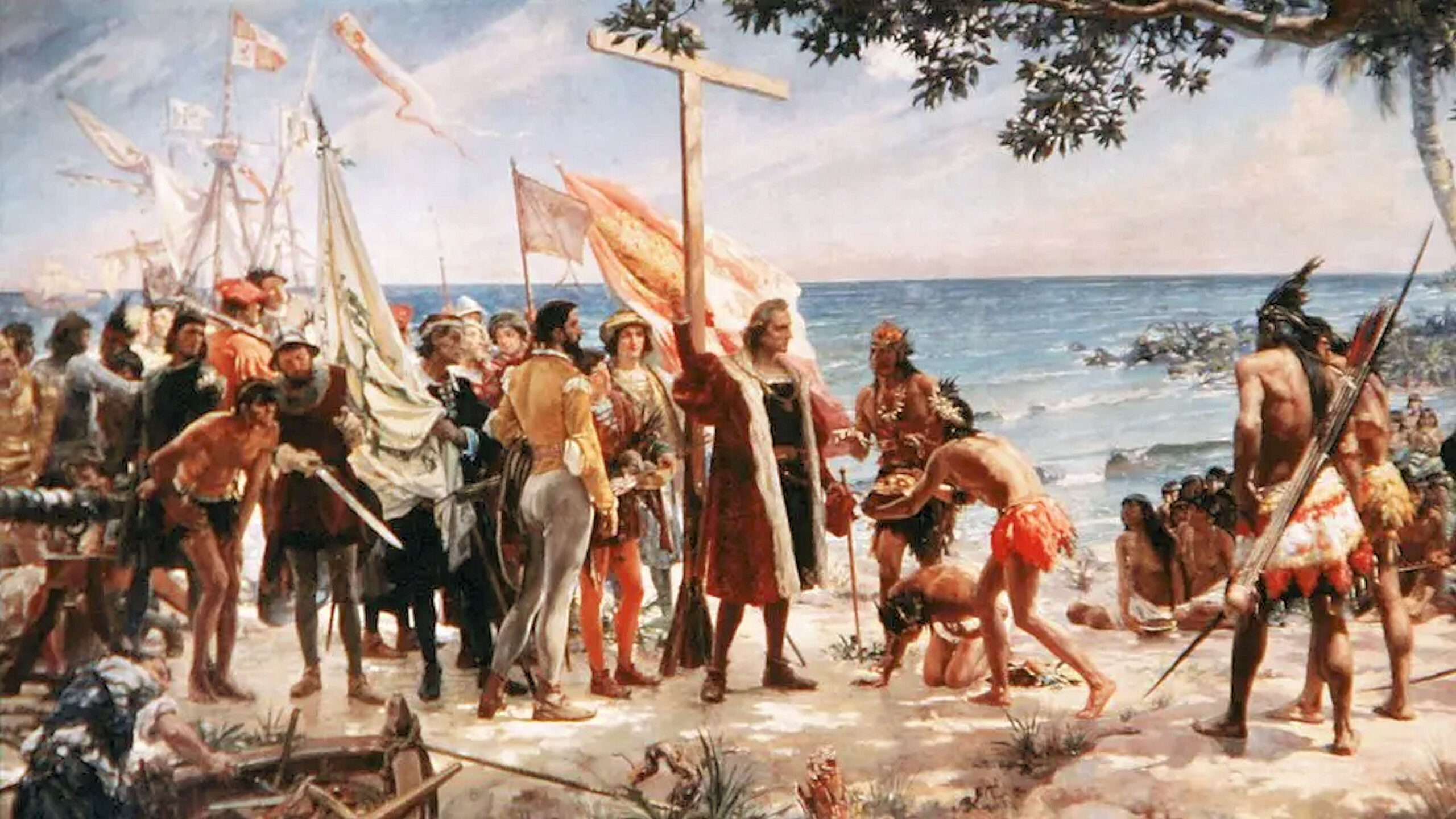
Many observers, including Isidor’s defenders, read his words as a nod to the island’s oldest name. The Taíno, a branch of the Arawak peoples who met Christopher Columbus when his flagship Santa María ran aground off the island’s north coast on Christmas Eve 1492, called the land Ayiti, often rendered “land of high mountains.” Columbus renamed it La Isla Española, the Spanish island, later Latinized as Hispaniola, a “little Spain” claimed for his patrons, Queen Isabella and King Ferdinand.
When Jean-Jacques Dessalines declared independence on Jan. 1, 1804, after the only successful slave revolution in history, he deliberately reclaimed that indigenous name for the new nation. Haiti was thus a statement that the island belonged to neither Spain nor France.
Here lies an irony that many Haitians find bitter. For generations, Dominican official culture, shaped above all by Trujillo’s 31-year dictatorship and his ideologue/successor Joaquín Balaguer, encouraged darker-skinned Dominicans to describe themselves as indio, a category that appeared on national identity cards for decades. Many still attribute their greater melanin to Taíno ancestry rather than to the enslaved Africans who were brought to Saint Domingue/Santo Domingo, the first slave colony in the Americas. Haitians and many scholars see this as a racist evasion, a way of claiming the Native American past while disowning the African one.
Yet the same nationalism that prizes a Taíno lineage refuses the Taíno name. Many Dominicans bristle at calling the whole island Haiti and insist on Hispaniola, Columbus’s colonial label, or on Quisqueya, a name whose Taíno origins historians still debate.
The 22 years Dominicans remember
Many Dominicans heard something else in Isidor’s words: an echo of 1822 to 1844, when Haiti governed the entire island.
The 1697 Treaty of Ryswick had recognized France’s hold on the island’s western third, which became Saint-Domingue, the richest slave colony on earth. Spain kept the eastern colony of Santo Domingo, where slavery also endured. After Haiti won its independence, Haitian leaders feared the east would serve as a beachhead for a European reconquest and a return of slavery and colonial subjugation. In February 1822, President Jean-Pierre Boyer’s army entered Santo Domingo, unified the island and abolished slavery there, freeing thousands of enslaved people.
the same nationalism that prizes a Taíno lineage refuses the Taíno name.
Dominican nationalist history calls this period the “Haitian occupation.” In 1838, Juan Pablo Duarte founded the secret society La Trinitaria to end it, and on Feb. 27, 1844, the Dominican Republic declared its independence from Haiti. Remarkably, the eastern elite later gave the country back to Spain: in 1861, President Pedro Santana annexed it as a Spanish colony once again, a move Duarte opposed. It remains the only nation in the Americas to have voluntarily surrendered its independence and returned to colonial rule. Dominicans then fought the War of Restoration and expelled the Spanish in 1865.
That sequence is the heart of the matter. The Dominican Republic’s national Independence Day, Feb. 27, celebrates separation from Haiti, the power that had abolished slavery, not from Spain, the colonial power that had imposed it. Restoration Day, marking the victory over Spain, is observed on Aug. 16, but it is Feb. 27 that anchors Dominican national identity.
A ban, a complaint, and a war of posts
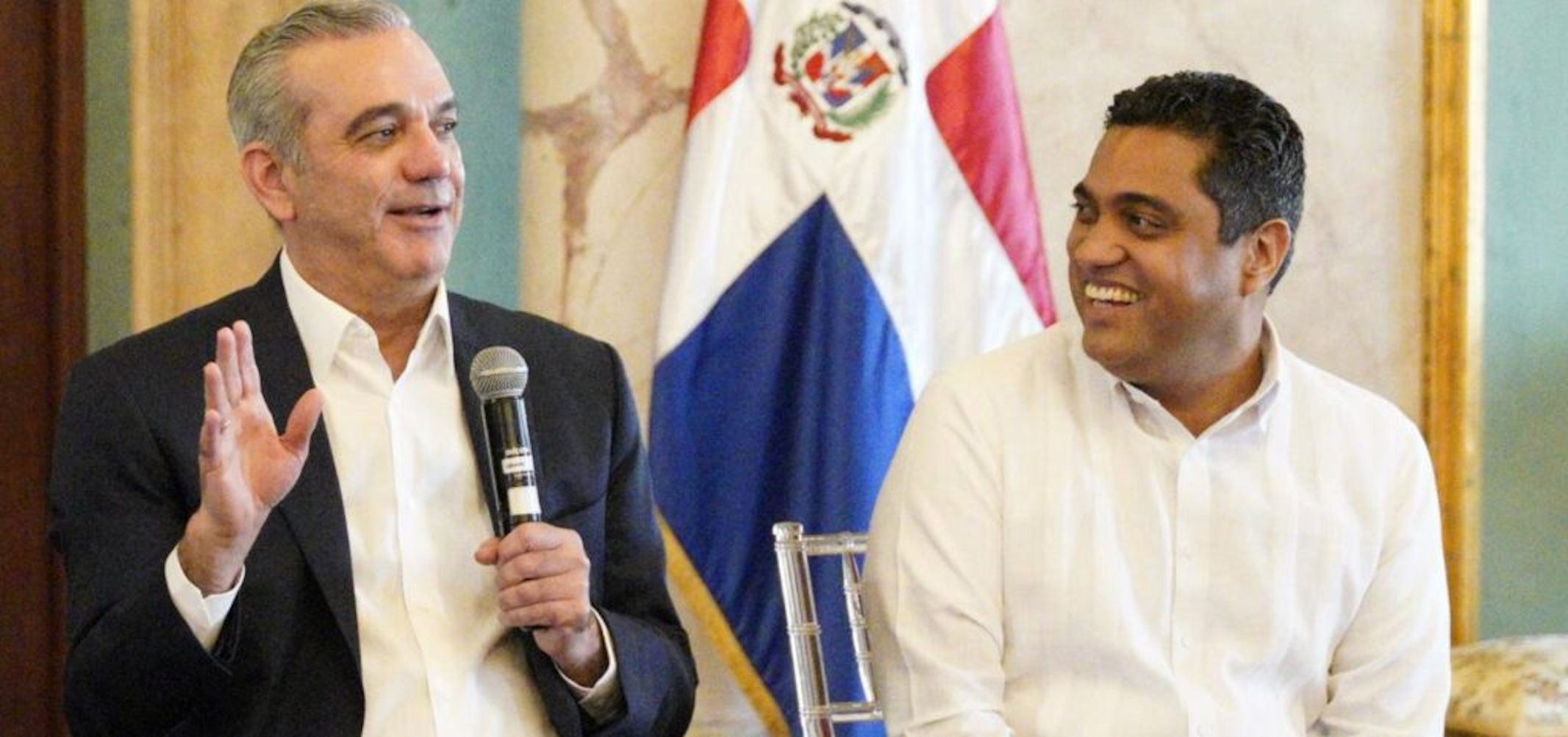
On Oct. 2, the 89th anniversary of the massacre, Dominican Sports Minister Kelvin Cruz announced that his ministry “totally forbids” Haiti’s national team from playing in Dominican sports venues. President Luis Abinader backed the ban. Cruz officially cited a crush of Haitian fans at the stadium gates, where Dominican authorities used pepper spray on crowds. He never mentioned Isidor. But José Deschamps, head of the Dominican Football Federation, called the striker’s words a grave act of disrespect toward national sovereignty, and his federation took its complaint to Concacaf and FIFA.
Social media did the rest. Dominican users posted greetings to everyone “except the Haitians.” One likened Isidor’s shout to a German player giving a Nazi salute. A widely shared video captioned “4-1” set footage of wealthy Dominican neighborhoods above images of Haitian slums. Team captain Duckens Nazon was also drawn into the fight over his own post referencing Hispaniola.
Haitians fired back. One user on X pointed out that Paris Saint-Germain supporters chant “Ici c’est Paris” at away games and “no one thinks they’re reclaiming territory.” The Haitian Football Federation defended Isidor’s words as “an expression of attachment” to his roots, not hostility toward another nation. Others turned their anger inward. Haitian lawyer and commentator Windy Phèle wrote that Haiti’s politicians have left the country dependent on its neighbor and that Haitians should work so the national team “can stop playing away from home.” Fighting between neighborhood armed groups, Haitian police, and foreign mercenaries have rendered Port-au-Prince’s main stadium unusable, forcing the Grenadiers to play their World Cup qualifiers abroad.
By February 2026, the head of the Directorate General of Migration boasted of more than 525,000 expulsions since he took office in October 2024.
Then came Sarodj Bertin. The lawyer, singer, and former Miss Haiti, who was raised in the Dominican Republic after her mother, a right-wing spokeswoman, Mireille Durocher Bertin, was assassinated in 1995, posted a video in Spanish and French. She called Isidor’s words “out of place,” declared that Hispaniola is not Haiti, and urged him to retract, at least for his “brothers,” if not for his country.
“In the end,” she warned, “those who are going to suffer are the Haitians who live in the Dominican Republic.” Many Haitians condemned her for kneeling to Dominican nationalism, noting she has long insisted the Dominican Republic “is not a racist country.” A former Haitian consul went further, calling for Isidor to be suspended.
The Haitian state, meanwhile, has been incoherent. On Oct. 2, Dominican outlets reported that Haiti’s embassy in Santo Domingo had disavowed “certain Grenadiers” and reaffirmed respect for Dominican sovereignty. The next day, the embassy denied it had issued any official position at all. With the Provisional Electoral Council (CEP) announcing on Oct. 6 that the Dec. 13 first round “no longer stands,” Haiti’s first national elections in over a decade are now expected to slide into 2027, and Haitian politicians angling for a future campaign have every incentive to wrap themselves in the flag and appear to talk tough to Santo Domingo.
Mass expulsions under Abinader
Bertin’s warning, however rationalizing, was based in reality. For more than a decade, the Dominican state has been purging Haitians and Dominicans of Haitian descent.
In 2013, the Constitutional Court’s ruling TC/168-13 retroactively stripped citizenship from Dominican-born children of undocumented migrants going back to 1929, rendering tens of thousands of people, overwhelmingly of Haitian ancestry, stateless. Expulsions followed through the 2010s, but Abinader, elected in 2020 and re-elected in 2024, turned them into an industrial operation. He has walled off much of the 235-mile border, suspended visas for Haitians and, in October 2024, ordered the deportation of up to 10,000 people a week.
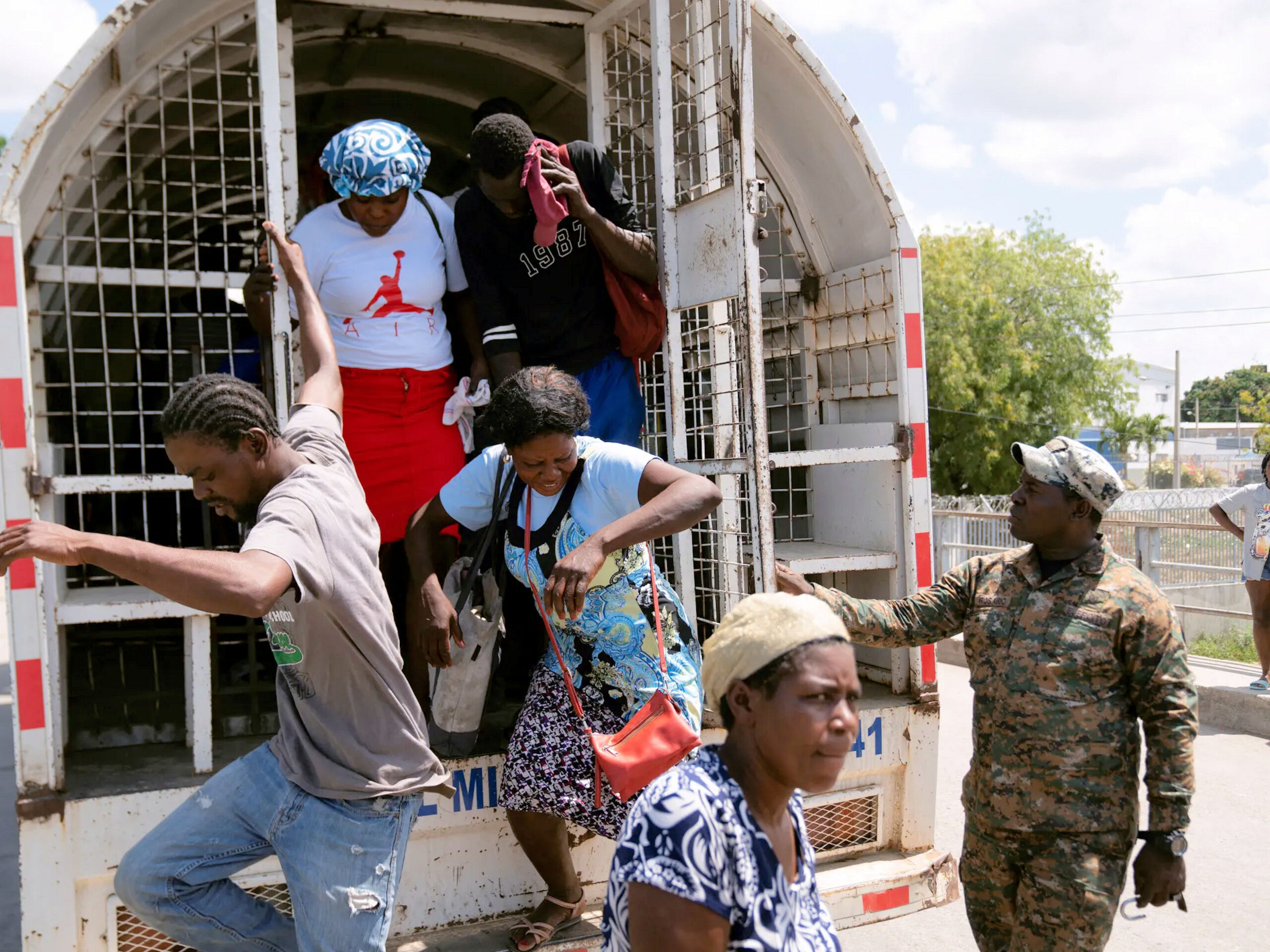
The numbers have climbed every year. Official figures show 276,215 deportations to Haiti in 2024. By the end of September 2025, the total for that year had already reached 285,614. By February 2026, the head of the Directorate General of Migration, Vice Admiral Luis Rafael Lee Ballester, boasted of more than 525,000 expulsions since he took office in October 2024. More than 265,000 Haitians were expelled in the first eight months of this year alone.
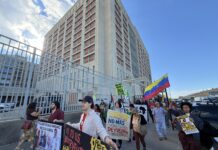
The methods have drawn condemnation from the United Nations and Amnesty International, which says Dominican migration policy is rooted in racism. Raids sweep up people by skin color. Agents have hunted Haitian women in maternity wards, and the UN condemned the deportation of some 900 pregnant or breastfeeding women in a single stretch of 2025. Families are unceremoniously dumped at the border.
Abinader is term-limited and cannot run in 2028, but his ruling party and its rivals already are. According to the Associated Press, presidential hopefuls have seized on the soccer controversy to promise even harsher crackdowns, with one even saying he would enslave Haitians.
Santo Domingo’s war cry
The same government that cannot tolerate six words from a soccer player has spent five years lobbying for foreign troops to fight in Haiti.
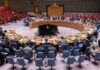
Since the 2021 assassination of President Jovenel Moïse, Abinader has used UN podiums year after year to demand armed international intervention. As Haiti’s neighbor, the Dominican Republic is routinely invited to speak when the Security Council takes up Haiti, and it has been among the loudest voices urging the Council to treat Haiti’s crisis as a danger to the region. Washington is the author of that framing, and the Council has adopted it: the resolutions that authorized two U.S.-mustered forces – the Kenyan-led Multinational Security Support (MSS) mission in 2023 and the Chadian-led Gang Suppression Force (GSF) in 2025 – declare the situation in Haiti a “threat to international peace and security” in the region. On Sept. 29, after the Dominican Republic and 31 other OAS members publicly urged it to, the Council renewed the GSF’s mandate for 18 months by 12 votes to none, with China, Russia and Pakistan abstaining, as in the first GSF vote on Sep. 30, 2025.
Santo Domingo’s concern for regional security has not extended to its own banking system. In April 2022, José Manuel Patín Muñiz, one of the Dominican Republic’s top anti-money-laundering investigators and a former compliance officer at Citibank, said on Dominican television that some $20 million used to pay for the assassination of Jovenel Moïse had been laundered through Dominican banks, and that the country’s banking superintendent knew it but had not said so publicly. Haitian lawyer Newton Saint-Juste asked the Dominican attorney general to investigate. Last month, as Haiti extradited 18 more suspects to Miami and U.S. prosecutors vowed to pursue those who financed the plot, the Dominican leg of that money trail deserves the same scrutiny.
The GSF’s own architects describe a counterinsurgency, not a police operation. At a House Foreign Affairs Committee hearing on Jul. 21, Col. Justin Gorkowski, co-lead of the Pentagon’s Haiti GSF “Tiger Team,” said earlier foreign missions had “mischaracterized the problem.” “They thought of this as a criminal problem,” he told lawmakers. “It is not. This is a proto-insurgency, and these folks really are on the verge of something significant if we can’t stem the tide.” In his written testimony, he said more than 20 armed leaders, whose fighters outnumber Haiti’s security forces, “dictate daily life” in their territories by providing security, jobs, school supplies and condolence payments. “This isn’t West Side Story,” he wrote; the threat “requires a predominately military solution.” Accordingly, the GSF was built as roughly four-fifths soldiers and one-fifth police, with air, land and sea components. By the Pentagon’s own description, then, Haiti faces not crime but an insurgency with a popular base, and the GSF aims to crush it.
Critics, Haitians foremost among them, find it absurd that Haiti, a country with no army to speak of, is cast as the hemisphere’s threat to peace. Over the past year, the United States has carried out lethal military strikes on small boats across the Caribbean, abducted Venezuela’s President and First Lady in a bloody, illegal January raid, and moved to choke off fuel shipments to Cuba. Santo Domingo has not called any of that “a threat to international peace and security.”
Two sentences, two centuries
Whatever Isidor meant, the reaction to his words revealed more about Hispaniola than the words themselves. A Dominican state that celebrates its liberation from the country that abolished its slavery, that names its people indio rather than Black, and that deports hundreds of thousands of its neighbors each year heard a 26-year-old’s celebration as an invasion. A de facto Haitian state with no elected officials could not even decide whether it had apologized.
Concacaf’s disciplinary case is pending, and Haiti, which advanced to the Nations League quarterfinals on goal difference, will have to find yet another neutral field.
The binational island’s original name, meanwhile, remains what it was before Columbus arrived: Ayiti.