(Français)
While the United States brazenly and bloodily kidnaps the president and first lady of Venezuela, imposes a brutal, medieval siege on Cuba, and kills hundreds of innocent human beings by blowing up their boats in the Caribbean and the Pacific, Austin Holmes surveys the hemisphere and finds its menace in Haiti. The country’s instability, he warns, “poses a direct and escalating threat to U.S. national security and broader regional stability.”
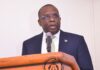
Holmes, a Florida humanitarian entrepreneur, is President Trump’s latest nominee to be ambassador to Haiti. Earlier this year he told Congress that, as he sees it, the Haitian people’s interests coincide with “the national, regional, and strategic interests of the United States.” As it happens, they also coincide with the interests of the charity he chairs.
The White House sent his name to the Senate on Sep. 14, pitching a businessman with nearly two decades in Haiti and a record in humanitarian logistics and hostage recovery, and it was forwarded for confirmation to the Senate Foreign Relations Committee. The record is less heroic. In February, as a private citizen, Holmes submitted written testimony to the Senate Appropriations Subcommittee on State, Foreign Operations, and Related Programs, the panel that controls what Washington spends abroad. He laid out a Haiti strategy “developed by CaribbeanOne” and urged appropriators to steer aid toward organizations like it, without mentioning that he chairs the board of the charity that runs CaribbeanOne.
Now he is poised to help direct that spending. In the Trump era, the line between public duty and private enterprise is drawn by the official himself, if at all.
Borrowed Words: “Narco-Terrorists”
In an April 2025 Miami Herald op-ed titled “An ‘America First’ plan to prevent Haiti’s collapse,” Holmes wrote that Haiti’s armed groups “are not philosophers or revolutionaries — they are narco-terrorists whose goal is to turn Haiti into a trafficking hub sending narcotics into the U.S.”

in revenue last year, 90% of it from private sources. Above is one of their donation appeals.
The phrase was not his. On his first day back in office, Trump ordered that drug cartels be designated as terrorist organizations. Three weeks after Holmes’s op-ed ran, Secretary of State Marco Rubio designated Viv Ansanm (Live Together), the coalition of Port-au-Prince armed groups, and the Artibonite Valley’s Gran Grif (Big Claws) armed group as Foreign Terrorist Organizations. “The age of impunity for those supporting violence in Haiti is over,” Rubio declared.
Often applied to anybody or any group that the U.S. government views as an enemy (and removed just as arbitrarily when they become an ally, the case of Syria’s President Ahmed al-Sharaa being a recent case in point), the label is meaningless. Haiti’s armed groups are the offspring of poverty, turf wars, self-defense, and decades of patronage by Haitian politicians and oligarchs, the same elites Washington has long backed. What the label did was recast a social and political crisis as a “counterterrorism” problem, to be solved with force rather than justice, jobs, and sovereignty.
“Narco-terrorist” is also the word Defense (War) Secretary Pete Hegseth attaches to the people his forces illegally kill at sea. Since September 2025, U.S. strikes on small boats in the Caribbean and eastern Pacific have killed more than 230 people in roughly 70 attacks. None of the dead were charged or tried. On Jan. 3, U.S. special forces illegally seized Venezuelan President Nicolás Maduro and his wife, Cilia Flores, in Caracas and flew them to New York. Since then, an equally illegal U.S. fuel blockade has plunged Cuba into blackouts and humanitarian crisis.
If terrorism means the use of violence against people, outside any law, to achieve political ends, then the hemisphere’s most prolific practitioner does not reside in Cité Soleil or Croix-des-Bouquets. It resides in Washington. When Holmes reaches for “narco-terrorist,” he is not describing Haiti. He is echoing the language that licenses those killings.
The same goes for his claim, in the Herald, that Haiti is “a rapidly escalating regional security threat.” Haiti has no navy, no air force, and an economy smaller than that of many U.S. cities. Its armed groups fight largely with guns smuggled out of Florida. The threat, in other words, runs clearly in the other direction.
No Boots, But a Business Plan
To his credit, Holmes does not want U.S. “boots on the ground,” as he wrote in the Herald. His testimony states plainly that he “does not advocate for large-scale military intervention.” That is fine and good. Haitians lived through a U.S. military occupation from 1915 to 1934 and U.S. troop landings in 1994 and 2004 (followed by UN military occupations), and the record of each is grim enough to warrant restraint.
But restraint is not his proposal. His proposal is a product. What Haiti needs, the op-ed argued, is “U.S. support for credible Haitian and Haitian-American partners,” among them “trusted private-sector leaders [i.e. Haiti’s reviled bourgeoisie], former law enforcement officials, and military veterans.” What Washington should fund, he told Congress, is “a feasible integrated security and humanitarian response strategy, developed by CaribbeanOne,” the network he leads. It has four phases: secure humanitarian corridors, move food, water, and medical care through them, restore essential services, then hand operations to Haitian institutions.
Corridors through territory held by armed groups must be secured by someone. Holmes says the security component will be “Haitian-led.” He does not say who will train, equip, advise, and support it. Presumably that could include Rally Defense Solutions, the military-services arm of his own holding company, which markets “executive education, tactical training, mission support, and crisis response” to governments and organizations in high-risk environments. No U.S. soldiers, then, but perhaps some U.S. contractors. “Swift action now,” Holmes promised Herald readers, “will pay significant America First dividends.” The question is who would collect them.
From Mission of Hope to CaribbeanOne
Holmes’s Haiti résumé is real. He began working there in 2009, lived there from 2017 to 2019, and built a staff, he claims, of nearly 900 that fed more than 100,000 children a day through HaitiOne, a school network run by the faith-based charity Mission of Hope, where his company biography says he was country director.
The network has since been renamed twice, to HaitiOne and now CaribbeanOne, but the charity is still legally registered as Mission of Hope. IRS Form 990 filings list Holmes as board chairman in every return from fiscal year 2021 through June 2025. The charity reported $24.8 million in revenue in its latest filing, about 90% of it from private donations. CaribbeanOne’s president was paid $151,500; Holmes reports no compensation as chairman.
Every return since at least 2020 has also checked the box disclosing “conflict of interest transactions,” dealings involving an interested party such as a board member or a company one controls. The details sit on Schedule L, which is not publicly indexed. Senators can and should ask whether they involve Holmes or his companies.
What He Asked Congress to Fund
Holmes told senators that CaribbeanOne “already operates 630 program centers across Haiti, feeding over 130,000 children daily” and “leads a network of over 500 NGOs.” Only 7.6% of past USAID funding in Haiti went directly to local organizations, he noted, while 40% went to UN agencies. He urged “flipping the status quo to instead allocate 90% of funding to local organizations in the field,” channeled through “proven, locally-rooted, community and faith-based organizations,” which in practice means Haiti’s powerful evangelical mission community, of which he is a part.
His formal recommendations never name CaribbeanOne, his defenders will note. But it was the only framework he put before the subcommittee, and his testimony dwells on his past with HaitiOne while omitting his present. That omission matters more now. With USAID’s remaining functions folded into the State Department, the embassy in Port-au-Prince carries far more weight (if not all of it) over how U.S. aid moves through Haiti. An ambassador who has already argued that the money should flow to organizations like his own would be positioned to shape decisions his charity stands to benefit from.
The testimony also notes, awkwardly for his new patron, that Trump’s January 2025 stop-work orders froze roughly $330 million in U.S. commitments to Haiti programs. And it calls the UN-blessed but U.S.-controlled Gang Suppression Force “a necessary kinetic tool” that does not address the humanitarian emergency, precisely the gap his coalition proposes to fill.
The China Card
Haiti is one of only 12 nations that still recognize Taiwan, Holmes reminded senators, while Beijing pursues a “charm offensive,” his characterization of financial assistance, infrastructure financing, and interest-free loans aimed at encouraging Port-au-Prince to join the rest of the world (including the U.S., formally) in recognizing the One China principle. Holmes wants to discourage Haiti from considering China’s generous development proposals that scores of nations worldwide (including the neighboring Dominican Republic) have been very pleased to accept.
“Without appropriate U.S. intervention,” he wrote, “China will continue to expand its control and influence in Haiti.” In reality, Washington holds a near monopoly on control and influence there. But the argument turns CaribbeanOne into a counter-China strategy and casts lawmakers who balk as ceding ground to Beijing.
A Contested Rescue Story
Holmes’s security credentials rest heavily on one case. In 2023, he told the subcommittee, he founded a security company “at the guidance of the Federal Bureau of Investigation” to support “the successful negotiation and recovery of a U.S. military veteran kidnapped in Haiti.” His co-founder, Tate Jolly (named in the testimony as Taylor Jolly), is a former Delta Force operator, Marine, and Navy Cross recipient.
The hostage was Jeff Frazier, an Army veteran and aid worker held for 43 days in 2023, who has since publicly credited Holmes with a crucial role in his release. But Frazier, a longtime associate of Operation Underground Railroad (OUR) founder Tim Ballard who has since taken over rebuilding that group, told a different story in a 2024 statement provided to VICE News. His wife was instrumental in freeing him, he said, with help from OUR friends and local security and logistics contacts in Haiti. The U.S. government provided “zero assistance.”
Holmes may have been among those local contacts, but that is hard to square with an FBI-guided rescue birthing his security company. Senators can ask Holmes, and the FBI, which version is accurate. It matters, because the story underpins his claim to be both humanitarian and security operator.
RallyX and Rally Defense Solutions
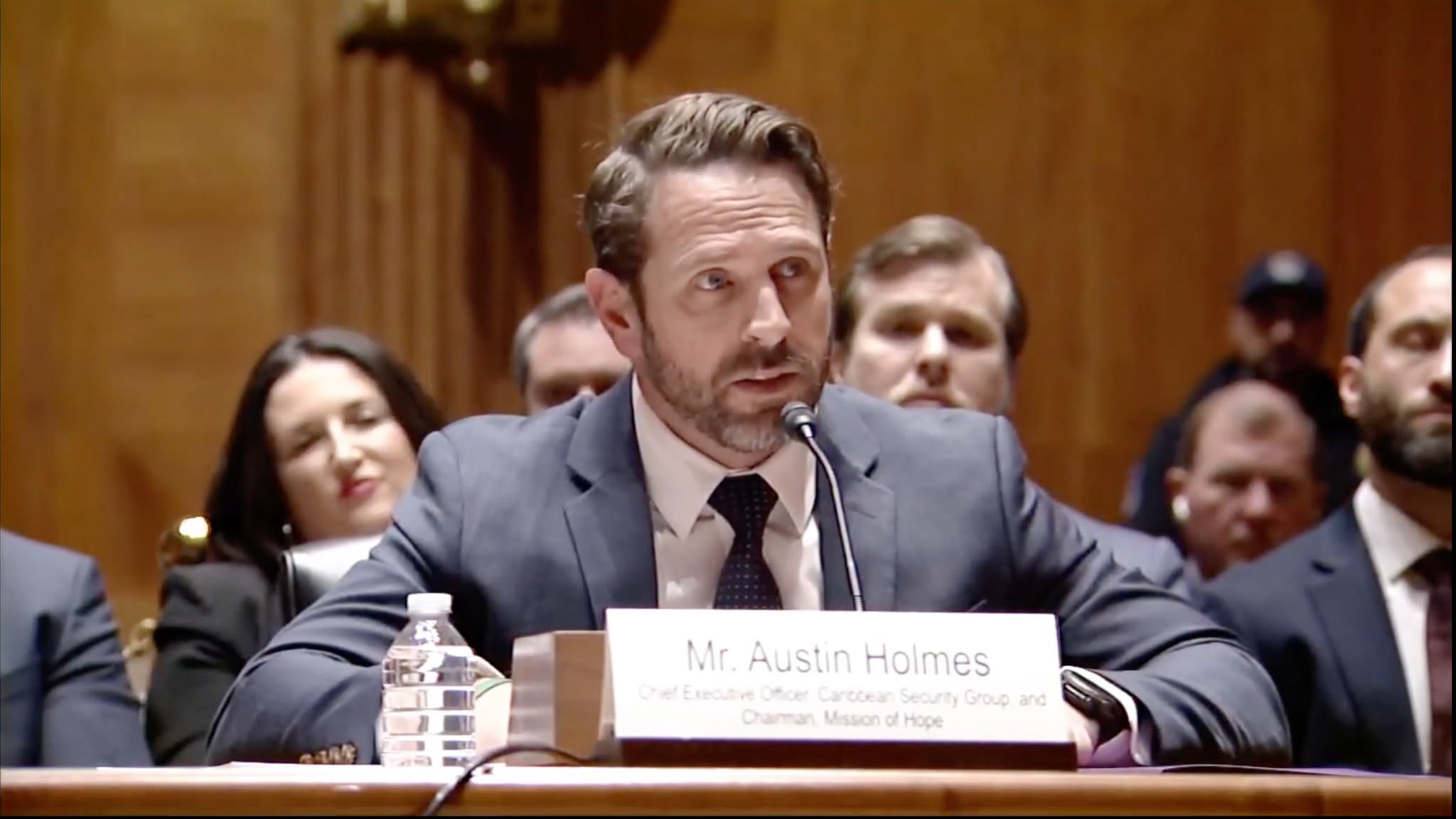
Holmes is CEO of RallyX, a Jacksonville holding company. State records show it was created in 1999 as Poole Management Co. and renamed in 2022, with Lockwood Holmes as president and Bret Holmes as CFO. Its holdings span health care, residential and commercial construction, nonprofits, landscaping, transportation,… and military contracting. USASpending.gov shows no federal contract awards to RallyX or Rally Defense Solutions, so the policy Holmes promotes would open a market the company has never had. Whether Rally Defense Solutions, or the Caribbean Security Group (also not found in USASpending.gov) listed on his professional profile and on the placard he had at February’s Congressional hearing, has worked in Haiti is a question for his confirmation hearing.
He rightly rejects U.S. boots on the ground, then offers his own charity’s plan, and perhaps his own company’s services, in their place.
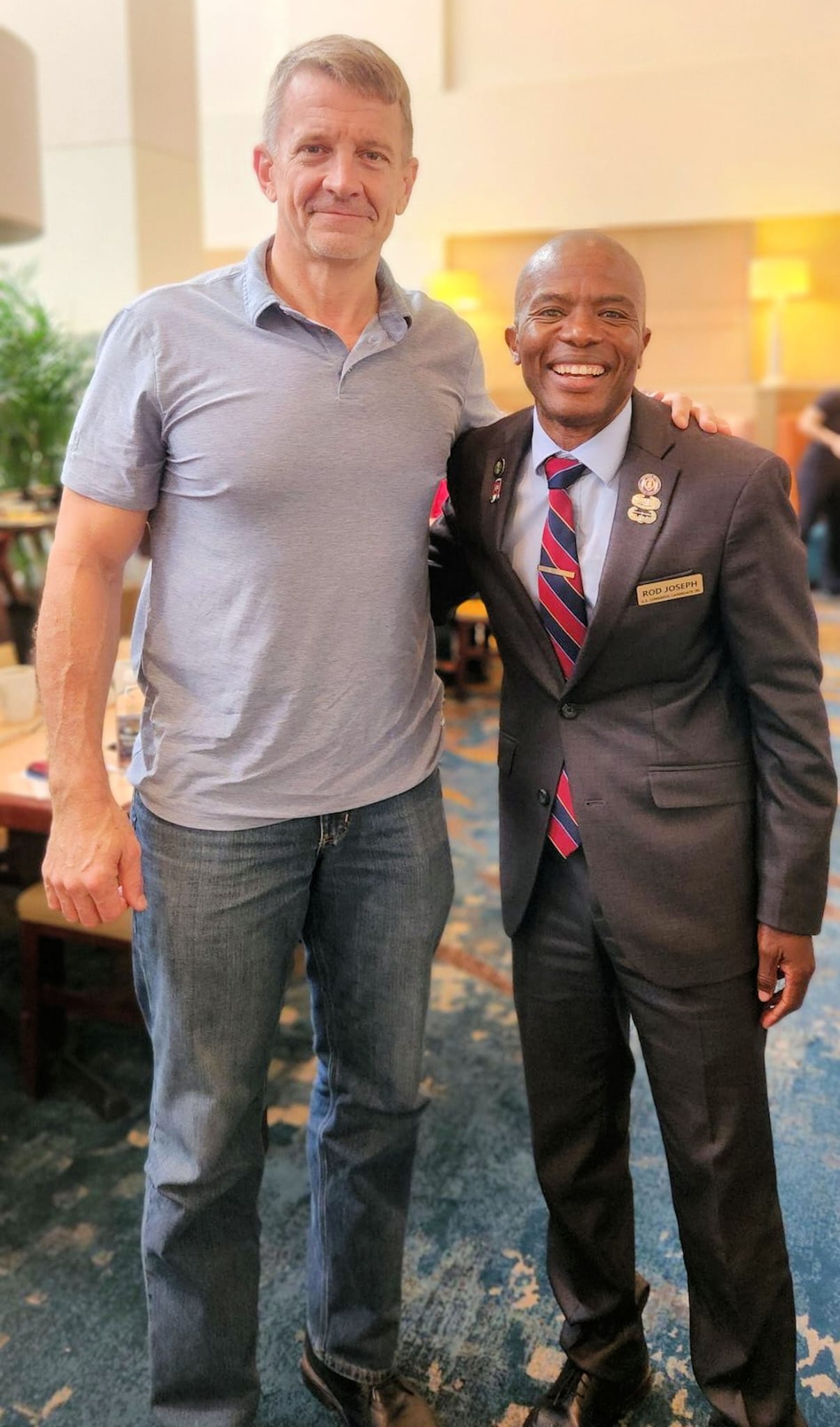
His operation is distinct from Vectus Global, the firm of Blackwater founder Erik Prince, which works under contract with Haiti’s de facto government. Vectus and the Haitian National Police it trains, advises, and directs have been accused by human rights groups and press reports of fatal shootings and drone strikes that mostly kill innocent civilians in the capital’s shantytowns.
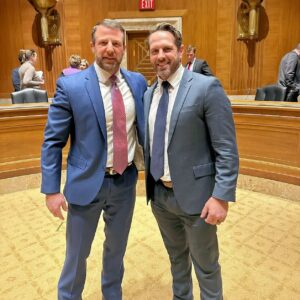
Rod Joseph, a Haitian-American Army veteran prominent on Haitian social media and a perennial candidate for office in Florida, says he and Holmes have been “friends for a while. We both work in the same field. We are both fighting against Erik Prince and have testified to Congress about the danger that Prince poses.”
But there is another rub. At a Jul. 21 House Foreign Affairs subcommittee hearing, Col. Justin Gorkowski, co-leader of the Pentagon “Tiger Team” that oversees the U.S.-assembled UN-blessed Gang Suppression Force (GSF), called the drone Task Force effectively run by Vectus Global “a tremendous partner” and said a Task Force liaison officer would soon be embedded inside the GSF’s own joint operations center. Holmes, meanwhile, assured Congress that his plan does not “seek to replace existing U.S. or multilateral efforts.” If Prince’s mercenaries are being folded into the Pentagon-overseen GSF, those existing efforts now include the very man whom Holmes is fighting, according to Rod Joseph. Holmes cannot both oppose Prince and pledge not to disturb an architecture that has made Prince a partner.
Holmes did not reply to Haïti Liberté’s emails and phone messages requesting an interview and verification of Rod Joseph’s assertions.
Money, Property, and Politics
In June 2020, the year after he says he returned from Haiti, Holmes and his wife paid $1,000,025 in cash for a house in St. Johns County, near Jacksonville. He sold it this April and bought in Cooper City in June. His income sources are not publicly documented. Senators can ask whether his ethics agreement with the Office of Government Ethics addresses his Mission of Hope board seat and his stake in RallyX’s defense business.

A Republican-aligned committee to which Holmes apparently belongs, FL Families for Action PAC Inc., is registered at the same Jacksonville office suite that served as RallyX’s headquarters until 2025. No filing reviewed names Holmes as its founder or head, and the committee is absent from the Florida Division of Elections online directory, which would show who runs it.
This is another area senators should look into, although ambassadorships are often a president’s reward given to important political campaign supporters.
The Familiar Pattern
No one disputes that Holmes knows Haiti. But he has not separated his advocacy for U.S. policy from his stake in the organizations that policy would fund. He borrows Trump and Rubio’s “terrorist” vocabulary to inflate Haiti into a threat. He rightly rejects U.S. boots on the ground, then offers his own charity’s plan, and perhaps his own company’s services, in their place. And he justifies the urgency with a China “threat” that makes objections look like weakness.
That is the governing style of the president who nominated him: public purpose and private interest presented as one and the same. The Senate can ask Holmes to separate them before it confirms him. It probably won’t.