


(Français)
Fifteen years ago this week, Haïti Liberté began its proud collaboration with Wikileaks, the media organization which provided Haiti’s largest weekly newspaper with close to 2,000 secret U.S. State Department cables that laid bare Washington’s nefarious role in the country.
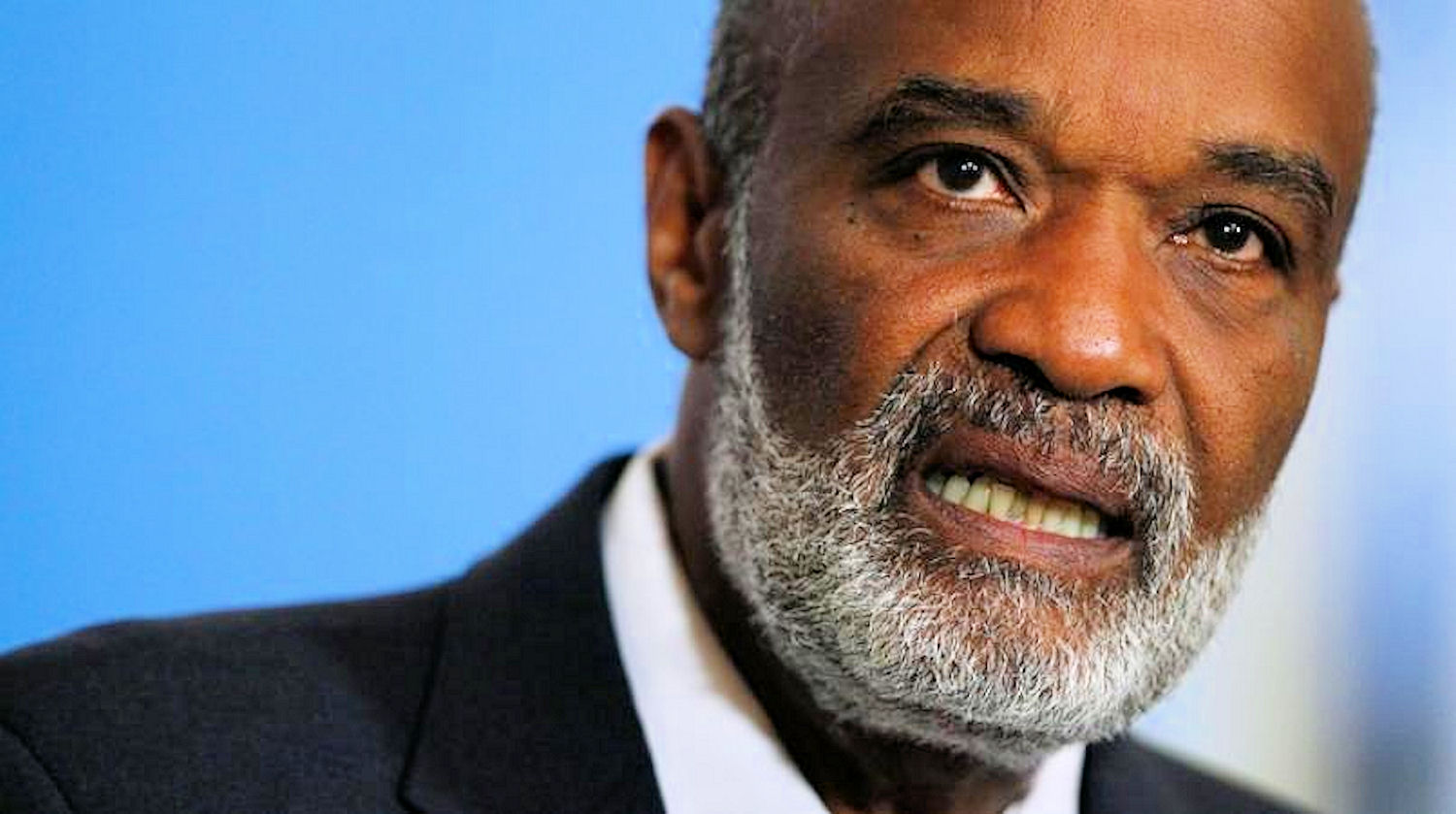
From the classified communications, Haïti Liberté’s journalists produced dozens of articles reporting primarily on the U.S. Embassy’s dealings with the second administration of the late President René Préval, when he governed Haiti from May 2006 until May 2011.
In many ways, Haiti’s current de facto government of Prime Minister Alix Didier Fils-Aimé, imposed by U.S. gunboats, is a duplicate and direct descendant of Préval’s government. Fils-Aimé’s ministers are drawn mostly from Préval’s Espwa/Inite political current and that of former President Jean-Bertrand Aristide’s Fanmi Lavalas party.
Currently, in close coordination with foreign (mercenary) military forces, the Fils-Aimé government is carrying out a bloody campaign of murder and terror, using drones and tanks, against Port-au-Prince’s poor localities in which the alliance of armed neighborhood groups, Viv Ansanm (Live Together), is based. This military offensive is the stick.
On the other hand, the occupation forces in concert with the Haitian National Police (PNH) are preparing to once again roll out a National Committee for Disarmament, Demobilization, and Reintegration (CNDDR), as the Préval government did in 2006 and 2007 against the “gangs,” primarily in Cité Soleil and Belair, which were resisting the 2004 coup d’état against Aristide and the ensuing foreign military occupation by the United Nations Mission to Stabilize Haiti (MINUSTAH).
Under de facto Prime Minister Gérard Latortue, the MINUSTAH carried out several terrible massacres in Cité Soleil, Belair, and other Haitian slums, which are documented in Haïti Liberté’s reporting based on the Wikileaks divulged cables. René Préval continued PNH and MINUSTAH operations against Haiti’s shanty towns into 2006 and 2007.
The CNDDR’s role is to approach armed groups and nicely but forcefully offer them amnesty, money, and jobs if they put down and turn in their weapons. This charm campaign is the carrot.
It is perhaps no coincidence that the head of Préval’s CNDDR was none other than Alix Didier Fils-Aimé’s father, Alix “Boulon” Fils-Aimé, who met extensively with U.S. Embassy officials, as the secret cables obtained by Wikileaks reveal.
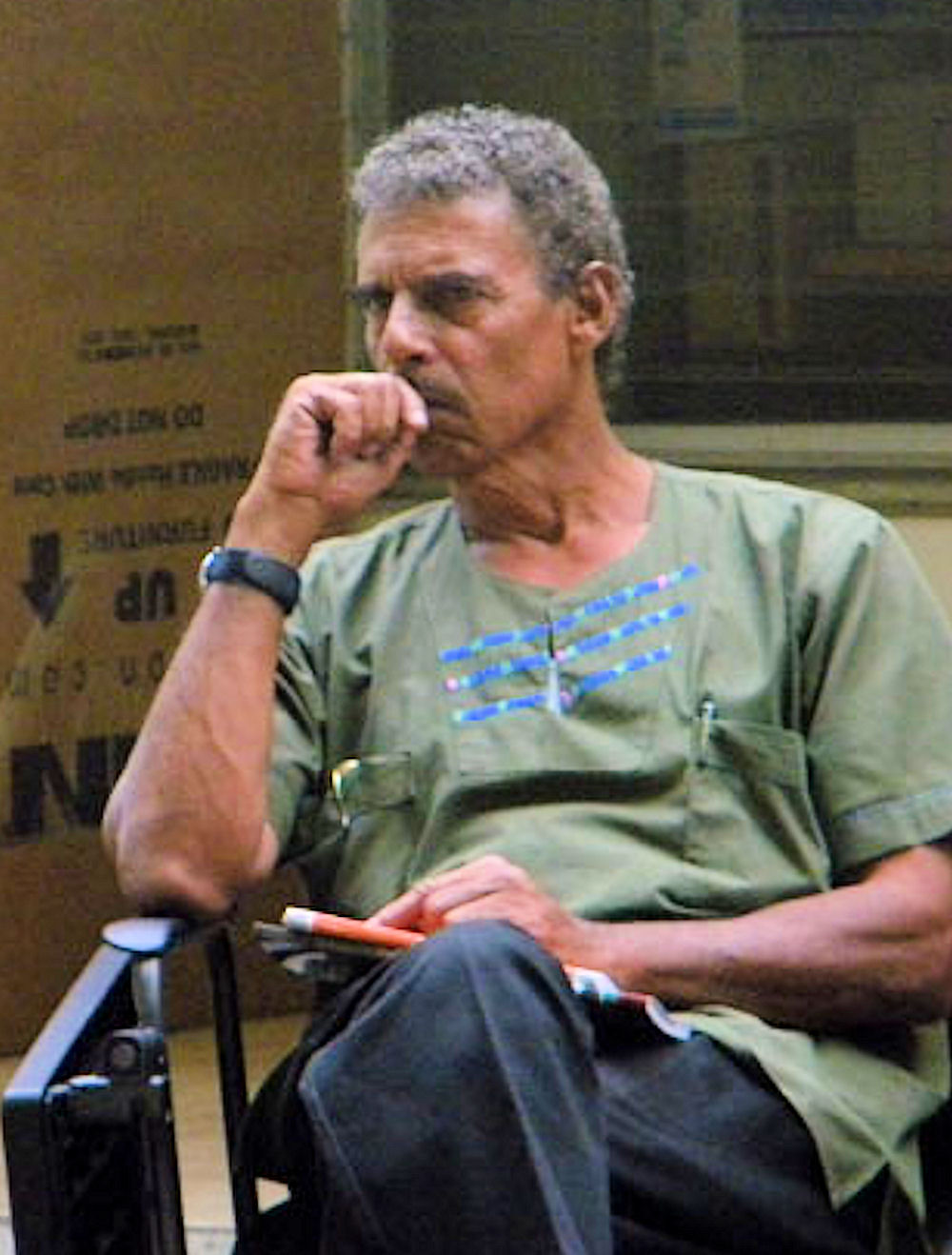
“Pacification of gangs and (Fanmi Lavalas) FL militants remained a priority,” wrote then U.S. Ambassador Janet Sanderson in a Jun. 30, 2006 cable to Washington. “Fils-Aimé estimated that the government needed to target some sort of assistance program to 6,000-10,000 potential troublemakers.” In short, he wanted Washington to give Préval money to buy off the “gangs.”
“Fils-Aimé warned that roughly 6,000 former government employees and FL partisans and another roughly 4,000 marginalized youth and gang members remained a threat to stability,” Sanderson continued. “The Préval government wanted to target this population directly with benefits and job training. Fils-Aimé thanked the U.S. Embassy for contributing to a good start. (Note: the Ambassador had announced a new initiative for Cité Soleil on Jun. 23 [2006]. End Note.) Fils-Aimé estimated that based on his initial calculations, the government would look for a total of $25 million to implement their ‘social appeasement’ program (‘though I don’t like that term’) over a period of two years. Asked if this would not unduly favor lawless elements in poorer neighborhoods at the expense of law-abiding citizens, Fils-Aimé replied that such a program was politically necessary, stressing that the estimated 10,000 had the potential to take up arms and destabilize the country.”
The irony and incongruity of this conversation between the U.S. Embassy and “Boulon” becomes evident when his background is laid out by Sanderson.
“He is a self-described ‘activist’ with revolutionary credentials who also ‘loves the States,’” Sanderson began. “Fils-Aimé was born in 1949 or 1950 (he is 56 years-old) in Haiti to a Haitian father and American mother (Consular records indicate he has never held a U.S. passport.) He attended high school in Brooklyn, ‘where I learned more Spanish than English.’ He returned to Haiti and became active in communist politics. He spent time in Grenada working with Prime Minister Maurice Bishop and in Nicaragua during the Sandinista regime in the agrarian sector. The regime of Jean-Claude Duvalier imprisoned him in solitary confinement for 18 months in the early 1980s for his communist ties (‘but they got me for the wrong reasons, I was into things they didn’t know about’). The Duvalier regime freed Fils-Aimé as a result of negotiations with Former President [Jimmy] Carter and [his UN Ambassador] Andrew Young. Fils-Aimé claims that he traveled to Libya in 1986 seeking Muamar Qhaddafi’s assistance in overthrowing Jean-Claude Duvalier: Duvalier’s flight from Haiti on February 7 made the question moot. Fils-Aimé comfortably volunteered all of the above information, adding ‘you must know all this since it’s in my file.’ ‘But I learned from all these experiences and I love New York and the States.’”
After the Duvalier regime’s fall in 1986, Fils-Aimé founded the League of Former Haitian Political Prisoners (LAPPH) with Robert “Bobby” Duval, whom Duvalier had also jailed in Fort Dimanche. Boulon became a friend and associate of Ben Dupuy, the communist leader of the National Popular Assembly (APN) mass organization, which later became the National Popular Party (PPN). He attended many of the meetings and congresses of both organizations.
“Fils-Aimé won election to the chamber of deputies… as an independent candidate from Kenscoff and Pétionville, upper-class suburbs of Port-au-Prince,” Sanderson continued. “He won a reputation as an astute, hard-working, and honest politician who tried to work within system but stayed clear of FL excesses. Fils-Aimé joined Préval’s team only after Préval’s first-round victory in February [2006], but quickly gained significant responsibility for outreach to political parties and the private sector… We expect that he will remain a valuable contact worth cultivating.”
“Fils-Aimé comfortably volunteered all of the above information, adding ‘you must know all this since it’s in my file.’”
So here we see a putative anti-imperialist, with years of “communist politics,” not only “comfortably volunteering” information to Washington, but also collaborating with it to crush the anti-coup, anti-occupation popular resistance that emanated from Haiti’s slums.
Recently, Haïti Liberté collaborator Kervens Louissaint addressed this schizophrenia in an essay.
“What I call ‘the Affranchi State’ possesses an extremely sophisticated political intelligence,” he wrote. “Constantly, it succeeds in pointing toward very real external enemies in order to prevent the population from looking deeply enough at the internal structure itself,” using the external enemies as “a permanent screen… to conceal a much deeper internal reality.”
“Let us be clear: yes, international interference exists. Yes, neocolonialism exists. Yes, major powers use Haiti according to their geopolitical, economic, and strategic interests. Yes, neoliberalism has profoundly weakened local structures, destroyed productive capacities, reinforced economic dependencies, and accelerated certain forms of social disintegration. All of this is real. And precisely because it is real, it also becomes an extremely effective political tool. Because while all the emotional attention of the people is directed toward ‘the foreigner,’ they look less at the nature of the internal system itself. Thus, political elites denounce foreign interference while constantly seeking validation from embassies. Economic actors denounce foreign domination while depending on international financial circuits.”
Louissaint’s analysis perfectly captures the hypocrisy of Haiti’s “enlightened” bourgeois ruling class sector personified by René Préval, Alix “Boulon” Fils-Aimé, and his son, Alix Didier Fils-Aimé. In short, they talk left, but walk right.
The fact that the two-faced, liberal bourgeoisie “accuses the devil” while at the same time “trying to obtain something from the devil” reveals the deep contradiction of Haiti’s neocolonial regimes , Louissaint explains.
It is a comprador state “organized around dependency” and is not “trying to build an organic sovereignty rooted in the Haitian population itself. On the contrary, they are mostly trying to obtain diplomatic validation, international recognition, financial support, strategic agreements, geopolitical protection, or external administrative legitimacy,” writes Louissaint.
These bourgeois and petit-bourgeois representatives hold “two contradictory ideas,” he points out: 1. The blan (white man) “is the problem,” while 2. his “validation is necessary in order to govern.” In short, “the Affranchi State does not entirely depend on its population in order to survive. That is the heart of the problem,” Louissaint concludes.
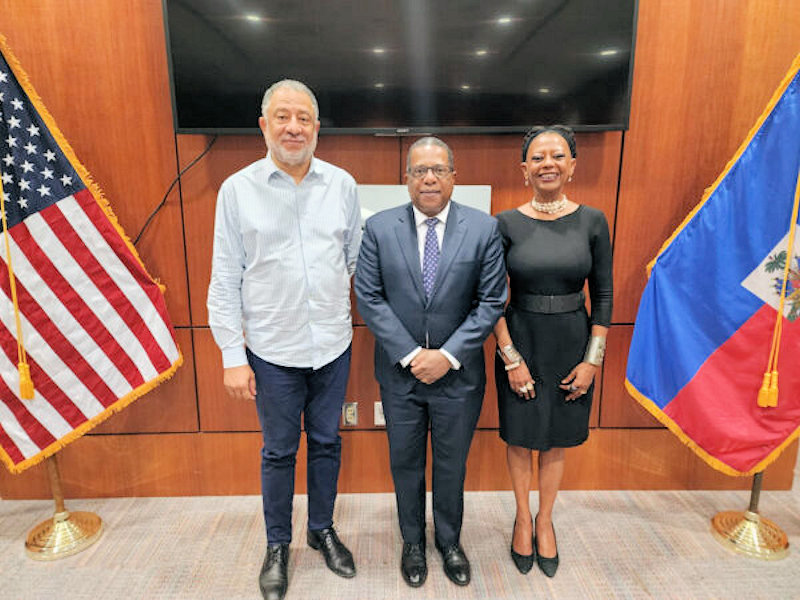
This hypocrisy is found throughout all of Haiti’s traditional political class, but one of the best examples is the Montana Accord coalition established in August 2021. The coalition was founded on the basis of finding a “Haitian-led” solution to the nation’s ongoing political void, now almost five years old, since the Jul. 7, 2021 assassination of President Jovenel Moïse. But it was in seventh heaven when Washington embraced it. Its political leaders, like Magali Comeau-Denis and Ted St. Dic, proudly posed for pictures with Brian Nichols and other State Department officials.
Today, Aristide has also joined this collaborationist current. Although as a liberation theologian priest he had declared that “capitalism is a mortal sin” and announced in his 1991 inauguration speech that his administration represented “Haiti’s second independence,” today he is the eminence grise advising Fils-Aimé, whom the Trump administration openly placed in power, even sanctioning Transitional Presidential Council (CPT) officials, like the Montana Accord’s Fritz Jean, if they dared to voice opposition to such brazen imperial arrogance.
In 2006, Ambassador Sanderson also embraced Boulon. “Fils-Aimé is a breath of fresh air, exhibiting an impressive combination of strategic vision and management sense,” gushed Sanderson in a Sep. 15, 2006 secret cable. When you find “the Great Satan” talking like this about you, it’s best to reflect on your position.
Of course, when Boulon didn’t completely follow the U.S. Embassy’s directives, Sanderson’s appreciation of him quickly dissipated. In September 2006, he began to have some disputes with Washington’s U.S. Agency for International Development (USAID), International Organization for Migration (IOM) and the MINUSTAH over how the disarmament was being carried out.
“Fils-Aimé declared at several points during the conversation that ‘the Government of Haiti is in charge of disarmament policy, not MINUSTAH,’” Sanderson reported in a Sep. 29, 2006 cable entitled “Rocky Start for DDR.” However, she quickly added: “We are not overly concerned with Fils-Aimé’s desire to exert control over the DDR process and the resulting tensions with MINUSTAH. Fils-Aimé, who is a strong personality in his own right, is also responding to direct pressure from Préval to quickly pacify Cité Soleil and resist perceived international efforts to limit Préval’s ability to devise ‘Haitian solutions’ to Haiti’s problems.” Her quotation marks around “Haitian solutions” shows how quaint an idea she considers that to be.
By June 2007, Sanderson was getting fed up with Boulon, as Port-au-Prince’s “gang” problem proved to be more intractable than she had first thought. In a Jun. 27, 2007 cable, she was all but dismissing his efforts as futile. “Fils-Aimé talks a good game, but the CNDDR cannot cite many tangible accomplishments,” she concluded.
So when a neocolonial puppet doesn’t live up to expectations or falls short of what is expected of him, he is dropped, or even sanctioned and punished, as the aforementioned CPT member Fritz Jean found out last year.
“When a local actor is eventually sanctioned by foreign powers, the population sometimes believes it is witnessing a historic moral rupture,” wrote Louissaint, in observing this phenomenon. But “those sanctions do not destroy the structure. They merely regulate certain actors within that structure.”
By reviewing Wikileaked cables from two decades ago, we can see the same neocolonial structure being enforced, using the same mechanisms, policies, and politicians, not just over time but from father to son.