


Roudy Choute, the number two in Haiti for the International Republican Institute (IRI) during the 2001-2004 coup d’état against President Jean-Bertrand Aristide and then a representative of President Michel Martelly’s Haitian Bald Headed Party (PHTK) a decade later, seems to be at the center of the mystery and scandal around $7 million that has gone missing in a major guns and ammunition deal between Haiti and a small Cayman Islands-based arms broker, Fencebridge Strategic Risk, LTD, headed by Bryan Seaver, the late Dolly Parton’s nephew
After Haïti Liberté broke the story about the deal last week, the Miami Herald published an investigation three days later reporting that “at least $7 million of Haitian public funds paid to acquire the weaponry is unaccounted for.”
According to documents obtained by the Herald, Haiti’s government wired two sums on Jan. 27, 2026 – $8,241,955 and $7,082,589.29, sent one minute apart – to a Citibank account set up by Ellie Soto, a Costa Rican-born, naturalized U.S. citizen who lives in Sugar Land, TX, a suburb of Houston, and works as an account manager and consultant with Tranmex LLC, an oil and gas wholesale company. The money was supposed to be held in escrow, for the benefit of Fencebridge, in a client trust (IOLTA) account controlled by Anthony Chukwuemeka Madu, 68, a Nigerian-born lawyer with a small legal firm in Orange, CA. Soto has acknowledged receiving the roughly $15.35 million.
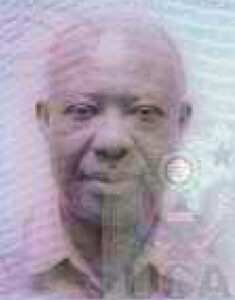
But Fencebridge never got the second, smaller sum. When the company inquired, Madu said he “only took orders from Ellie” – although she is not part of Fencebridge – and had sent her the entire balance, the Herald reported. Madu told the paper he “disposed the money according to the instructions” and invoked attorney-client privilege.
Now, Soto has disappeared, and calls and emails from Fencebridge, the Herald, and Haïti Liberté trying to track her down have gone unanswered.
That money represented a 70% down payment on a roughly $10 million deal for thousands of rifles, pistols, and “very specialized equipment,” Seaver told Haïti Liberté. It is a separate deal from the 32 tons of ammunition that Fencebridge delivered to the Port-au-Prince airport by a Boeing 707 jet from Peru on Sep. 16.
“This isn’t an industry that operates on credit – nothing in the arms business leaves Point A for Point B until it’s 100% paid for,” Seaver explained. “We had priced the contract out for maritime shipping only, but given the dire needs of the PNH [Haitian National Police], we expedited the shipping by chartering the cargo jet out of Peru at our own expense – $232k given the Hot LZ [landing zone] that PAP [Port-au-Prince] has turned into. The $7M that is missing is the initial 70% for the arms contract – separate from the ammo contract. We have a second shipment of 9mm [ammo] that is paid for shipping out sometime in the next week or so.”
Where did Madu and Soto come from?
So the big question is: how did an obscure California legal office and a random Texas oil distribution company employee get involved in a massive arms and ammunition sale?
The answer: officials from the de facto Haitian government insisted on it.
Seaver says that Roudy Choute “was the DG’s guy,” referring to the PNH Director General, Vladimir Paraison, the former head of presidential security who took over as chief of the force in August 2025.
Choute “was the intermediary between the DG, PM [Prime Minister Alix Didier Fils-Aimé], and the Finance Ministry for our ground liaison,” Seaver said. “Fencebridge’s understanding was that the Finance Ministry insisted on using Ellie and Madu to manage the escrow because we were a new company, instead of sending directly to us. Ellie and Madu still refuse to respond to us.”
Fencebridge had its own account at a U.S.-regulated bank in Puerto Rico. “I would love to know why the Haitian Finance Ministry trusted them more than our basic bank account in Puerto Rico,” Seaver said. But he acknowledged that he never dealt directly with the Finance Ministry. “Most of this has come from the DG and Roudy and the PM,” he said.

Roudy Choute, as the principal liaison between Fencebridge and the Haitian authorities, seems the most well-placed to know why the Haitian government wanted to use Madu and Soto. He translated that message when it was conveyed over the phone to Fencebridge, Seaver said. Choute has not returned Haïti Liberté‘s repeated calls and voice messages.
A veteran Finance Ministry official, contacted by Lynn Garrison (see below), said he did not know Choute, suggesting Choute holds no post there and is simply, as Seaver put it, Paraison’s man.
“He is the key,” Garrison said. “Because if I wanted to steal money, but if I don’t have somebody in finance, I can’t do a thing.”
According to Seaver, Choute now has his own theory. “His whole bit is, this is Ellie. Ellie has stolen the money,” Seaver said. “She’s a Costa Rican. Probably a Cuban spy, he says.”
It is a convenient explanation for a government official who was among those instructing and insisting that Fencebridge use her to get their payment.
The Herald reports that Justice Minister Patrick Pélissier, whose ministry oversees the PNH, signed off on two deals with Fencebridge but did not respond to requests for comment, and that officials would not say whether Haiti’s audit court (CSC/CA) ever reviewed the contract, as it is supposed to.
A long-time political operator
Choute’s political pedigree also suggests that he could be an architect, or at least an executor, of such a strange and unorthodox payment arrangement.
After starting his political life as a member of the Open the Barrier Party (PLB), founded by Renaud Bernadin in the early 1990s, Roudy Choute then became the second-in-command in Haiti of IRI, the Republican tentacle of the National Endowment for Democracy (NED), a CIA cut-out with the mission of carrying out U.S. political objectives internationally. Working under Stanley Lucas, he helped organize and foment regime-change organizations like the Group of 184 and the Democratic Convergence, which worked in tandem with the armed “rebels” of Guy Philippe and Louis-Jodel Chamblain to overthrow Aristide on Feb. 29, 2004.
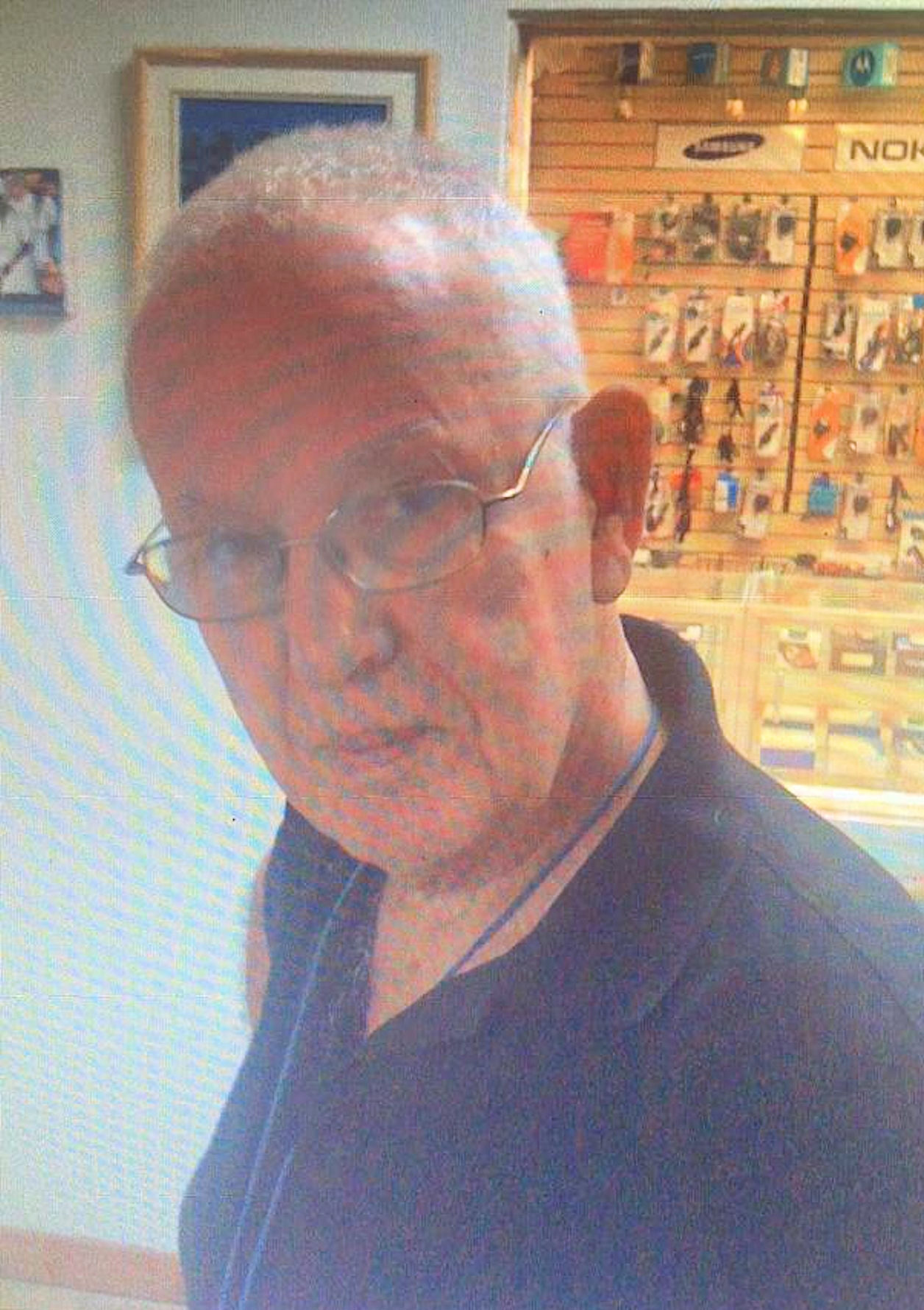
Then, still working for IRI, Choute traveled to and lived in Washington, DC for a couple of years before returning to Haiti.
In 2011, he became a representative of Martelly’s PHTK, where he was a devoted follower of the mercurial, controversial president, who was sanctioned by Washington in 2024 for drug trafficking. “The only thing we have is the president, and I’ll keep using him,” Choute told Vice News after 82% of Haitian voters would not or could not participate in the August 2015 legislative elections. The “elections were good enough to move on… Even if there are three votes, the one with two goes on. You can’t cancel the vote.”
In 2016, Haiti did, scrapping the fraud-riddled results of the October 2015 presidential first round.
Choute has now emerged, a decade later, as the right-hand man of Paraison, in handling a new group for an arms deal because of “the desire of the head of the police to cut ties with a longtime supplier,” as the Herald reported.
That well-established and large supplier was represented in Haiti by Lynn Garrison, a well-connected Canadian pilot who has lived in the country for decades. As Haïti Liberté reported last week, Garrison felt strongly that Paraison’s stiff-arm of his estimate, delivered in May, for guns and ammo was proof that there was corruption afoot. The disappearance of the $7 million transfer seems to confirm his suspicion.
The arithmetic of corruption
The numbers may explain why Paraison walked away from a supplier that the PNH had used for years.
Under the normal arrangement with his company (which he preferred not to be named), Garrison said, his entire commission was 6%, calculated only on the merchandise, not on shipping – about $1.5 million on a deal of this size. Even if every penny of that commission had been diverted, it would have been a small fraction of the $7 million that has now disappeared.
“It’s just crime,” Garrison said of the Soto-Madu arrangement. “You could do it so simply… through [my company], with less than 60 days, without having to pay an ex-Congressman $600,000.”
That is a reference to Mark Green, the Tennessee Republican who chaired the House Homeland Security Committee before resigning from Congress in July 2025 (and no relation to Fencebridge CFO Golden Green). According to the Herald, Green helped Fencebridge navigate U.S. export approvals for arms to embargoed Haiti. Strikingly, he says he billed his fees – $1,000,080 – to Ellie Soto, who has paid him $600,000. Green denies structuring the contract and says he holds none of the missing money. The Herald reports that Soto flew into Port-au-Prince from Miami on a Sept. 14, 2025 flight with her husband and another Tennessee businessman, around the time of Green’s own visit to Haiti.

Seaver said Green “may have created the paradigm” for the deal, “but I don’t think he’s taking any money.” Seaver also offers a more charitable explanation for why Paraison dropped Garrison’s company: “I think the reason was because we were cheaper. We mostly just kind of underbid it.” That may be. But as the Haitian proverb goes, “dèyè mòn gen mòn” – behind mountains, there are more mountains.
Novices in a practiced system
Fencebridge’s officers come across less as conspirators than as marks. First founded in Tennessee in 2015 and then re-incorporated in the Cayman Islands, this is Fencebridge’s first PNH contract. Seaver prides himself on valuing transparency in a sector – arms merchants – which is usually very secretive. Fencebridge denies ever offering or paying kickbacks to Haitian officials.
“We’re the ones that have been stolen from,” Seaver insisted. “It was supposed to be our escrow account… This is Fencebridge’s money being stolen.”
But it is also the Haitian people’s money. And if the de facto government’s officials, practiced in corruption, wanted to make $7 million vanish without leaving fingerprints, they could hardly have found better partners than a new, eager company with no history in Haiti. Fencebridge was told it was too new to be trusted with the money directly, so the money was steered instead to a Texas oil-company consultant and a California lawyer whom no Haitian official has publicly claimed to have chosen.
It is still speculation. But the indicators are mounting: officials insisting on unvetted intermediaries; a liaison with a long history of anti-democracy political operations who now blames a “Cuban spy”; and a longtime supplier pushed aside for an arrangement whose leakage dwarfs any normal commission.
Holding out hope
Despite having spoken at length to Garrison after Haïti Liberté‘s report last week, Seaver holds out hope that the money is still in the escrow account at the Citibank branch in Santa Ana, CA, which Madu and Soto opened.
Reminded that Madu told Fencebridge that he “had sent all the funds from that account to Ellie,” Seaver replied: “I don’t believe that.”

Photo: Fencebridge
Having failed to get answers from the bank by phone and email, Seaver plans to fly to California this week to visit the branch personally, as the officer designated on the escrow, to learn whether the $7 million was kept by Madu, transferred to Soto, or sent somewhere else. “This is a big bank,” he said. “They have a lot of responsibility here.”
If the money is gone, Seaver says, Fencebridge will sell the weapons elsewhere and walk away from Haiti, leaving the police without their rifles and “very specialized equipment,” and the Haitian people without their $7 million.
Meanwhile, neither Choute, Madu, nor Tranmex, the company where Soto works, have returned phone calls and emails from Haïti Liberté.