

(Français)
In Haiti, there is no better way for a government official to make a post profitable than to act as a middleman facilitating a deal. Preferably, a big one.
It’s not called a bribe. It’s a “service fee” or a “commission.”
That is what former Haitian Interior Minister Ardouin Zéphirin did when he was a special advisor to President Jovenel Moïse. He took to selling 9mm bullets that cost about 60 cents each for $5 apiece. That represents a 733% markup.
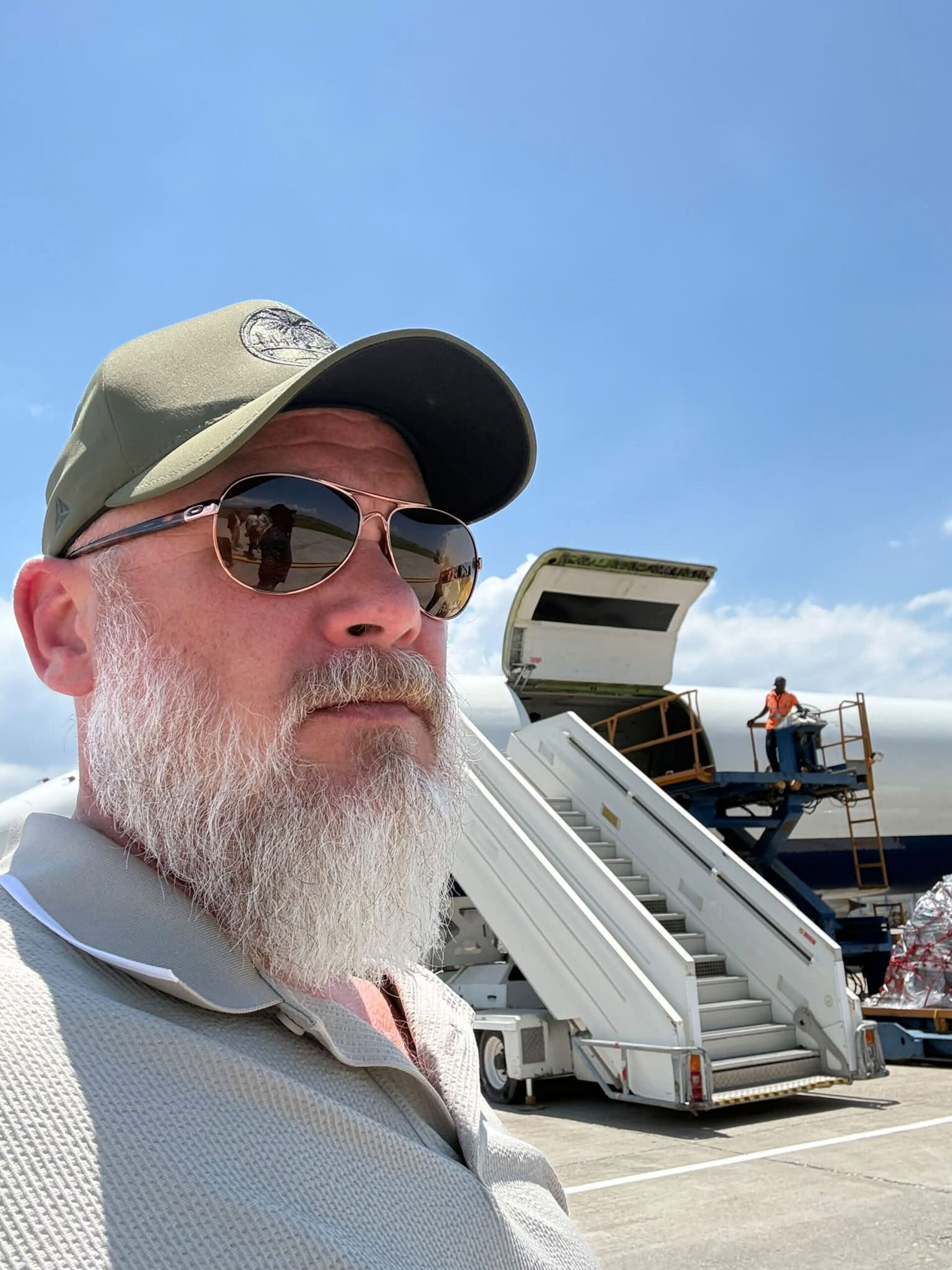
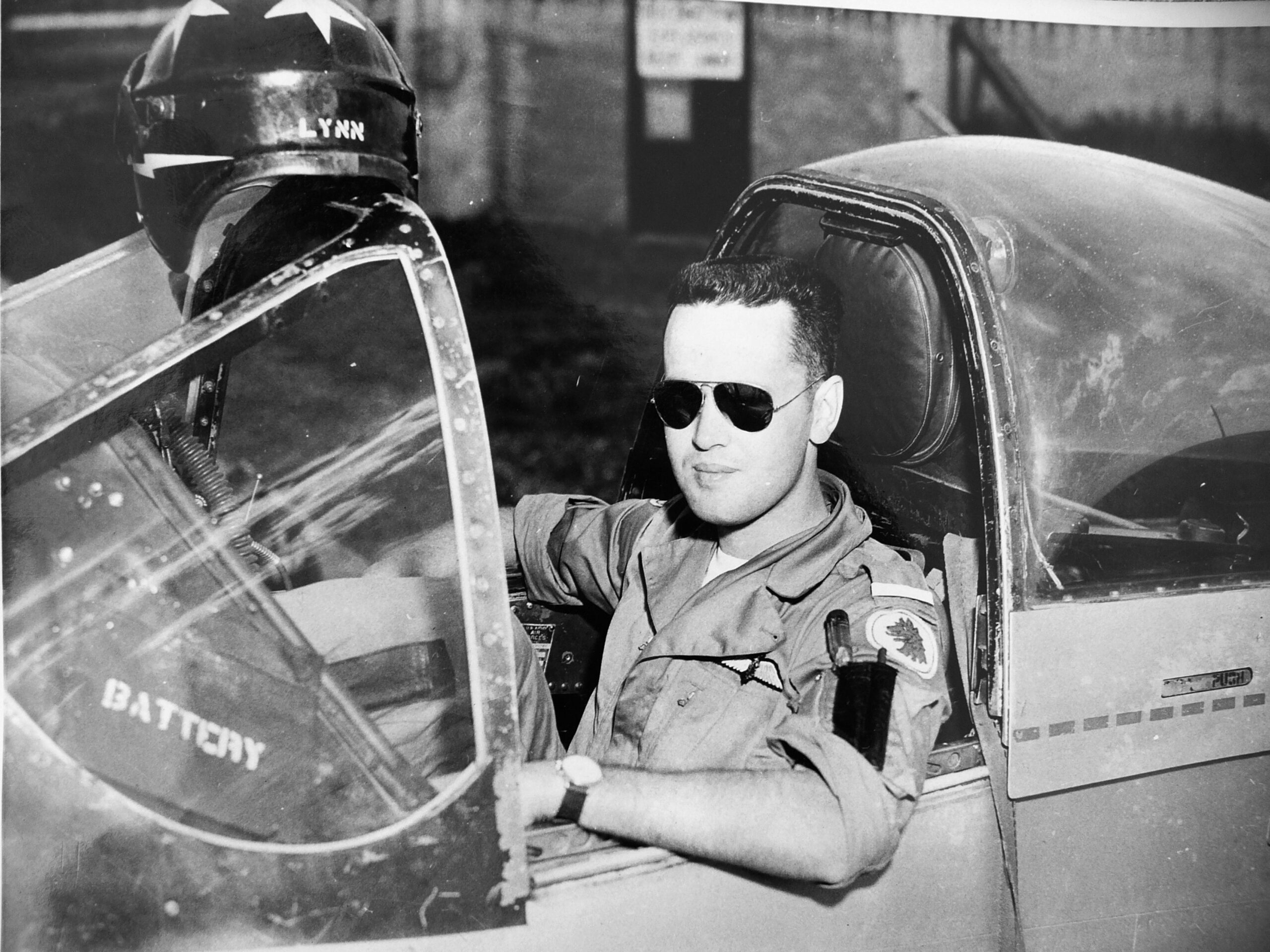
That anecdote is according to Lynn Garrison, 87, a former Canadian pilot, mercenary, and political advisor to the Haitian army officers who carried out the 1991 coup d’état, who has lived in Haiti for decades and is the sole representative there for one of the largest military supply and training companies in the U.S., a firm that holds the only standing U.S. export license to ship ammunition and weapons to Haiti.
Since 2019, “Haiti is a proscribed destination under § 126.1 of the International Traffic in Arms Regulations (ITAR), meaning defense articles and defense service transfers to that country are subject to a policy of denial, with limited case-by-case exceptions,” a U.S. State Department spokesman told Haïti Liberté.
In other words, there is, officially, a complete arms embargo on Haiti, even to the Haitian National Police (PNH), except for what the U.S. State Department approves. And those sales have to go through Garrison… usually.
Bullets and Guns Are On the Way
In recent years, the PNH has been habitually short on ammunition due to a procurement process that has been plagued by corruption and bureaucracy, not only among its brass, but also in the State Department’s Bureau of International Narcotics and Law Enforcement Affairs (INL), as Garrison has often denounced on his website haitian-truth.org.
So in May, Garrison received a request from the PNH for a price quote for nine million bullets of different calibers (three million rounds each of 7.62mm, 5.56mm, and 9mm), 5,000 rifles, and 1,500 Glock pistols for the PNH and Haitian Armed Forces (FAdH). On May 29, Garrison gave the government pro-forma documents spelling out how the merchandise and shipping to Haiti would cost $26,682,937.50 – that is $25,172,582.55 with an additional 6% agent’s commission set and closely monitored by the State Department, precisely to counter scalping like that which Zéphirin is alleged to have done.
“I only keep 1% of the commission, giving the other 5% back to the government to do with as they please,” explained Garrison, a widower who lives with his late wife’s sister in a modest art-filled home in the Pèlerin district above Pétionville, not far from the house where President Jovenel Moïse was assassinated on Jul. 7, 2021. “That 6% comes to about $1.5 million, so there’s plenty to go around.”
Nonetheless, he never heard back from the government and didn’t know why, until this past week.
Enter Fencebridge
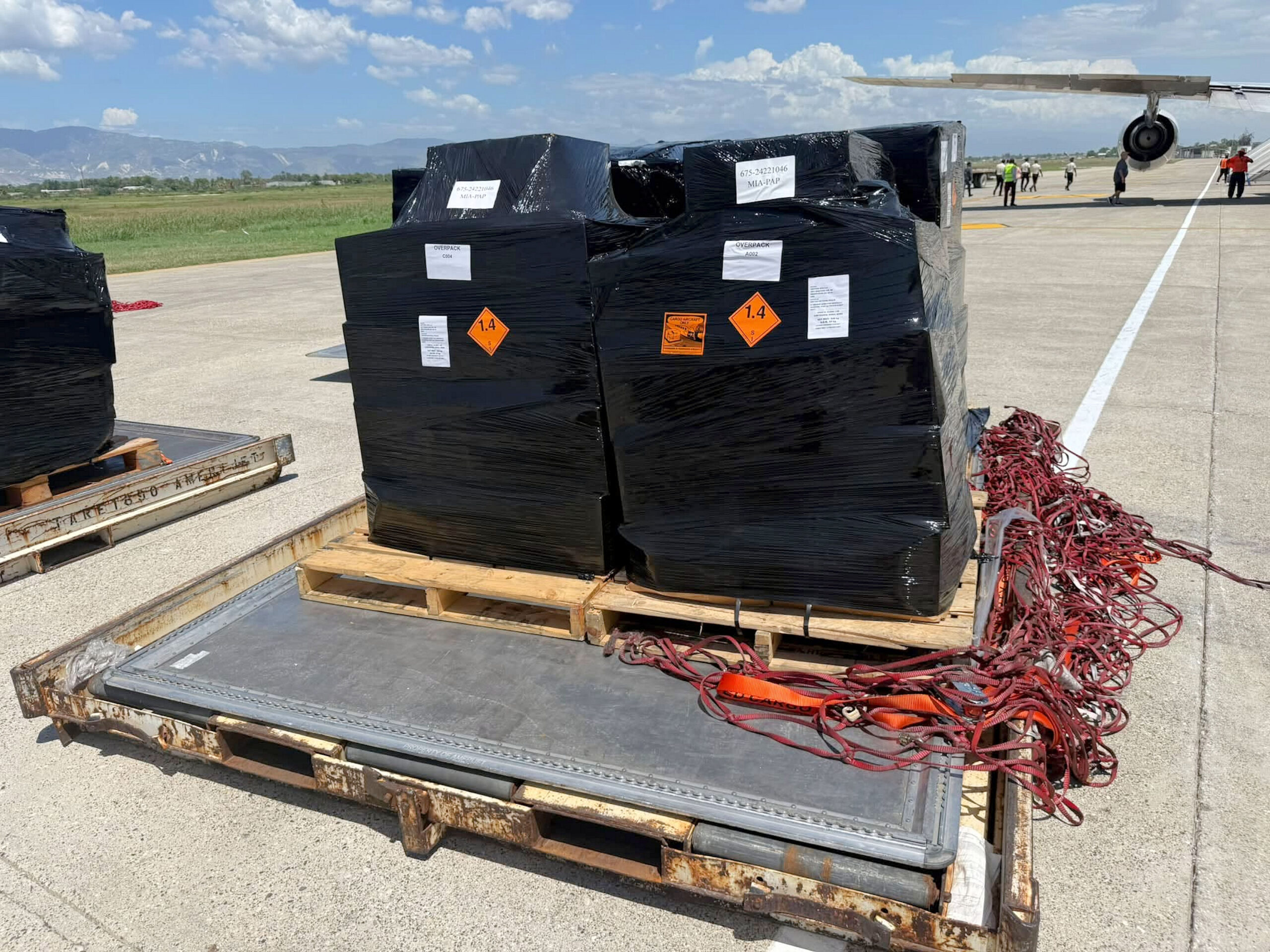
On Sep. 16, a privately chartered cargo plane touched down and dropped off 32 tons of ammunition, wrapped in black plastic on wooden pallets, on the tarmac at Port-au-Prince’s Toussaint Louverture International Airport. Bryan Seaver, 49, the nephew, family spokesman, and security chief for the late singer and songwriter Dolly Parton (who died on Aug. 25), was there to greet the shipment. He is the CEO of Fencebridge Strategic Risk, LTD, a Cayman Islands-based company which is a “U.S. State Department broker,” meaning “we have to have a broker’s license, not a dealer’s license, not an export license,” he explained to Haïti Liberté. “Because we are United States citizens, we still have to register as an ITAR broker, but we’re not an exporter. We have another vendor that’s involved in that.”
That other vendor is Historic MVS, LLC, an Atlanta-based company that sells ammunition, launch vehicles, guided missiles, ballistic missiles, rockets, torpedoes, bombs and mines, explosives and energetic materials, propellants, incendiary agents and their constituents, armored cars, all ground vehicles, and personal protective equipment.
“They are our exporter and vendor for ammunition and arms,” Seaver said. “We still have to deliver multiple outstanding orders, but that first order has definitely been delivered. We are in business with Haiti.”
The massive arms and ammo sale only came to light because entertainment publications like TMZ and Variety published sensationalist articles on Sep. 22 after Parton’s manager, Danny Nozell, filed a restraining order against Seaver for “terrorizing” text messages that are now part of a lawsuit between the two men. The court documents in that case include an Exhibit 2 in which Seaver texted: “I just sold 29 million dollars worth of ammo to Haiti” and “I’m not exactly a media person. I’m literally an international arms dealer and mercenary.”
When asked about the $29 million figure, Seaver explained: “No, that was a typo. It was a delivery of 29,000 kilograms of ammunition.”

In fact, the total deal that Fencebridge has with the PNH is about $24 million, comprising ammo and guns, explained Andrew Day, Fencebridge’s COO, who also flew with Seaver to Port-au-Prince. “We have a weapons contract right now,” he said, adding that it involves the “same kind of numbers” as the 5,000 rifles and 1,500 Glocks in Garrison’s price quote. The next delivery should come “within the next month,” Day said. “If all goes according to plans.”
The first planeload was only a fraction of the order. Three million rounds each of the three calibers would weigh roughly 134 tons before packaging, about four times the 32 tons that landed in Port-au-Prince. Day confirmed the shipment was “shy of that,” mostly “a little heavier stuff… That’s how they could fit on the plane.” He declined to give a breakdown by caliber or price. “The gangs read your paper too,” he said.
Why Shop Elsewhere?
Fencebridge’s deal raises an obvious question. The PNH and the government of de facto Prime Minister Alix Didier Fils-Aimé had in hand, since May 29, a complete price quote from a long-established supplier with a standing State Department license, a warehouse full of ammunition, and a commission whose distribution the State Department polices. Why didn’t they place the order?
Garrison has no doubt about the answer. “To make money,” he said.
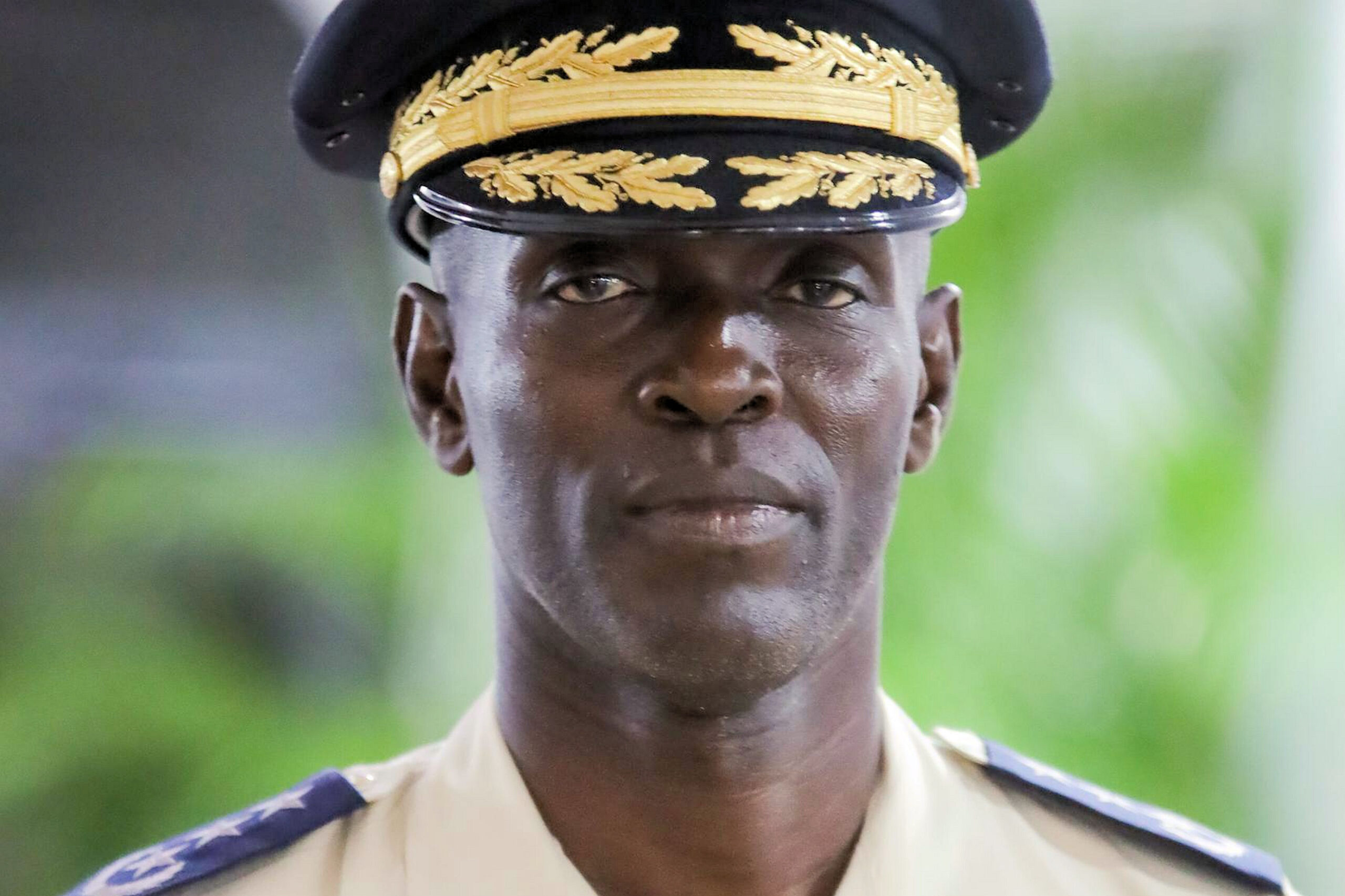
According to Garrison, PNH Director General Vladimir Paraison “has avoided contact with the American organization [he represents] for several months and has been trying to purchase ammunition through other non-recognized sources.” Paraison and some of his associates, he said, “think they can do it. And people in the States tell them they can do it.”
Garrison points to an episode this spring as a sign that something was amiss. The foundation of the company he represents had offered to fund a hospital for PNH officers and their families. “On April 16, Paraison was supposed to have a meeting on that,” Garrison said. “He never showed up.” To Garrison, a police chief who skips a meeting about a free hospital for his own officers is a police chief more interested in a different kind of deal, one where the price can be “padded.”
Meanwhile, Garrison says, the PNH’s ammunition crisis has dragged on. “Police officers have died because of this,” he said. “We would put the ammunition on Amerijet tomorrow. … We have the ammunition sitting on the floor in our warehouse.” The company recently shipped 75 forty-foot containers of ammunition to Israel, he added.
How a Bill Gets Padded
Garrison explains that padding an arms deal is not complicated. In the Zéphirin-era scheme, he said, the purchasers “never sent all the money” to the supplier. “They’d send x rather than 3x and they just keep the 2x here,” while “the bill would be made out for $5 a round.”
The same logic applies to rifles. “Let’s say they’re $2,400. So they charge $3,400,” Garrison said, noting that cut-rate AR-15s can be had for as little as $249, “but they’re garbage.” With sums as large as these, he said, a cooperative supplier can “make another extra hundred or two hundred thousand and you make a couple of million.” Officials might even “create an LLC” in the U.S. to act as an intermediary, he said.
That is exactly what the State Department’s licensing arrangement is meant to prevent. Garrison says that when he once asked his principals to add “six cents per round” to a quote, he was told it was impossible because the State Department “authorizes everything.”
Fencebridge’s roughly $24 million contract is, on its face, somewhat cheaper than Garrison’s $26.7 million quote. But without a breakdown of quantities, calibers, and the makes of the weapons, which Fencebridge declined to provide, there is no way to know what Haiti is getting for its money. Garrison estimates that nine million rounds should cost about $10 to $11 million. He suspects the markup in the Fencebridge deal is “100%, 200%,” though he offered no documents to support that estimate. “You don’t do a crime for peanuts,” he said.
Garrison also says Paraison has taken money before. During the period of the Transitional Presidential Council, when Paraison commanded the National Palace security unit (USGPN), Garrison says Paraison persuaded businesswoman Magali Habitant, who had “nothing to contribute” to a deal Garrison’s group was then discussing, that she had to pay him $200,000 to take part. “She did,” Garrison said, though he acknowledged he knows this only because “she told me that. I didn’t see the bank records.” Habitant, a former director general of Haiti’s National Solid Waste Management Service (SNGRS), was arrested last year, is now jailed awaiting criminal trial, and could not be reached. Garrison believes Haiti’s Anti-Corruption Unit (ULCC) “should look at this one.”
Is It Even Legal?
Garrison and his principals also question whether Fencebridge’s deal is legal. “Anything that involves the Cayman Islands in a deal like this is probably illegal,” Garrison said. “They’re trying to avoid American laws. … You make a deal with an American group, they ship it under their export license from an American port. You can’t be dealing with somebody in the Cayman Islands to buy ammunition in the States to get it to Haiti. You don’t get there from here.”

“We don’t believe they have a legitimate export license to ship ammunition from the States to Haiti,” Garrison said. Historic MVS’s export registration has been renewed through June 1, 2029, but Garrison suggests it may cover only military vehicles, not ammunition and small arms. A review of Fencebridge by his principals, he said, found “a nothing thing” with “no background, no experience, no business record, run by a couple of low-level ex-military people.”
“To go around us, it has to be criminal because we’re very straightforward,” Garrison said. “I think it’s criminal myself, but I don’t know.”
Fencebridge tells a different story. Day said that he has been “importing and exporting firearms to conflict zones for the entirety of my adult life,” and that Fencebridge, which has been working “in and out of Haiti” since 2022, began talking to Paraison in the late summer of 2025. “Haiti is embargoed. We definitely had to ask for permission, specialized permission,” Day said. Historic MVS is registered as the exporter, Fencebridge as the broker, and each contract requires its own license, which in this case “took months,” all within 2026. Fencebridge also sources ammunition from Turkey, Day said.
The State Department’s own statement leaves room for such “case-by-case exceptions,” and a July 2025 revision of the ITAR rule on Haiti expressly allows licenses to be considered for security units commanded by the Haitian government. Whether one was granted here, and on what terms, is something only the State Department can confirm. Garrison, it should be noted, represents the supplier that lost the business.
For his part, Day presented Paraison as a man in a hurry: “He wants to get rid of this gang problem.”
Neither Paraison nor Fils-Aimé responded to Haïti Liberté‘s requests for comment by press time. Henry Wooster, who served as U.S. chargé d’affaires in Port-au-Prince until this summer, replied that he had “completed my assignment in Haiti” and referred questions to the U.S. Embassy.
The questions remain. Why did Haiti’s police chief walk away from a licensed supplier’s quote and skip a meeting about a free hospital for his officers, only to sign a $24 million deal with a little-known Cayman Islands broker? Is it, as Garrison believes, because a deal through him would not leave room for the kind of “service fee” that has long greased Haiti’s arms purchases?