
(Français)
“The history of all hitherto existing society is the history of class struggles,” wrote Karl Marx and Frederick Englels in 1847 in the opening lines of The Communist Manifesto. “Freeman and slave, patrician and plebeian, lord and serf, guild-master and journeyman, in a word, oppressor and oppressed, stood in constant opposition to one another, carried on an uninterrupted, now hidden, now open fight, a fight that each time ended, either in a revolutionary reconstitution of society at large, or in the common ruin of the contending classes.”
Now almost 180 years later, we are witnessing Western capitalism’s final imperialist stage, characterized by spreading war and turmoil worldwide. In Haiti, there is a bitter struggle between Haiti’s ruling class – primarily U.S. capitalists along with their Haitian comprador bourgeoisie handmaidens – against the teeming proletariat, lumpen-proletariat, and peasantry, which has been exploited, oppressed, impoverished, ruined, uprooted, massacred, and marginalized for over a century.
Haiti’s masses tried to carry out political revolutions via the ballot box in 1990 and 2000 with the election of former liberation theologian priest Jean-Bertrand Aristide, but both attempts were turned back by coups d’état followed by foreign military invasions and occupations. The slogan which galvanized this Lavalas movement was “Tout moun se moun” (Everybody is a person.)
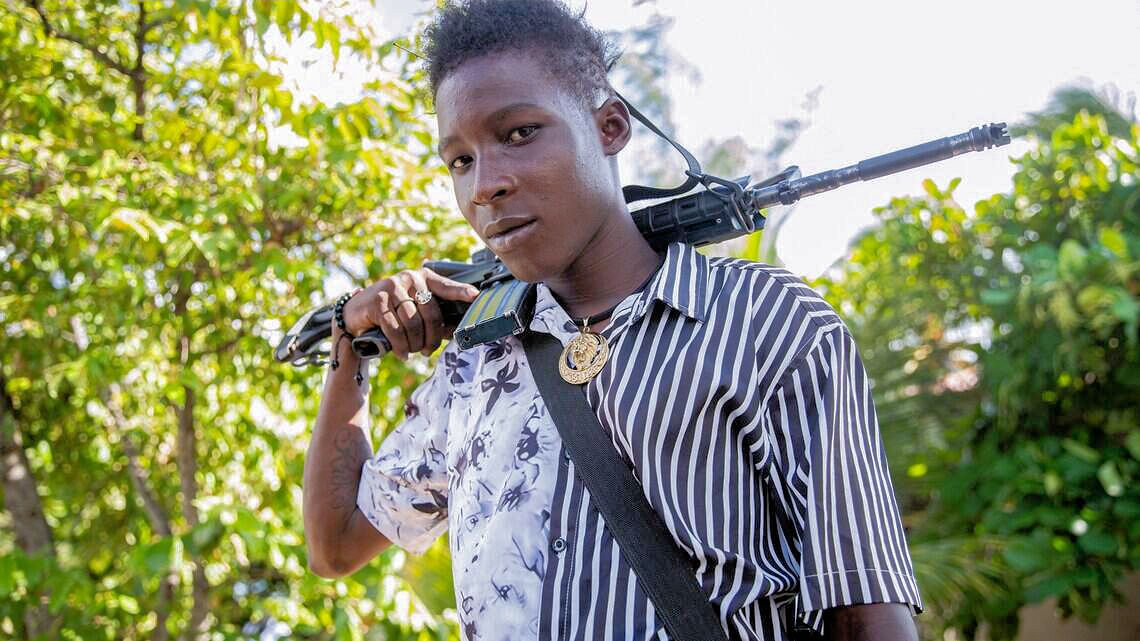
Now groups of men from Haiti’s slums and growing swaths of the countryside have taken up arms. Despite past and present coalitions, each neighborhood armed group is autonomous, having different levels of political consciousness and organization. Some are fighting “to get their share” while others seek “system change” and a social revolution, where control of the state and ownership of the means of production would change hands.
The ruling class classifies all armed groups not working for it as “gangs,” “criminals,” and “terrorists.” Haitian intellectual Kervens Louissaint calls Haiti’s current government the “Affranchi State,” by which he means the rule of the comprador bourgeoisie whose ancestors, the affranchi (propertied freed men), assassinated in 1806 Haiti’s founding father Jean-Jacques Dessalines, who had a revolutionary working-class vision for Haitian society.
Whether Haiti will attain a “revolutionary reconstitution of society” or will end “in the common ruin of the contending classes” remains to be seen. But a starting point for Haiti’s transformation begins with language and the framing of its problems. This is what Louissaint addresses in the following analysis.
Kim Ives
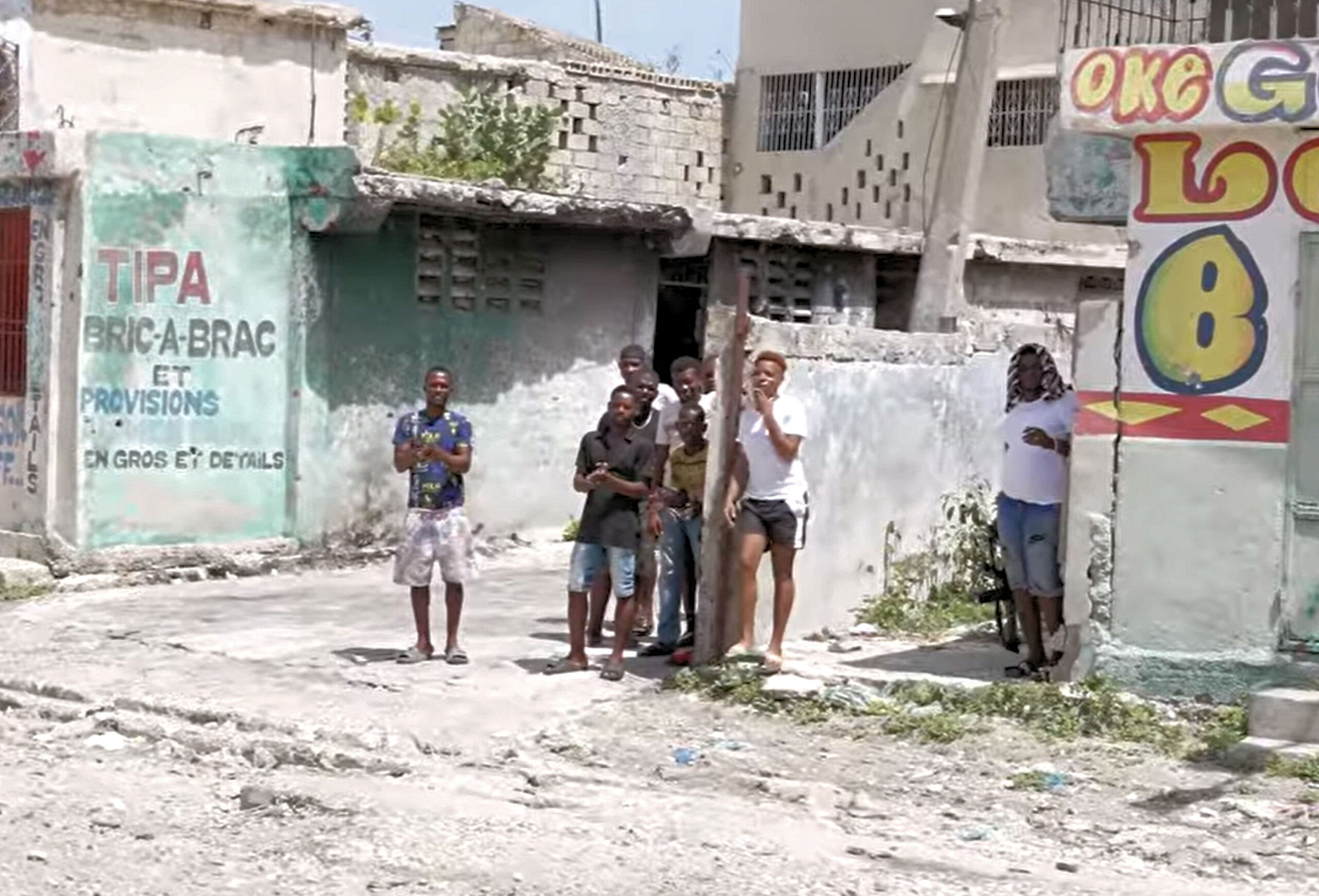
Today, I want to you to think about those whom the Affranchi State classifies, defines, and compresses into a single word: “Gang.”
I have not come to justify acts of violence, nor to erase the victims, nor to romanticize the gun. I have come to ask a question: What happens to a society when it stops seeing the human being behind the categories it creates?
Because before the “gang” or the “bandit,” there is a human being. Before the police file, the newspaper headline, the political speech, and the statistic, there is a body, a memory, a desire to live, a history, a need to be recognized, a fear, a family, and a consciousness.
We are human. That does not mean all actions are equal nor that responsibility disappears. It means that no label should ever possess the power to strip a human being of their humanity.
DISTINCTION ➔ DISTANCE ➔ INTOLERANCE ➔ CONFLICT.
The first movement appears innocent:“Us” and “Them.” But when distinction becomes absolute, it produces distance.
When distance grows, we no longer feel the need to understand the other.
When we no longer feel the need to understand the other, intolerance becomes easier.
And when the other no longer appears before us as a human being, violence can begin to appear normal. That is how a word becomes a wall.
“Gang.” “Bandit.” “Criminal.” “Enemy.”
Words can describe acts. But words can also do something far more dangerous. They can transform the criminal act into the total value of the human being who committed it. And that is where consciousness stands at the center of the problem.
Who gives the name? From what position is the name given? What power does that name produce? Whom does it make visible and whom invisible? What does the label allow us to stop trying to understand? What are we all participating in producing? Who creates the conditions? Who profits from them? Who supplies the weapons? Who provides the money? Who gives the orders? Who provides protection? Who confers legitimacy? Who provides the silence?
Who manufactures the discourse that makes some people appear human while others are made to appear as things?
When a State calls a group a “gang,” the question is not merely whether certain group members commit crimes. The deeper question is: What does that category produce within the collective consciousness?
We are going to dissect the word, decipher its function, and decode its power. Because a category does not merely describe reality; it manufactures the way we perceive reality.
When you call someone “gang,” are you describing a criminal act? Or have you already transformed the person’s entire existence into that criminal act?
When a human being becomes nothing more than a “bandit,” “criminal,” “terrorist,” “enemy,” what remains inside our consciousness? Do we still see a person? Or has the label already performed the work of dehumanization?
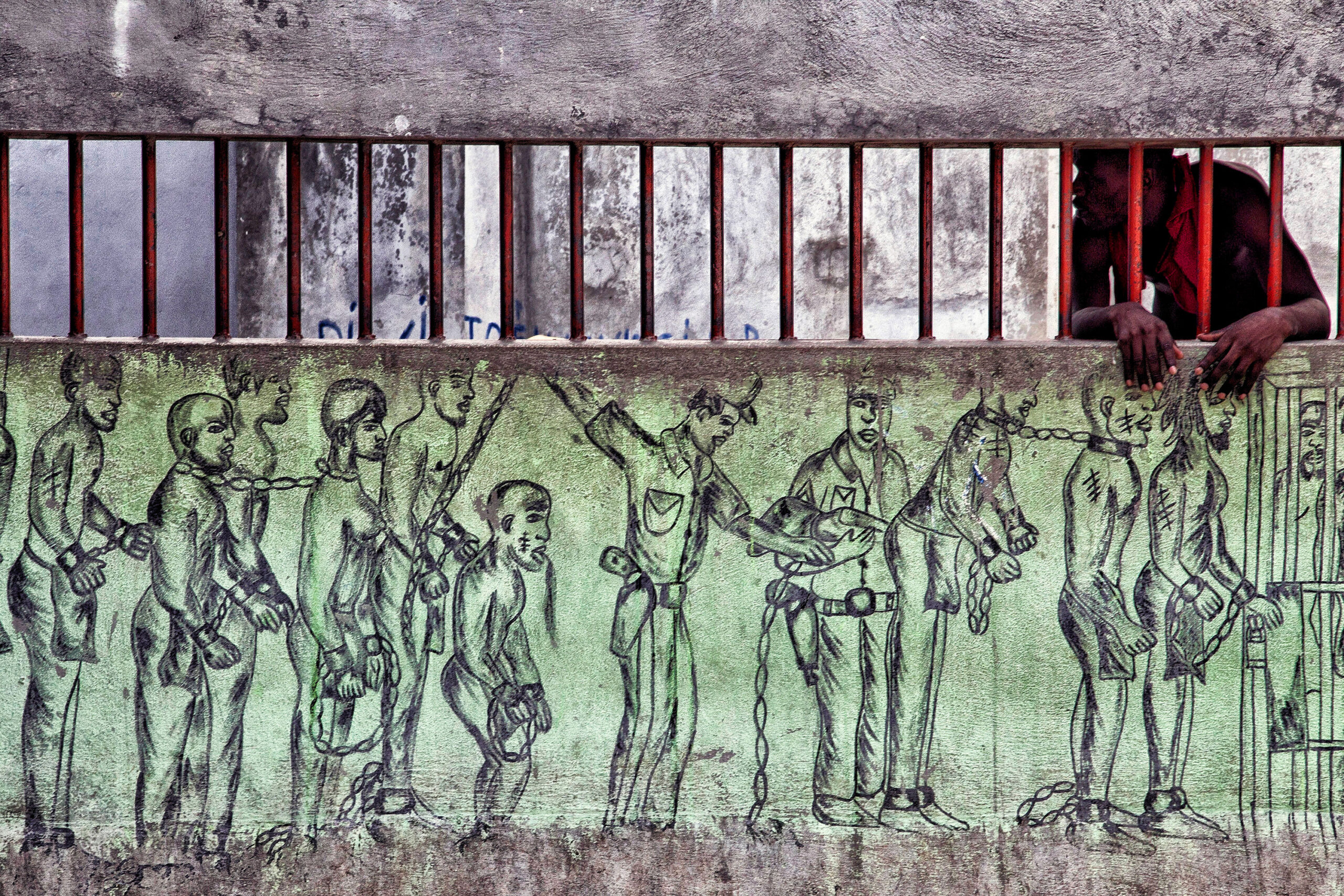
We can condemn the criminal act without abolishing the human being. We can demand justice without demanding dehumanization. We can demand security without manufacturing an entire category of people whom we treat as social waste.
We can tell someone “What you did is unacceptable” without crossing into “You, as a human being, are worthless.” Because when a society removes the humanity of those it considers threats, it reproduces the very logic it claims to oppose: to reduce the human being into an object, a target, something to be eliminated.
We begin with: “We are not like them.” Then: “We do not need to understand them.” Then: “We do not need to speak to them.” Then: “They do not deserve the same rights we do.” And finally: “They must disappear.”
This is how a society prepares its consciousness for violence before the first bullet is ever fired. But who manufactured the “them”? Before there was a “them,” there were human beings. A child. A family. A neighborhood. Hunger. Humiliation. A desire for power. A memory. A choice. A structure. A market. A weapon. An interest. A human being who learned that force was a language.
None of this justifies crime.
I repeat: to understand is not to justify. But a society that refuses to understand what it produces condemns itself to reproduce it. I refuse that logic.
To those who are called “gangs,” I see human beings before I see the category that has been placed upon you.
That does not mean I agree with criminal acts that kill, kidnap, rape, burn homes, displace families, or destroy lives. I do not erase the people you have kidnapped, the children you have killed, the women you have raped, the homes you have burned, the families you have displaced, or the fear you have driven into the body of a people.
No. Because recognizing someone’s humanity does not mean removing their responsibility. On the contrary. It is precisely because you are human that I can demand that you answer for what you have done. An animal does not stand trial. An object does not make moral choices.
But a human being can answer, reflect, change direction, negotiate, repair, lay down a weapon, or re-enter society differently.
That is why I say: to humanize is not to declare innocent. Imagining another future does not mean forgetting the victims. Understanding does not mean justifying. Justice does not require dehumanization in order to exist.
If Haiti wants to escape the cycle of violence, then we must also dismantle the machine that produces distance. Because distinction produces distance, which then becomes intolerance, which begets dehumanization, which leads to violence, which turns to revenge, and results in new violence. And the cycle begins again.
How do we create a society in which recognition no longer has to pass through the barrel of a gun?
That is why I propose an alternative chain of events: recognition, to proximity, to dialogue, to responsibility, to justice, to reintegration, to possible peace.
I am not asking anyone to forget the blood that has already been spilled. I am asking us not to transform the already spilled blood into the justification for infinitely more blood.
I am not asking the State to abandon security. I am asking that security not become a theology in which some people are classified as human beings while others are classified as things.
I am not asking those who carry weapons to believe my discourse. I am asking them to look at themselves again as human beings capable of making another choice. Because a weapon can give you the capacity to make others afraid. But it cannot give you a lasting place in the world.
Is the weapon a tool has it become your identity? If all your value depends upon your ability to make another human being tremble, is that power, or is it another form of mental prison? A person who needs the fear of others in order to exist in their own eyes is not truly free. They become a prisoner of the very image they created.
Can you imagine yourselves without the weapon? If the answer is no, then the weapon is no longer only in your hands. It has entered your consciousness. And that is where the first disarmament must begin.
Not only: the weapon leaving the hand. But also: the weapon leaving the way a person understands themselves, and the way we have learned to see one another. Power that exists only through fear must reproduce fear every single day in order to continue existing. That, too, is a prison.
That is why my message is not: “Us against them.” My message is: What are we all producing together? What system, what memories, what wounds, what interests, what exclusions, what economy, what discourse, what power structures, and what choices?
What makes a young person reach the point where a weapon appears to be the only language through which society will recognize their existence? And once we ask that question, another, more difficult question appears: How do we create a society in which recognition no longer has to pass through the barrel of a gun?
That is where politics must begin, where the State must begin, and where the community must begin. And that is where the person carrying the weapon must begin as well.
Because at the end of my analysis, I return to the simplest principle: We are human. Distinction does not have to become distance. Distance does not have to become intolerance. Intolerance does not have to become conflict.
A society can manufacture its own enemy, and then use the existence of that enemy as proof that it was right to manufacture him in the first place. There can be no peace without responsibility. But there can be no lasting peace through dehumanization either.
To those who are called “gangs,” I say: I have not come to worship you, to fear you, or to justify you. I have come to look directly at you before the tribunal of my own consciousness and say: I refuse to strip you of your humanity in order to condemn your actions. I can do both. I can see the human being, and I can judge the act. That is what a consciousness that is not imprisoned by labels must be capable of doing.
To the State, I say: You have no right to demand humanity from a people while practicing dehumanization as public policy.
To those who carry weapons, I say: You have no right to ask society to recognize your humanity while you strip others of theirs at gunpoint.
To the ruling class, I say: You have no right to condemn the disorder you helped finance, organize, sustain, or profit from.
To society: We have no right to demand peace while continuing to manufacture categories of human beings whom we consider unworthy of dialogue, justice, or return.
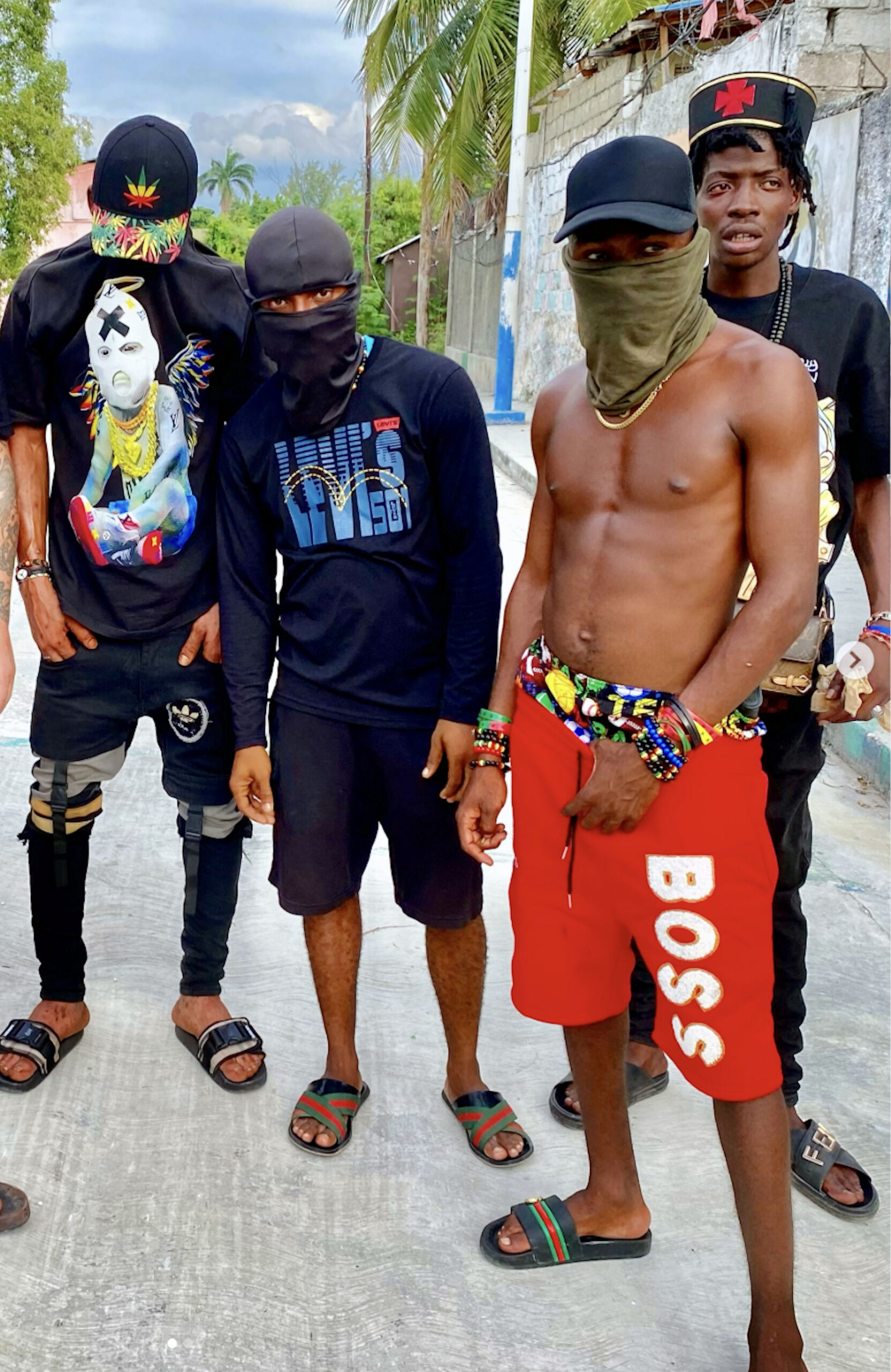
We are not searching for one single culprit onto whom every evil can be placed, but to rather to identify all the relationships that produce the harm, including exploitation, oppression, demonization, and marginalization.
We must ask everyone: What is your part in it? Because the greatest lie a system can tell is: “The entire problem is the other,” or in this case “the gangs.”
This is where the consciousness I am bringing forward stands. I am not asking: Who must we eliminate? I am asking: What system must we transform so that we stop producing the people we will claim we need to eliminate tomorrow?
And I do not ask only those carrying weapons: When will you lay down your guns? I ask the entire society: When will we lay down the logic that constantly needs to manufacture an “Other” as an enemy in order for us to define ourselves?
Because the first war does not always begin with a weapon. It begins with categorization, with labels, with language. It begins when one human being says: “He is not one of us.” That is where the first wall rises, where distance is born, where intolerance finds its soil, and where conflict finds its language.
And so my message before the Tribunal of Consciousness remains simple: We are all human.
Precisely because we are all human that we can all be judged, we can all change, we can all answer for our actions, and we can all transform what we have produced.
No label should ever take the place of consciousness. Because the moment a word causes us to stop seeing the human being, that word has already begun to think in our place. And I refuse to surrender the sovereignty of my consciousness to any label.
No category is immune from scrutiny. No power stands above questioning. No act stands above responsibility. No human being stands beneath humanity.