

(Français)
The following article was written during the week before the night of Aug. 23-24, 2026, when armed men and possibly drones killed an estimated 47 people and wounded 22 others in the immediate vicinity of the Kenscoff Police Station, according to the United Nations Human Rights Office (OHCHR).
Wilner Joseph, a highly placed advisor to de facto Prime Minister Alix Didier Fils-Aimé, asserted that this violence was “planned and organized” by Police Inspector Nickenson Cadet, who was the Kenscoff Police Chief at that time.
Meanwhile, protestors in a large demonstration outside the Kenscoff Police Station after the violence also accused Cadet of orchestrating the violence with an armed group and called for his removal as Kenscoff police chief. Haitian National Police (PNH) Director General Vladimir Paraison was forced by the popular outcry to replace him in that post with Police Commissioner Jean-Pierre Ketler Mariceau on Aug. 27.
The Fils-Aimé government bears major responsibility for the tragedy because it knew, as Joseph’s testimony reveals, that a confrontation was brewing and that violence was going to erupt in a power struggle between Inspector Cadet and Kenscoff’s Mayor Jean Massillon.
It is well established that the PNH works closely with numerous paramilitary armed groups called “brigades” which it arms, provisions, and pays, just as has been done over past decades by other national police forces and armies facing popular insurrections in Latin America, most clearly in Colombia and El Salvador. In Haiti from 1986 to 1990, as neo-Duvalierist regimes battled a growing democracy movement, these police-supported paramilitaries which carried out massacres were called “attachés,” meaning “attached” to the police force.
In early August, a family in Thomassin, a town about eight miles north, down the mountains toward Port-au-Prince from Kenscoff, reached out to Haïti Liberté to investigate the disappearance of a young family member whom they believe the PNH and local “brigades” kidnapped and likely killed. Here is their story.
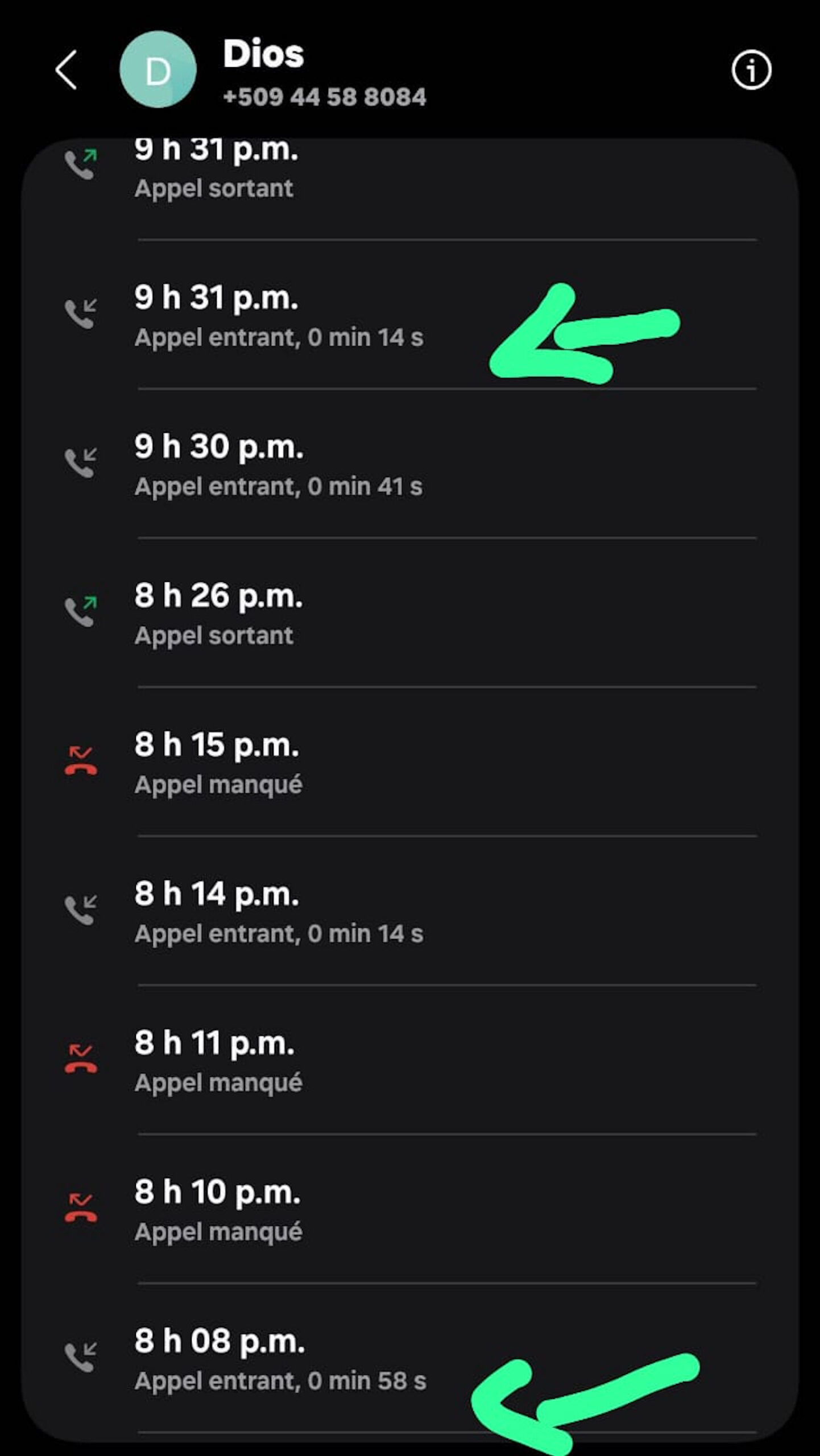
At 8:08 p.m. on Sat., Sep. 20, 2025,, Djanina Dérise, 33, received an alarming phone call while at home with her four-year-old son. It was her cousin, Dios Francoeur, 27, who lived with her. He was in trouble.
On his way home from dropping off a girl in Kenscoff, he rode his motorcycle to a market in Fermathe to have a Pica Pollo chicken meal. Wanting Dios to pick up food for her hungry son, Djanina called Dios 13 times from 7:32 p.m. to 7:49 p.m., but he did not answer. She figured that when he saw the missed calls, he’d phone her back.

When he finally did call her 30 minutes later, he was panicked. “My cousin, I know I’m not involved in anything, and I don’t know what they think I’ve done, but two cops have arrested me and taken me to Thomassin. Come quickly!”
She immediately got dressed, called her mother to accompany her, and the two women left her home in Thomassin’s Soisson neighborhood, in the 5,000-foot mountains above Port-au-Prince, and drove on a motorcycle to the police station.
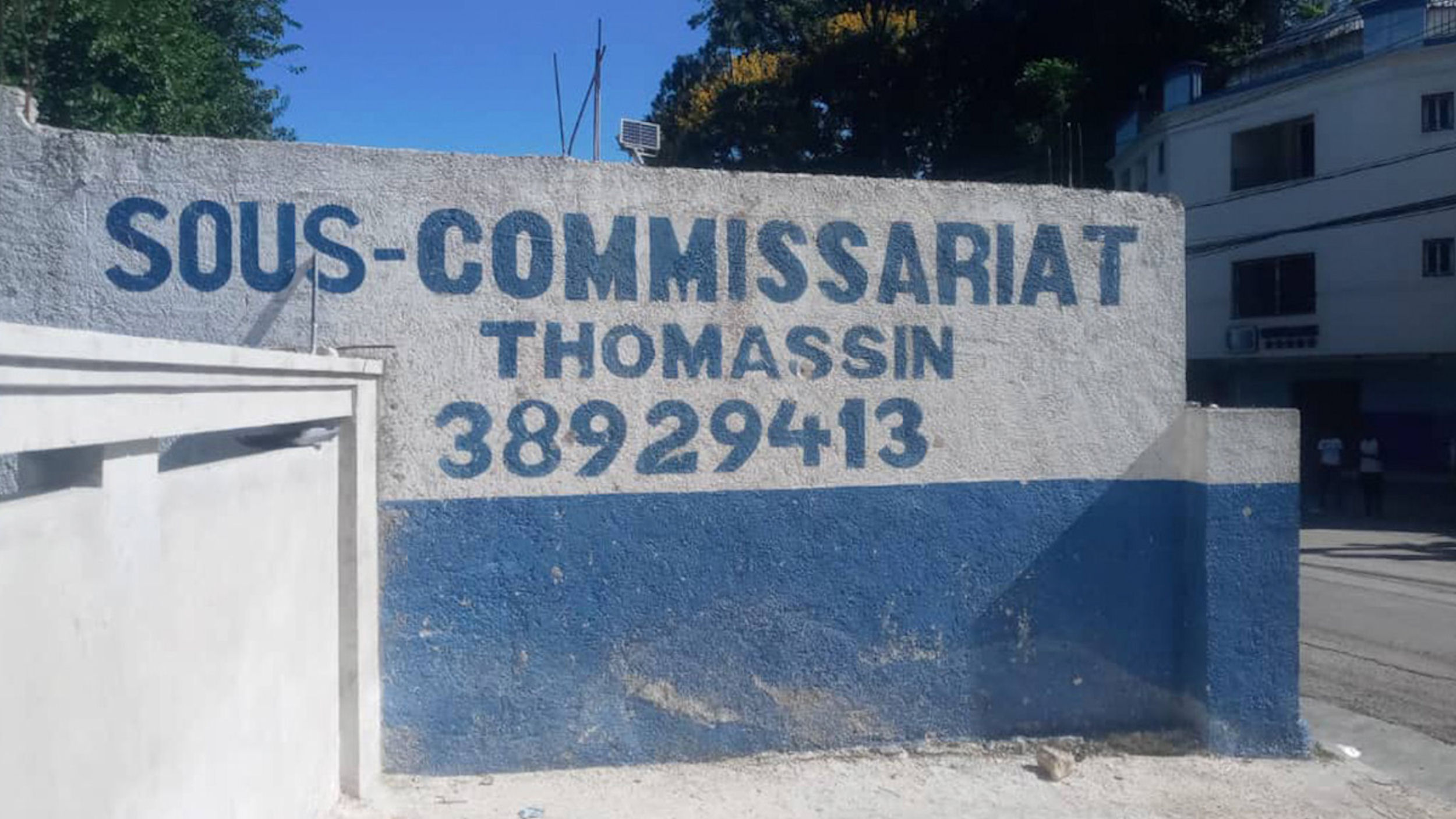
Across the street from the Thomassin 25 Haitian National Police (PNH) Sub-Station (Sous-Commissariat) at 9:30 p.m., she received another call from Dios. He was being held in the back seat of their police pick-up.
“Dios, where are you?” she asked. “I’m here at the station.”
“Yes, I can see you,” he said. “I’m in a vehicle parked in front of the station. Come over here. I will knock on the window so you know which one.”
Djanina and her mother crossed the street and heard the tapping on the window of a white police pick-up – in Kreyòl called a zo reken (shark bone) – parked in front of the station. She could not see inside because it had dark tinted windows. She screwed up her courage and went into the police station to ask to see the inspector in charge, Nickenson Cadet.
The Cops Are Uncooperative
She was not able to see Cadet that evening, she said. He was supposedly on a phone call upstairs. Instead, she spoke to the desk officer, identifying herself and telling him that her cousin had been arrested, that he was in a car outside, that she wanted to know the charges against him, and that there surely must be some mistake.
That evening, according to Nickenson Cadet, policemen from the station had arrested at Thomassin 37 a man who had pulled a gun on another man. The desk officer led Djanina and her mother to the holding cell where the man was being held. (Cadet said that he was the only man in the cell, Djanina says there were two.) The women asked the detainees if they had been arrested with anyone else or seen anybody else in the cell (namely Dios), and they said they had not.
Still unable to see Cadet, Djanina asked the desk officer to look in the police vehicle parked in front where she had heard her cousin knocking. He said that he was not authorized to do that.
Djanina went in front of the station and spoke there to another police officer, asking him to look in the vehicle where Dios was knocking. He said that he didn’t know anything about it and that there was nothing he could do.
At this point, from the station’s second floor balcony, Inspector Cadet announced that he had received word that “gangs” might be preparing to attack the station and that all civilians had to clear the area.
Frustrated and confused, and not wanting to antagonize Cadet, Djanina and her mom retreated to the Unibank branch across the street, keeping the station in view.
About five minutes later, she and her mother saw the police vehicle which had Dios in the back, license plate 1-00978, start to drive down the hill toward Pétionville, where the area’s largest police headquarters sits on a central square. They wanted to follow it but decided to wait for Dios’ mother, Monduré, father, William, brother, Daken, and sister, Bettyna, to arrive.
Just as the four other family members met them, they all saw the police zo reken 1-00978 heading back up the hill towards Kenscoff. All during this time, Djanina continued phoning Dios but got no answer until her ninth call.
“Where are you?” Djanina asked.
“I don’t know where I am, cousin,” he replied.
Then, Djanina heard a voice in the car say “You’re the guy that they used to take ammo and weapons up the hill to the bandits and you are saying you don’t know where you are? Tell them you are in Fermathe.”
Then the man speaking took Dios’ phone and said to Djanina: “You are the one who supported him to bring ammunition and guns to the bandits up there.”
“Oh my goodness, we don’t know anything about that, he doesn’t know anything about that either,” Djanina exclaimed.
But the man hung up the telephone, saying they were going to take Dios to Kenscoff. Since then Djanina and Dios’ family have not seen or heard anything from the young man.
The Search Begins
Dios was like many young Haitian men, working a little, studying a little, and trying to get by. He had family support, particularly from Djanina. He was studying telephone programming (décodage) at a school at Delmas 95, gardening green onions, winning money in card games, dominos, and borlette (lottery), and doing a little moto-taxi. He had owned and run a small bar, which served as a night club on the weekends, when the family lived in the Kenscoff neighborhood of Godet, but they left there on Jan. 27, 2025 because “gangs” took over the area. Since then, he had lived with Djanina in Soisson, at the top of Montagne Noire near Thomassin.
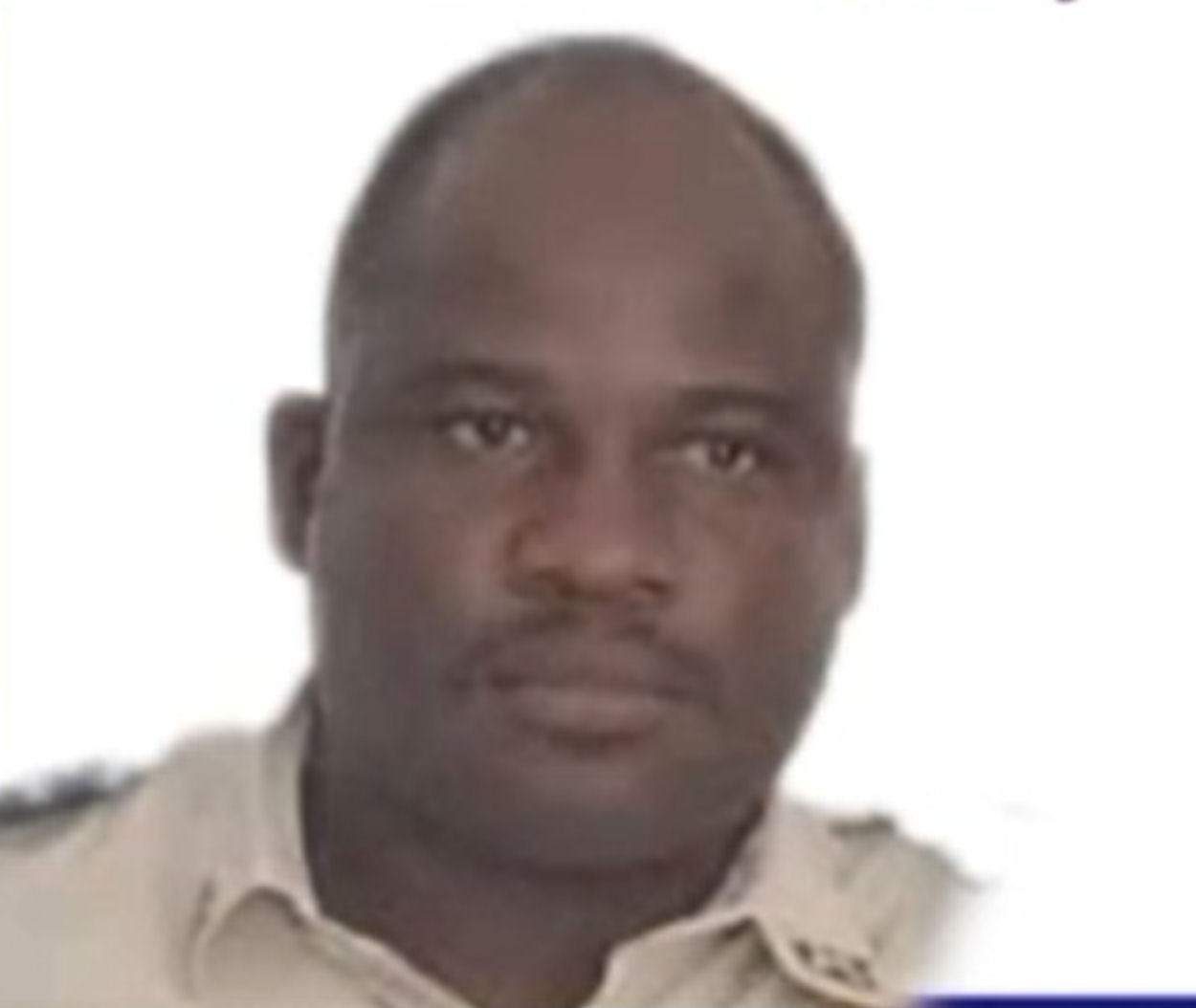
After the last phone call from Dios, the six family members headed up the hill towards Fermathe and Kenscoff, but at Thomassin 31 passed the police pick-up 1-00978 heading back down. They decided to pursue their search for Dios the next day.
On Sunday morning, Sep. 21, about 15 of Dios’ family members went to the Thomassin 25 police station to meet with Nickenson Cadet. When Djanina explained to him the events of the previous evening, his response was extremely strange, she said.
First, he claimed that the police pick-up 1-00978 (which was his personal vehicle) was broken down and had not moved the day before. When Djanina told him that they had seen it go down the mountain, then up, then down again, he said some cops were road-testing the vehicle after some repairs.
When Djanina told him that she was on the phone with Dios when he was tapping on the vehicle’s window from inside, he questioned if she was really speaking to her cousin. When she insisted she was, he said he would have police headquarters trace the calls, which she says he never did.
Djanina and Bettyna saw that he had cameras recording the sub-station’s front area with the monitor in his office. Why not just review the recording from the night before to see if she was lying, Djanina asked. “He said, ‘no, I don’t know anything about that camera. Someone installed it there, but I don’t pay it any mind,’” according to Djanina. “He apparently never reviewed the tapes or traced the calls, even though I gave him all the information.”
In what the family saw as an insult to their intelligence, Inspector Cadet said that he and his officers “would assist us in our search for Dios,” Djanina said.

The meeting became very heated with voices raised. Such confrontational meetings with Cadet continued for several days, as the family pressured for answers on Dios’ fate. Eventually, Cadet banned Dios’ family members from gathering and semi-protesting in front of the sub-station, saying that “they stink.” They were forced to gather across the street.
Haïti Liberté reached Inspector Cadet for his version of events, which was completely different from Djanina’s. He claimed that he spoke with Djanina when she came to the station on Saturday night. “As the officer in charge, I called the Pétionville police station, and that in Fort Jacques and in Kenscoff, in the family’s presence,” he said. “I tried to investigate the case with them. They went everywhere. That was over. The next morning, they came back again… We told them we couldn’t do anything for them.”
He also claimed that he had tried to trace the calls “using GPS” to an area in Kenscoff but, using drones and three police vehicles, they could not find the phone, that family members sent text messages to Djanina’s phone pretending to be Dios, that he had reviewed the camera footage with the entire family present and that it showed nothing, that the family did not even see his police car’s license plate until Sunday, and that, when he asked for Dios’ number to trace it, they refused to give it to him and ran away, contradicting his previous statement that he had traced Dios’ phone “using GPS.”
Told that the family said they had given him Dios’ number, he replied, “they are fabricating lies. They came with four different telephone numbers.”
“Those people wanted to accuse the police of taking the guy without wanting to tell them,” Cadet concluded. “It’s a story which they completely made up.”
He also accused Djanina of being a “marijuana seller” (a charge she denies) and wanting “to put a bad label on me.”
The inspector promised to send Haïti Liberté “documents” proving his version of events but to date has not done so.
“My cousin, I know I’m not involved in anything, and I don’t know what they think I’ve done, but two cops have arrested me and taken me to Thomassin. Come quickly!”
Someone told the family that Dios’ motorcycle had been seen in the PNH station at Thomassin 30. The family also went there but didn’t find it.
In the following days, Djanina and other family members visited all the other police stations in Thomassin, Fermathe, Lotin, and Kenscoff. They also went down to the main police station in Pétionville, where Djanina filed a formal complaint about Dios’ disappearance while under arrest. Officers there also said they had no information about Dios.
In Pétionville, “they said that they could not understand how this would happen,” Djanina said. “The commander there also said that I should not stay at my home in Soisson. He thought that it might be dangerous for me and my family.”
After the fruitless search on Sunday, on Mon., Sep. 22, 2025, Djanina went to Radio Caraïbes in Port-au-Prince and told her story on the airwaves. “We don’t know why they’ve arrested Dios, what they’ve done with him and his motorcycle, we can’t find any trace of him,” she said. “We are asking what they’ve done with him, because we haven’t heard from him, and what are we supposed to do. And that’s why we’ve come to the radio this morning.”
She also gave the license plate number of the zo reken: 1-00978. That may have enraged the cops.
The Reprisals and Demonization Begin
Djanina’s radio appeal only made matters worse.
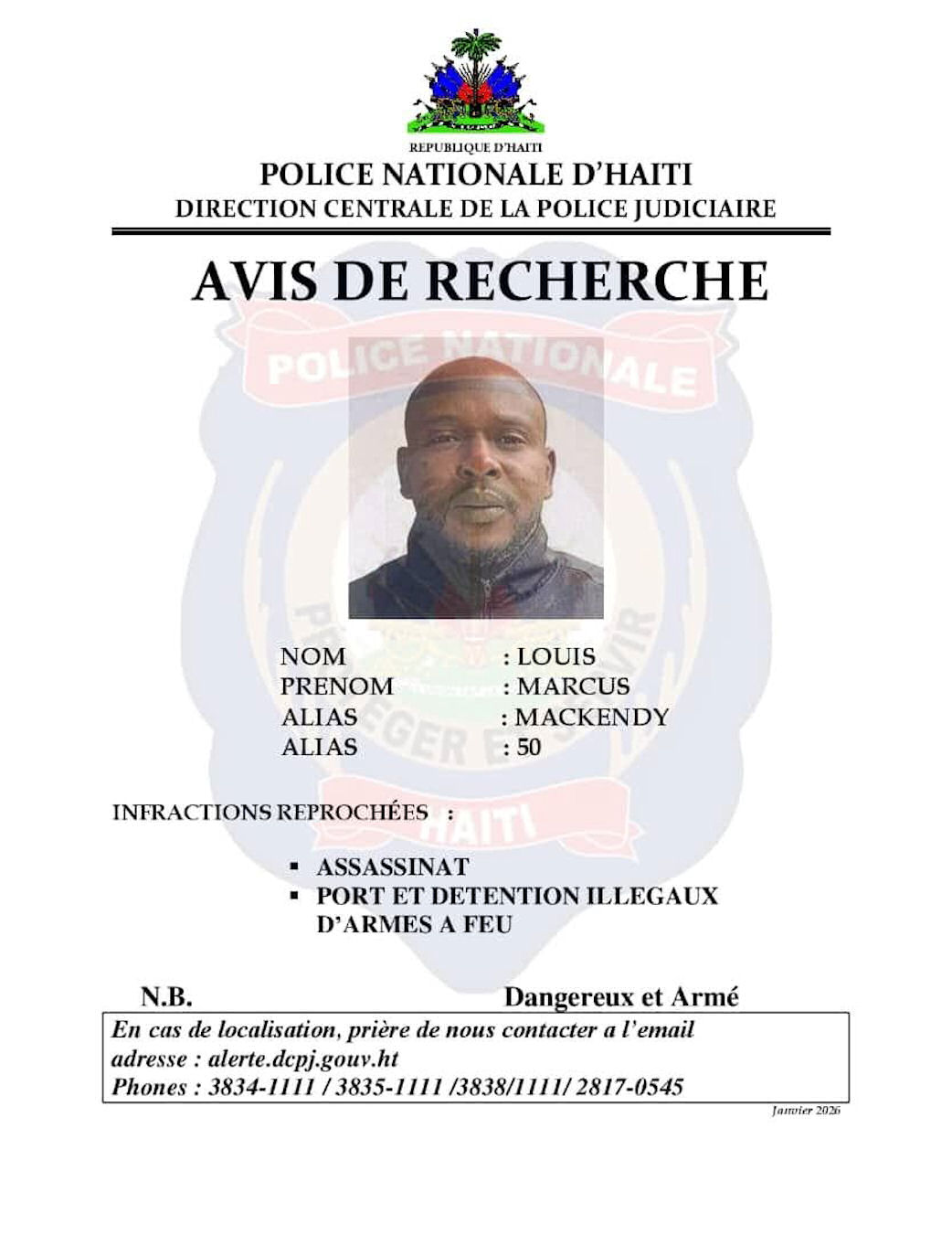
On the afternoon of Sat., Sep. 27, armed men from the area’s so-called “brigade”, TPP (Thomassin Pap Peri or “Thomassin Won’t Perish”), headed by Pierre “Ti Pierre” Milord, accompanied by Louis “Mackendy 50″ Marcus, attacked her home in Soisson. They ransacked and vandalized the house, burned mattresses and other belongings, stole a luggage set, and smashed the windows and windshield of a new Jeep Cherokee which Djanina’s boyfriend, Rubensky Saint-Louis, had purchased for his father, Innocent Duvergé. The car was garaged at the house and sometimes used by Djanina. The armed men stole its license plates and several other items from the house.
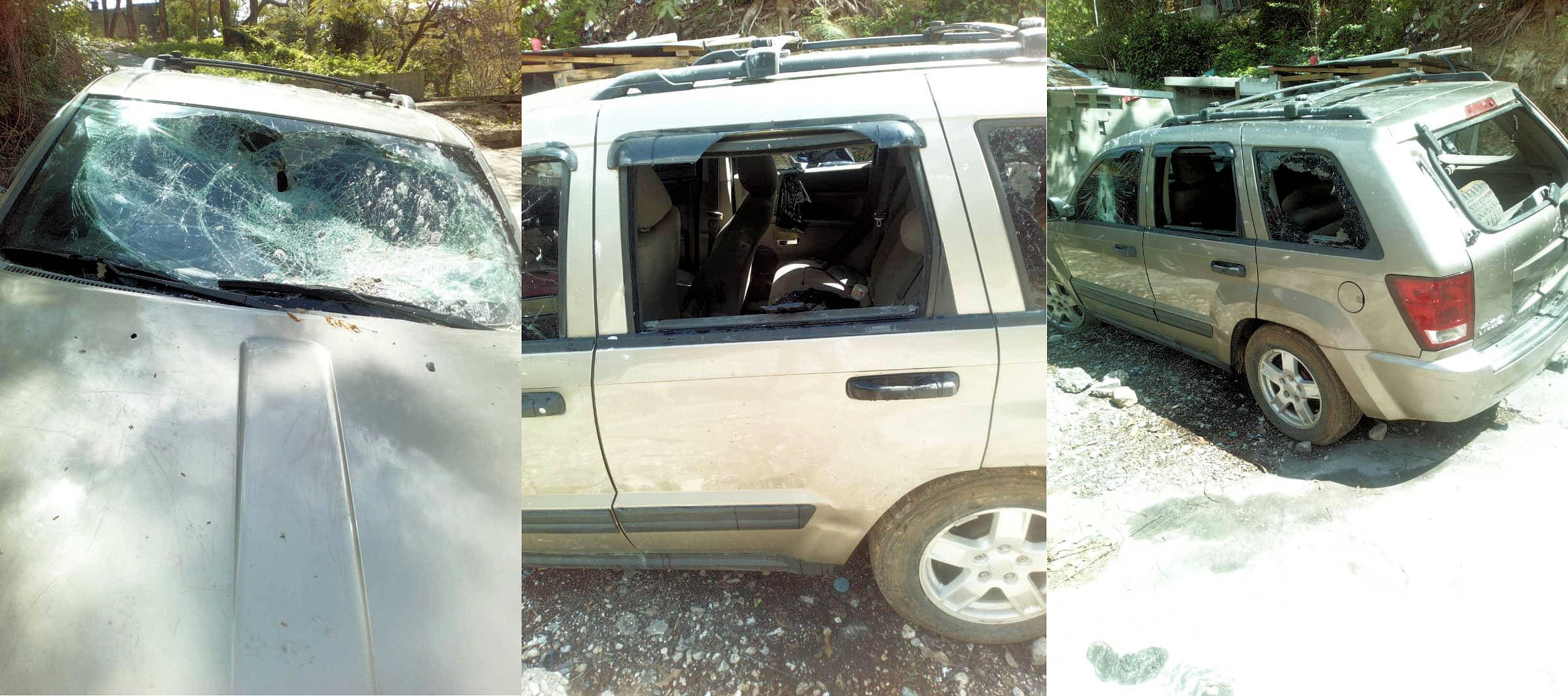
Fortunately Djanina and her family had been warned of the attack and all had left the house, otherwise there likely would have been bodily harm. Under continuing threats, the family could not return to the house and are in hiding.
Asked if he had investigated this attack, Cadet said he had not. “The brigades are citizens who volunteer in their area, who see that it is going to perish with the Viv Ansanm (Live Together) situation [a reference to the greater Port-au-Prince armed group coalition calling for radical social change and national dialogue], and they do their own investigation. Sometimes, if there is something, they will intervene by themselves, sometimes with the police. That’s something they did by themselves.”
Haïti Liberté asked why he didn’t send policemen when the attack was happening: “If I sent four officers in a situation like that, when they arrive and see dozens of people revolting and demonstrating, do you think four cops would be enough to counter 40 or 50 people who were carrying out an act?”
Pressed on whether he had sought afterwards to charge anybody for smashing the car and plundering the house, Cadet replied: “That is a private matter… That is up to the family to file a judicial complaint. That’s for the family to decide. All that we did was go with a juge de paix [a crime scene investigator], he recorded everything that was done, and we sent that report to our superiors.”
Meanwhile, a Whatsapp group began to post anonymously on social media accusations that Djanina and Dios were family members of and had been working for Carlo “Ti Makak” Petithomme, a “gang” leader in the area whom police killed in April 2023, over two years earlier. Among other things, the anonymous posts implied, without any proof or testimony, that Djanina did reconnaissance, shopping, and prepared food for “Ti Makak” and that Dios participated in a kidnapping of an unnamed engineer, and that they both received a cut of the money from that kidnapping.
The family vehemently and categorically denies the charges as malicious fabrications aimed at slandering and casting suspicion on them to justify Dios’ abduction.
Cadet also sought to cast aspersions on Dios, saying that he was possibly involved in illegal activities and had a cousin who was connected to “Ti Makak.”
Questioned about Cadet’s statement, Djanina replied that Cadet was probably referring to Rony Antoine, an uncle of both Dios and Djanina who was, she had heard, a distant relative of “Ti Makak,” but about whom she knew very little. (Many of Kenscoff’s original residents, not the rich newcomers, share family, not that blood ties confer any guilt.) The uncle had long since died.
Demands for Ransom
In the following days, the family received many phone calls demanding, among other amounts, a ransom of 1.5 million gourdes ($11,500) for his release, along with 100,000 gourdes ($770) for his food. To protect Dios’ life, the family sent cell phone minutes along with $200 to the cell of a certain Jameson Exantus (the phone number is now disconnected). Despite the gesture, no progress was made on Dios’ release. The kidnappers, in recorded phone calls with Djanina, threatened to beat Dios if they family did not comply with their demands.
The attack on the house, the defamatory social media campaign, and the ransom requests were answered by an unidentified family member in an angry, impassioned voice message on the TPP’s Whatsapp group.
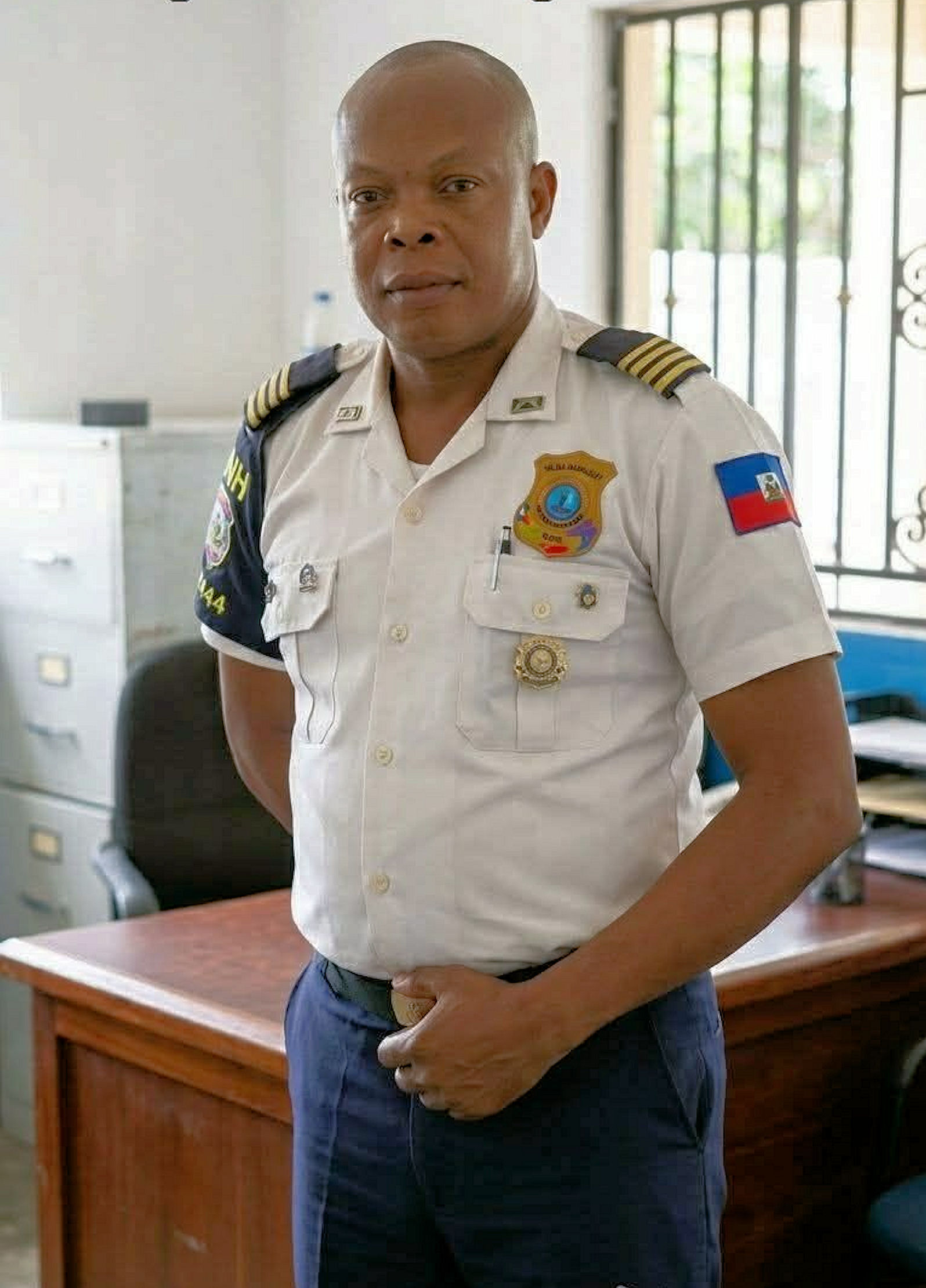
On Oct. 10, the physical and social media attacks’ purpose, and the collusion of Inspector Nickenson Cadet with the TPP, became crystal clear, as far as the family is concerned. Calling from the phone of Djanina’s cousin, Dondy Anilus, a TPP “brigade” member, Inspector Cadet pointedly asked her: “Am I still your target or are you going to make peace with me?”
That was the last time she spoke with Nickenson Cadet.
Legal Action Underway
This question, perceived by the family as a threat, and the various other attacks and ransom demands, were cited in judicial complaints filed by the family’s lawyers, Jerry Carly Théodore and Evens Coffy. They have also appealed to the Central Directorate of the Judicial Police (DCPJ, Haiti’s FBI), and the PNH’s Office of General Inspection (Internal Affairs). Until now, the PNH has apparently done nothing to investigate this case.
The TPP’s criminality came to light again three months after the attack on Djanina’s Soisson home. At 7 p.m. on Dec. 30, 2025, Marcus “Mackendy 50″ Louis of the TPP’s Thomassin 48 brigade, was witnessed in front of Sheeshee’s Food near Kenscoff shooting to death Police Inspector Hold Jean “Blan Sansousi” Esterlin, chief of the Fort Jacques Police Station. Edouard Lacroix, another family lawyer, says that Esterlin knew Cadet had acted illegally in arresting Dios after 6 p.m. and that it was an extrajudicial disappearance.

“Inspector ‘Blan’ knew Dios’ case very well,” Lacroix told Haïti Liberté. “‘Watch out!’ he told me. They acted illegally in arresting [Dios] after-hours, especially since he was not caught in the act of committing any crime and he was not armed. They detained him holding only a bag of deep-fried meat (fritay). They needed to clean up their story. They knew that [Esterlin] knew certain things, so they agreed among themselves to kill him. But everything is going to come out.”
The PNH has issued a warrant for Marcus Louis’ arrest for Esterlin’s murder and carrying an illegal firearm.
Press Campaign for justice
With Dios’ disappearance now approaching its first anniversary and the PNH apparently carrying out no investigation, the family has begun to turn to the media to put pressure for answers.
On Jul. 22, 2026, Marc André “Toto” Alexandre, widely recognized as the unofficial spokesman for Port-au-Prince’s Belair neighborhood, held a press conference to lay out the details of Dios’ disappearance.
“The DCPJ has the case,” Alexandre explained. “Nothing has been done. The prosecutor’s office has the case. Nothing has ever been addressed. Even the human rights groups [RNDDH and OCP] have the details of the case, but they have done nothing up until today. And next month, it will be one year since [Dios] Francoeur disappeared and the family has been searching for him. They loved him so much and have been calling for justice for one year. So you can see this is a very serious matter. We are calling on the DCPJ to investigate this case, because they say that it is Inspector Cadet, who is responsible for that area, and for that death.”

The irony is that the PNH and their paramilitary “brigades” have been responsible for hundreds of extrajudicial killings and kidnappings of innocent civilians, as a growing number of human rights groups have been forced to admit. This has resulted in a terrible reign of terror, while the U.S. State Department accuses only the Viv Ansanm armed neighborhood group coalition (which is calling for the redistribution of Haiti’s resources and for dialogue) of being the “terrorists.”
During a long interview, Inspector Cadet accused two other family members of Dios of being criminals who had been killed in Kenscoff and Canapé Vert, concluding that “those killings happened two years before Dios’ death, so that’s not the first person in that family to have that happen. It looks like scores being settled” by the “brigades.”
Haïti Liberté immediately asked him: “So you know that Dios is dead?”
Perhaps realizing that he had revealed or overstepped himself, Cadet replied: “Until now, he is only listed as disappeared.”
That is the question that Dios’ family wants to be answered: what was Dios’ fate, and will they find justice for him?