
(Français)
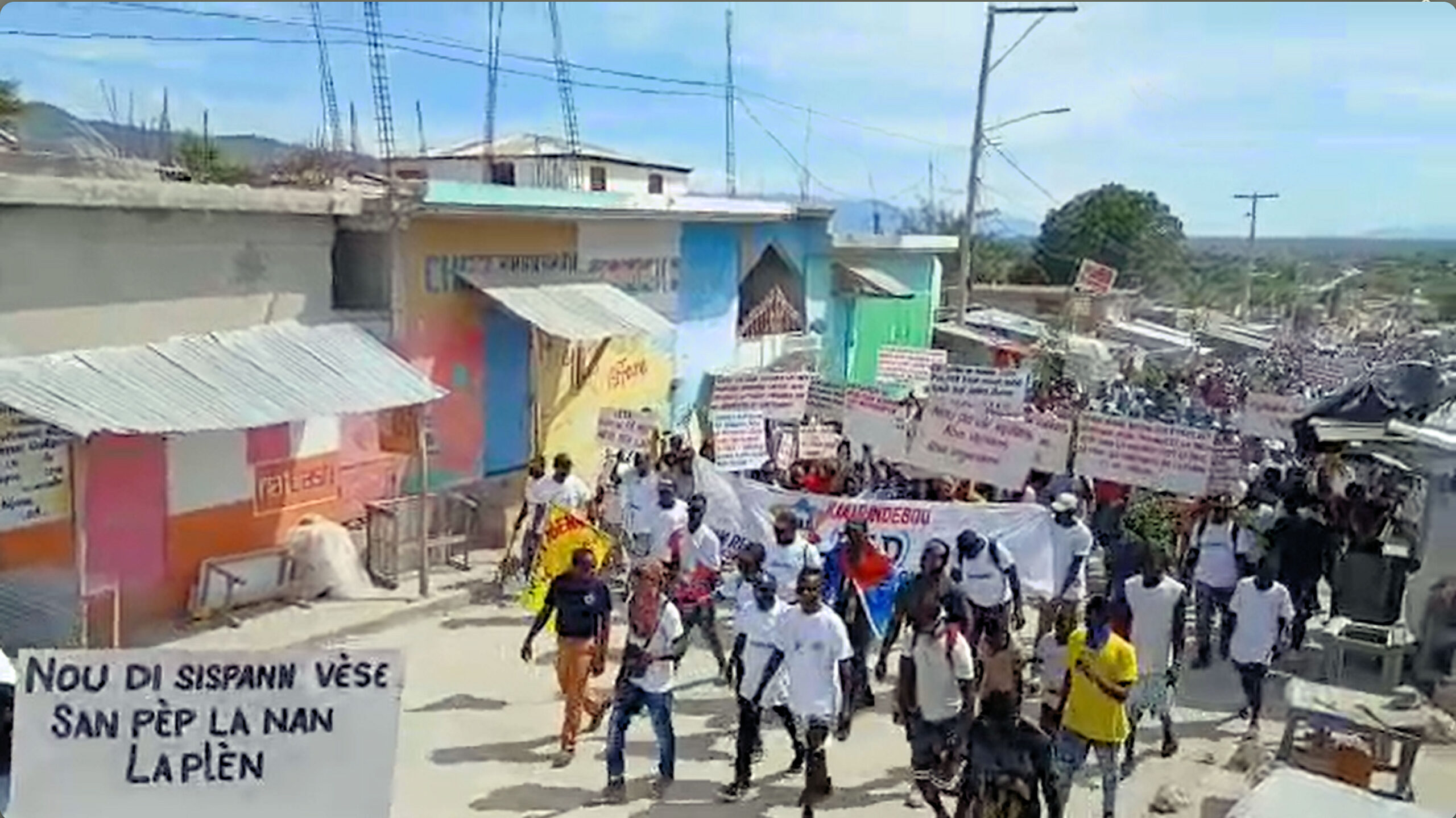
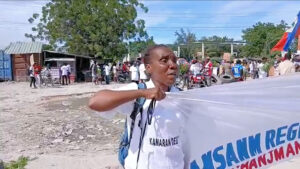
On Nov. 2, about 1,000 poor peasants and townspeople living in the scrubby suburbs north of Port-au-Prince marched several miles to demand an end to the violence that foreign mercenaries and troops are raining down on their communities.
Since some 2,000 Salvadoran troops began invading Haiti on Oct. 22, they have concentrated their attacks on the area known as the Plain of Cul de Sac, just northeast of the capital, where three townships, all governed by armed groups, are located: Croix-des-Bouquets, home of the 400 Mawozo headed by Joseph “Lanmò Sanjou” Wilson; Croix-des-Missions, home of Chen Mechan (Mean Dog) of Claudy Célestin, and Canaan (Kanaran in Kreyòl), home of the Taliban headed by Jeff “Gwo Lwa” Larose.
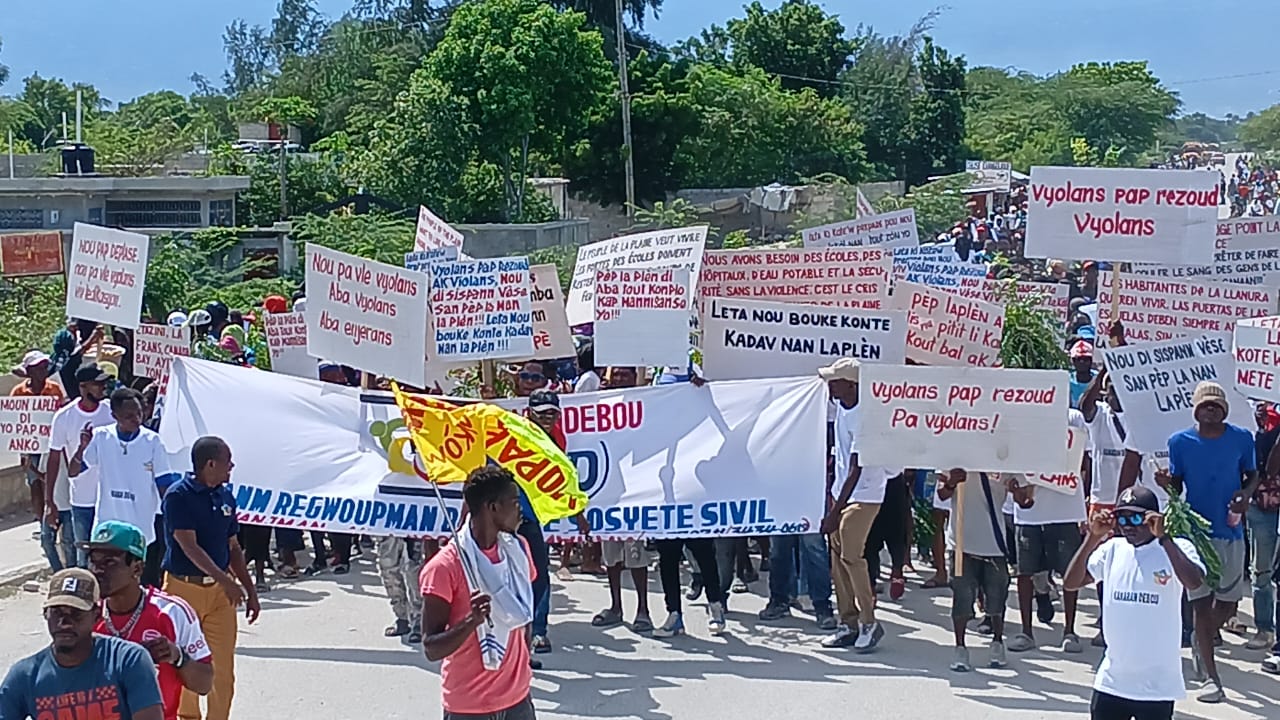
The mostly young marchers danced and chanted to the drums and horns of a rara band and carried dozens of large hand-painted signs in Kreyòl (with a smattering in English and Spanish) with slogans like “Down with violence! Down with foreign intervention!” and “Stop spilling the people’s blood in La Plaine” and “The State, we are tired of counting dead bodies in La Plaine” and “Too many have died from gunshots and drones! Today we need schools, hospitals, water, and security without violence!”
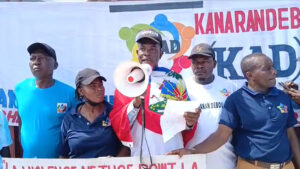
Teachers from different schools of the three townships organized the march under the banners of Kanaran Debou (Canaan Stand Up) or KAD, a coalition of over 60 local community organizations, and the Grouping of Civil Society Organizations and Sectors (REDORSOP).
“The Core Group [Washington and its allied embassies], under the U.S. Embassy’s direction, has planned and carried out massacres, homicides, and human rights and civil rights violations of La Plaine’s population and all the neighboring zones,” said Pasteur Timothée, KAD’s head and a well-known community leader who was among the thousands of refugees who fled the capital 16 years ago to the flood plain which would later become Canaan after the Jan. 12, 2010 earthquake which leveled much of Port-au-Prince.
“The La Plaine zone has a civilian population [of 4.7 million] living in it, which cannot move…. They are destroying their houses, children’s schools, churches, businesses, and health centers. They are committing war crimes by the hand of invading nations. They are killing little babies, pregnant women, paralyzed people, and peaceful citizens… We denounce the hidden hand of the Haitian government and the Core Group in the question of La Plaine, as well as all the other invading nations.”
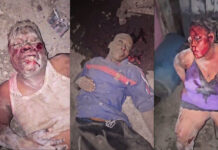
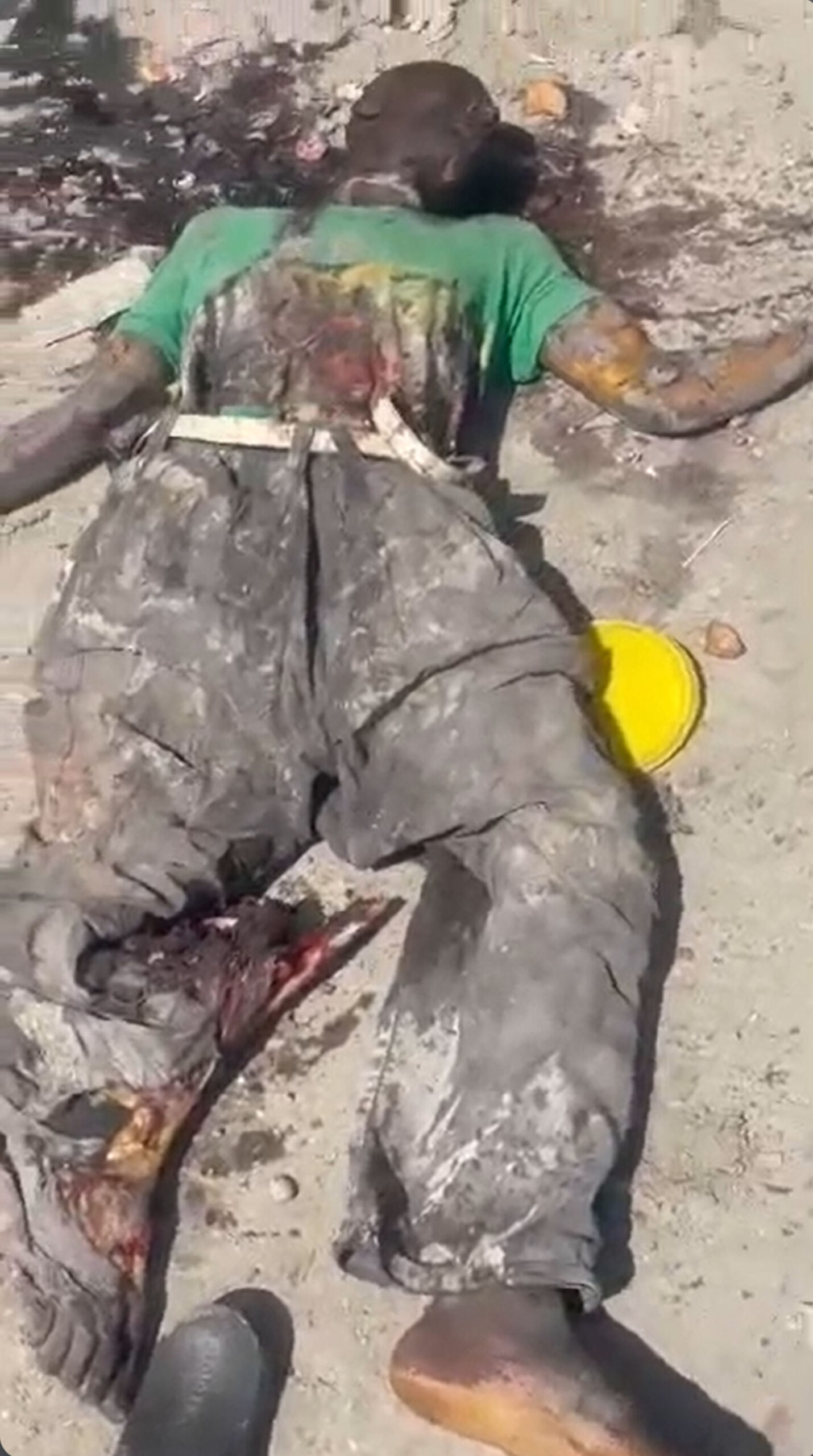
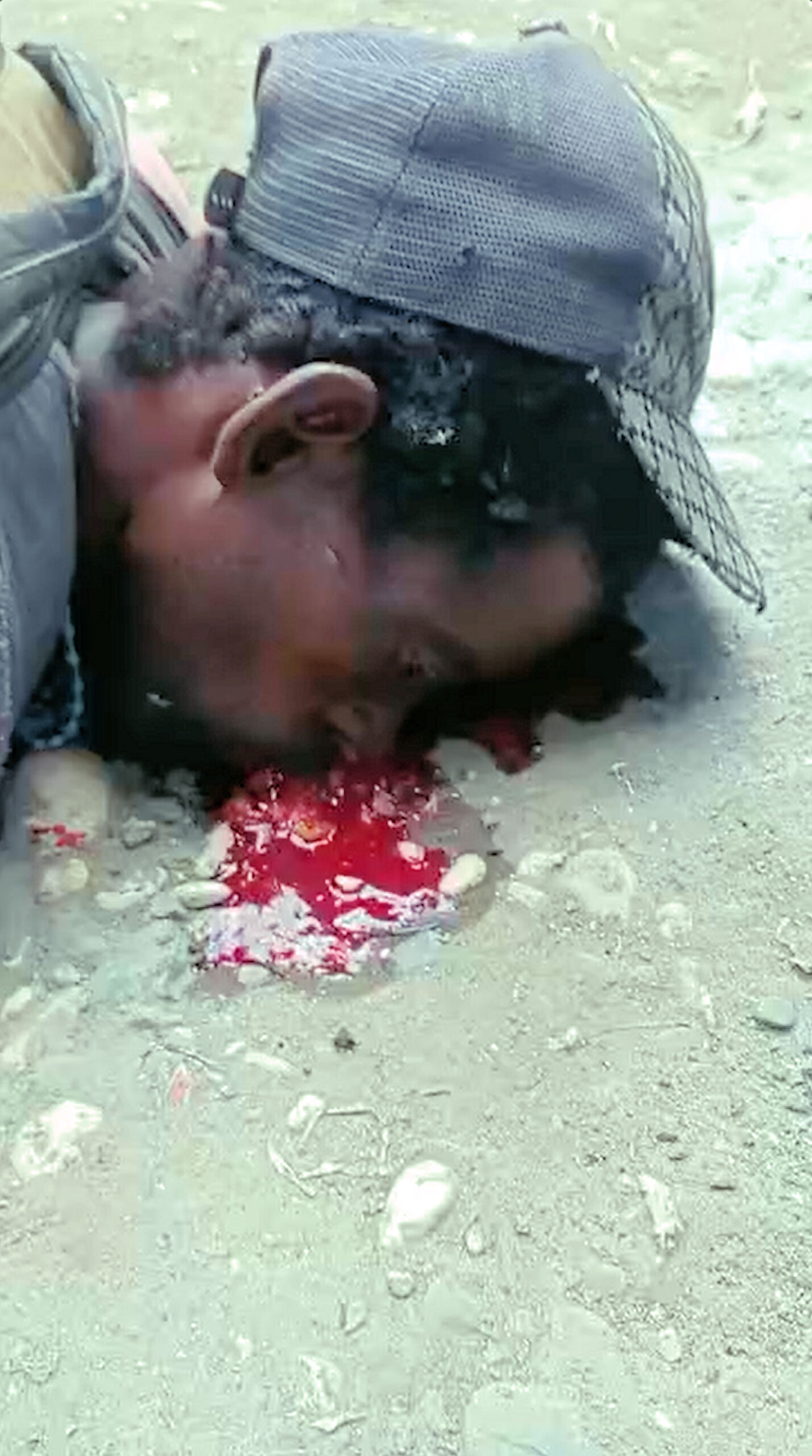
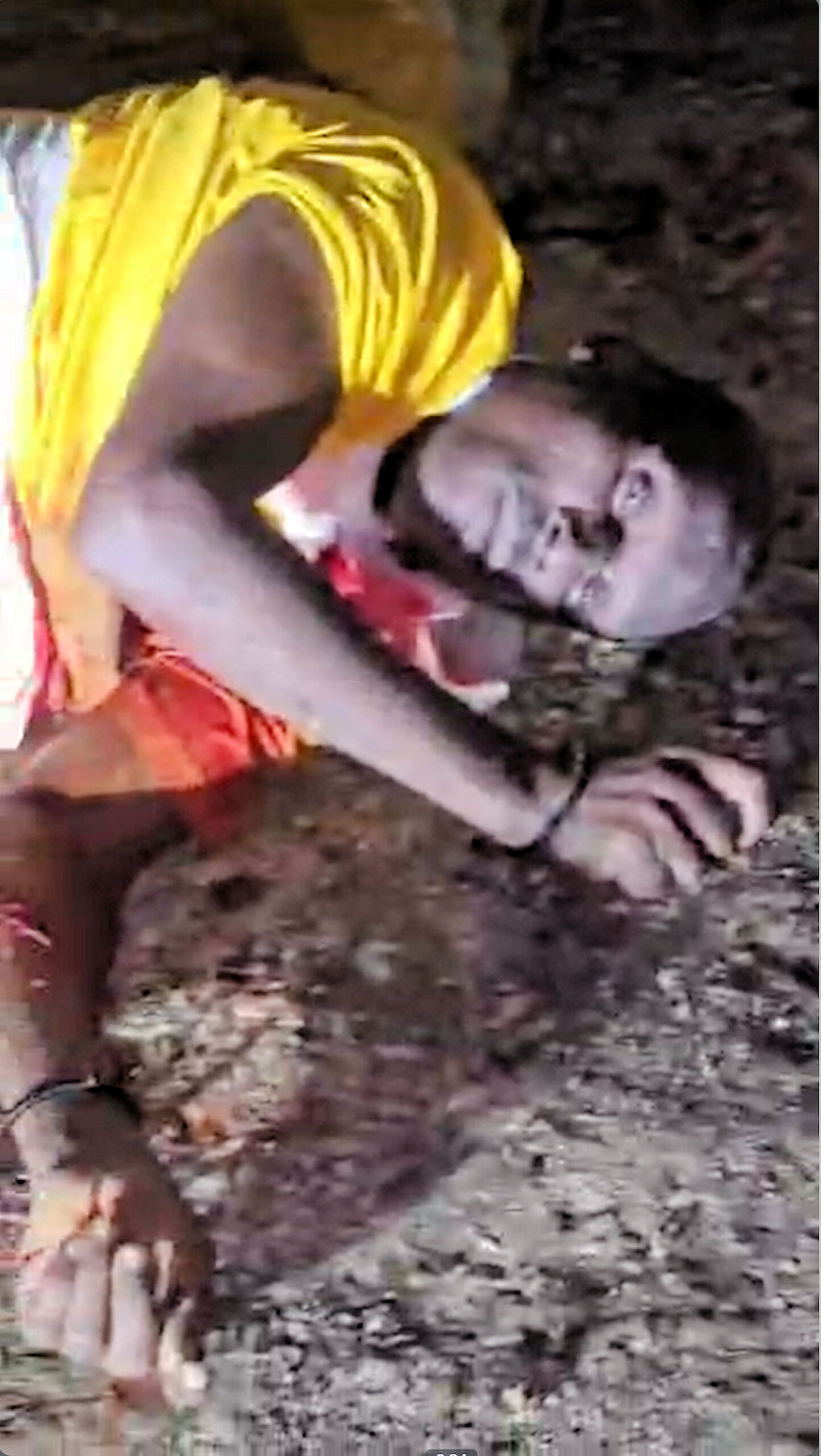
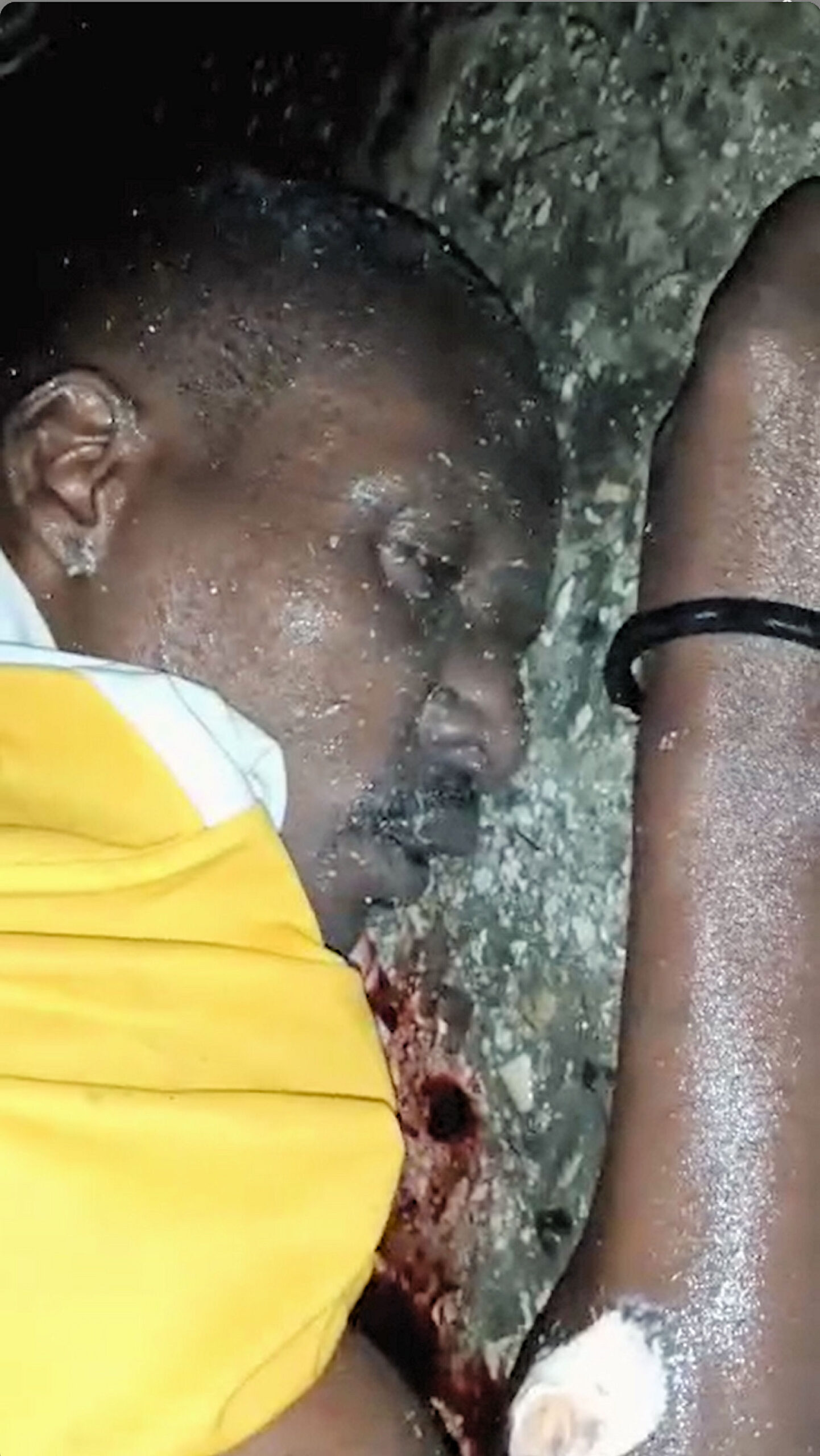
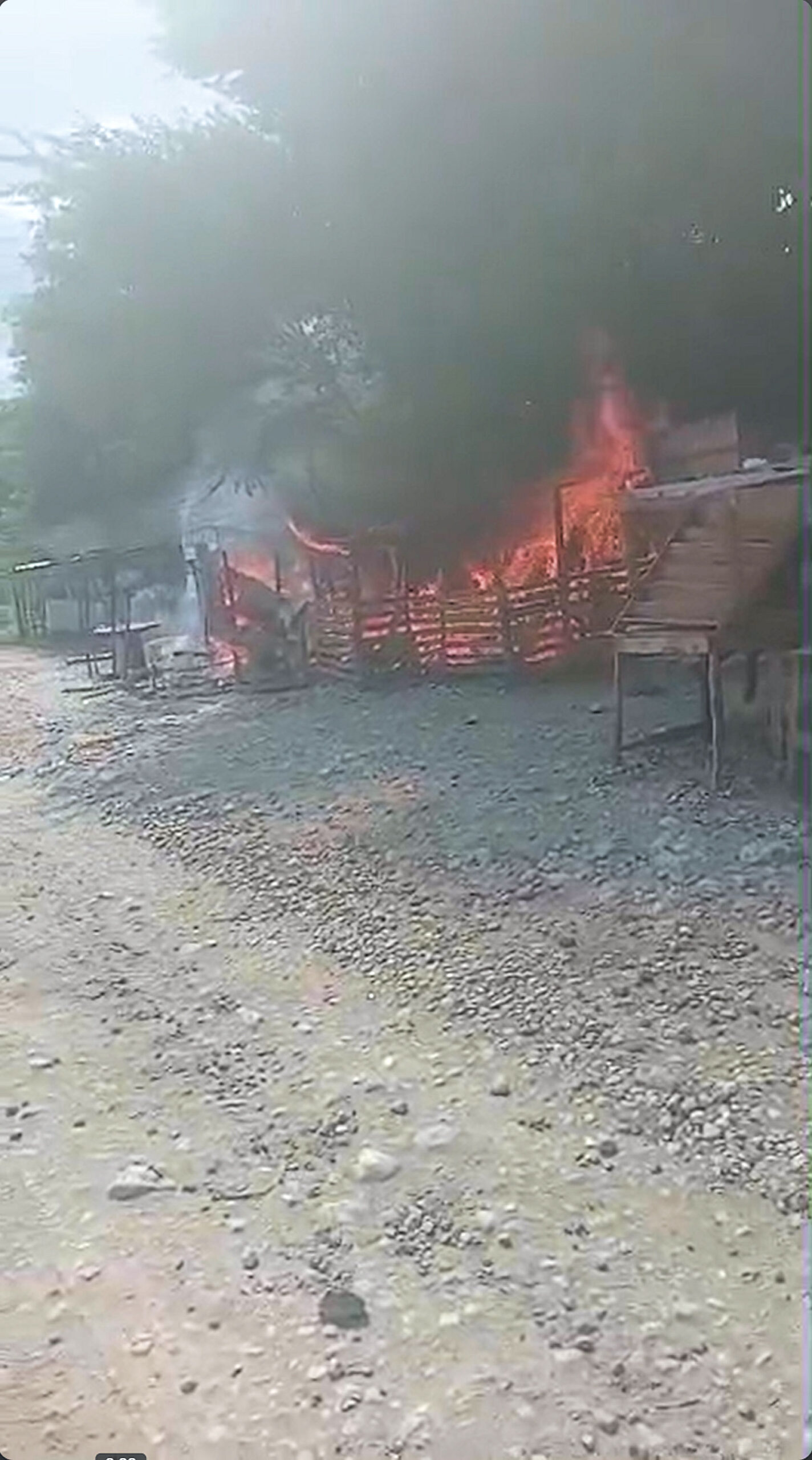
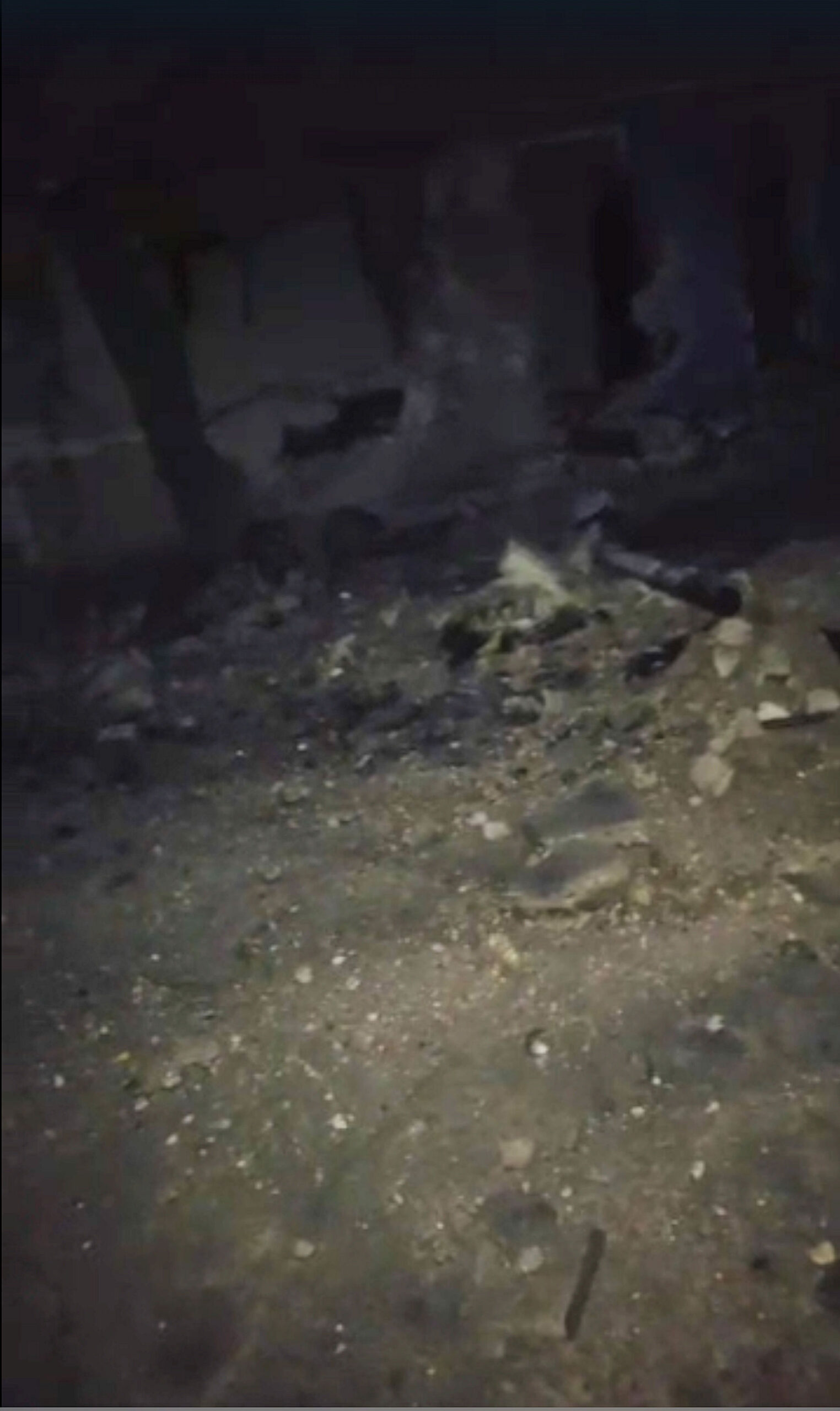
Truly, the death and destruction which has been visited on the poor communities of La Plaine du Cul de Sac is horrific. Haïti Liberté has begun to collect the photos and videos of the many Haitian civilians killed and wounded in La Plaine, as well as the houses, shops, schools, and markets destroyed, in the 11 days between Oct. 23 and Nov. 2. Our journalists are working to get the victims’ names and ages and the circumstances of their deaths.

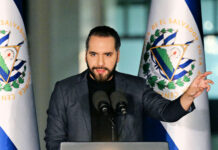
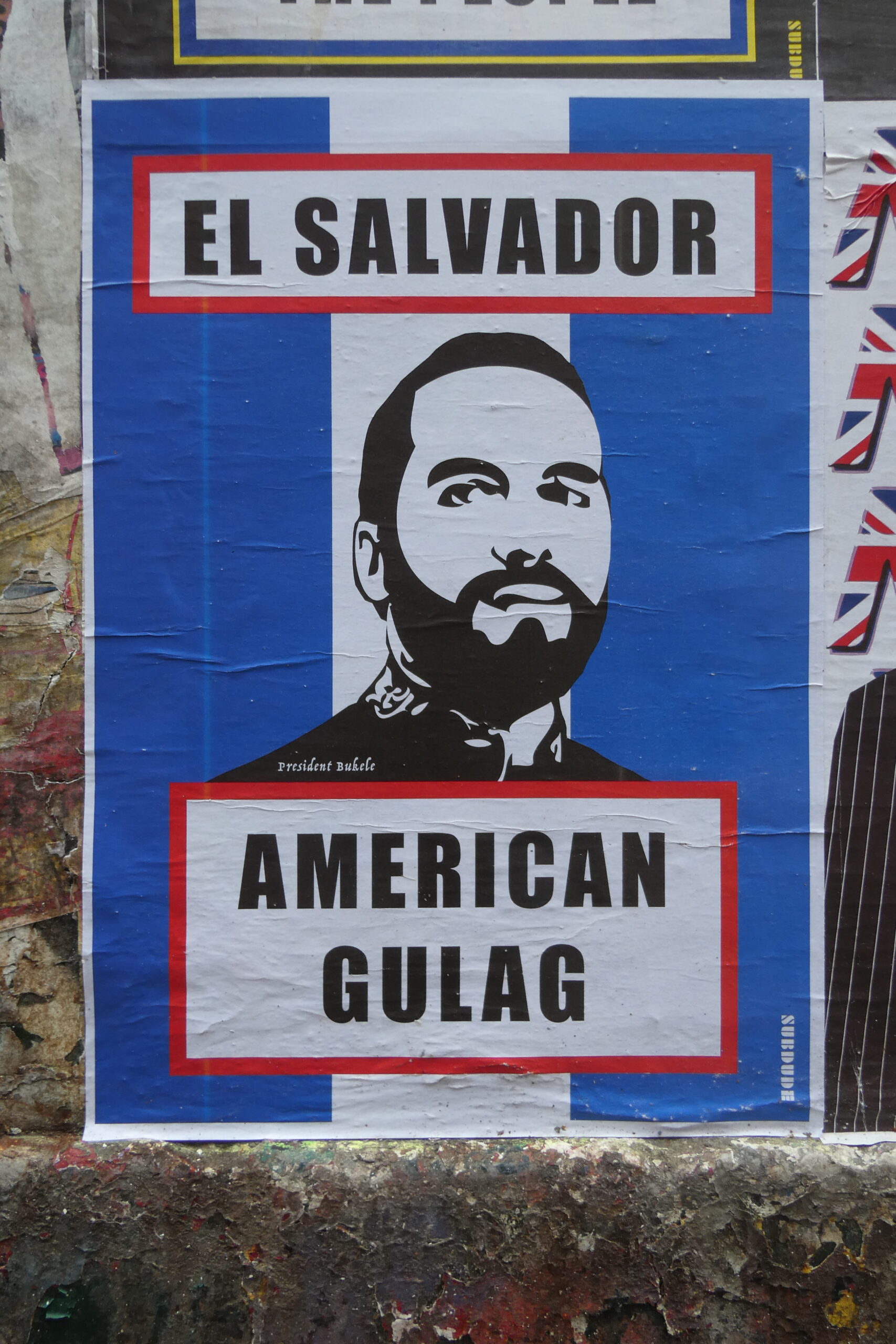
Meanwhile, El Salvador’s President Nayib Bukele has made several provocative and likely consciously false pronouncements.
On Oct. 23, the day after his first troops landed, Bukele cast the deployment as a holy war. “All those who have enlisted are believers, and we have entrusted this mission to God,” he wrote on X. “Haiti’s gangs are satanic, and it is public knowledge that they carry out human sacrifices…. God will grant us victory. The Creator of the Universe is with us.”
In short, the Salvadoran soldiers are with God, and the Haitians in their gunsights are with the Devil. It is the oldest trope in the colonial playbook, the same one that U.S. Marines and their propagandists used during the 1915-1934 occupation to paint Haiti’s Vodou-practicing masses as savages to be subdued. It also hands young Salvadoran soldiers, who know nothing of Haiti, its language, or its history, a ready-made license to see the people of La Plaine as less than human.


Bukele has also sought to calm critics at home and abroad by suggesting that his troops’ stay will be brief. If the four missing technicians are returned alive, he said, “that same day we return from Haiti.” But his other statements tell a different story. On Oct. 29, he promised only that “when our mission ends, we will return home,” without giving any end date. Meanwhile, the force keeps growing: from about 100 special forces on Oct. 22 to some 1,000 by Oct. 27 to over 2,000 by Oct. 28, backed by UH-60 Black Hawk and MD 500E helicopters, with Reuters reporting that the contingent could reach 2,500.
Jake Johnston of the Center for Economic and Policy Research (CEPR) called it “a form of long-term deployment.” Nobody ferries 2,000 soldiers and a fleet of helicopters across the Caribbean for a brief stay.
Nor are all of those soldiers the crusading “believers” Bukele describes. “Yes, we have reports that several soldiers had requested discharge just before going to the Haiti mission,” Marvin Reyes of El Salvador’s Police Workers’ Movement (MTP) told Global South World.

Their requests were “denied” by the military high command, he said. “The main reason is the risk of losing one’s life.” How many soldiers tried to get out is unknown, Reyes explained, “because this information is classified.” José Edgar Campos, a retired Salvadoran officer, made the rules plain: “no member can refuse” the mission. Even at home, the war’s popularity is thinner than it looks. While a CID Gallup poll found 86% of Salvadorans approving of the “rescue,” 82% said they were worried about the risks to the troops.

Then there is the money. “We are practically the only ones paying for this operation,” Bukele said on Oct. 29, claiming that “with our own small budget” El Salvador is covering 90% of the costs and that “nobody is
paying us for this.”
This is very likely untrue. Salvadoran troops were flown into Haiti on C-130 Hercules transports of the U.S. Southern Command and the Colombian Aerospace Force, while the Dominican Republic provided transit, logistics, and intelligence. The Pentagon confirmed sending at least two military aircraft to Port-au-Prince for “logistical support.” When AFP asked how much El Salvador had budgeted, Bukele refused to answer. “All signs point to U.S. support,” Johnston said.

To be sure, Axios reported that Washington turned down Bukele’s request for drones and transport planes, and Donald Trump said “he doesn’t need help” while telling Bukele to “do what you have to do.” But a country that in 2025 had to sign a $1.4 billion loan program with the International Monetary Fund is hardly in a position to bankroll a 2,000-man overseas war on its own “small budget,” and the 90% figure has never been backed up by a single published number.
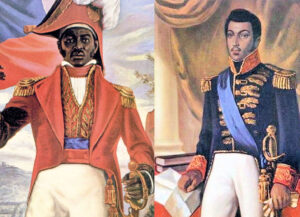
Most revealing of all was Bukele’s tweet today, Nov. 3, written in Kreyòl and invoking Jean-Jacques Dessalines, the founding father of Haiti. Of Haiti’s armed groups, he wrote: “Yo pa eritye Dessalines, yo se eritye trèt ki te asasinen l yo e ki te detwi eritaj li” (“They are not Dessalines’ heirs; they are the heirs of the traitors who assassinated him and destroyed his legacy”). “Those traitors still exist in Haiti,” he continued, before calling on Haitians to rise up and promising that El Salvador would help them “take back” their country. “Haiti will be free,” he concluded.
Bukele appears oblivious to who those traitors actually were. Dessalines was ambushed and killed at Pont-Rouge, just north of Port-au-Prince, on Oct. 17, 1806, in a plot whose chief architect was Gen. Alexandre Pétion, the son of a French colonist and a free woman of color. Pétion spoke for the affranchis or anciens libres, the lighter-skinned, propertied class of former free people of color who had inherited much of the colonists’ land and were enraged by Dessalines’ moves to verify land titles and redistribute property to the formerly enslaved. “And the poor Blacks whose fathers are in Africa, will they have nothing?” Dessalines famously asked.
Those “poor Blacks” were the bossales, the African-born captives who made up the bulk of the revolutionary army. Their descendants, Haiti’s peasants and urban poor, are still called pitit Desalin, Dessalines’ children. The bourgeoisie, by contrast, is commonly known in Haiti as pitit Petyon, Pétion’s children, and its wealthiest hillside enclave above the capital still bears his name: Pétion-Ville.
So Bukele has turned history on its head. The proletarian and lumpenproletarian armed groups of Croix-des-Bouquets, Canaan, and the slums of Port-au-Prince, whatever their crimes, are recruited from the children of Dessalines. It is the bourgeoisie, Pétion’s children, along with their masters in Washington, that Bukele has allied himself with. Even his own tweet concedes that some Haitians “finance the gangs or give them weapons.” But his helicopters are not circling over the villas of Pétion-Ville. They are firing on the shacks, schools, and markets of La Plaine.
That brings us back to the 1,000 marchers who danced behind a rara band on Nov. 2, carrying signs that said “Too many have died from gunshots and drones!” The Haitian diaspora group UNA-Haiti has denounced Salvadoran operations for “causing the death of innocent civilians, including children,” while Bukele and the Gang Suppression Force (GSF) deny using bombs or explosives at all. Doctors Without Borders treated 30 civilians wounded by gunfire or explosions in Port-au-Prince between Oct. 18 and 26 alone.
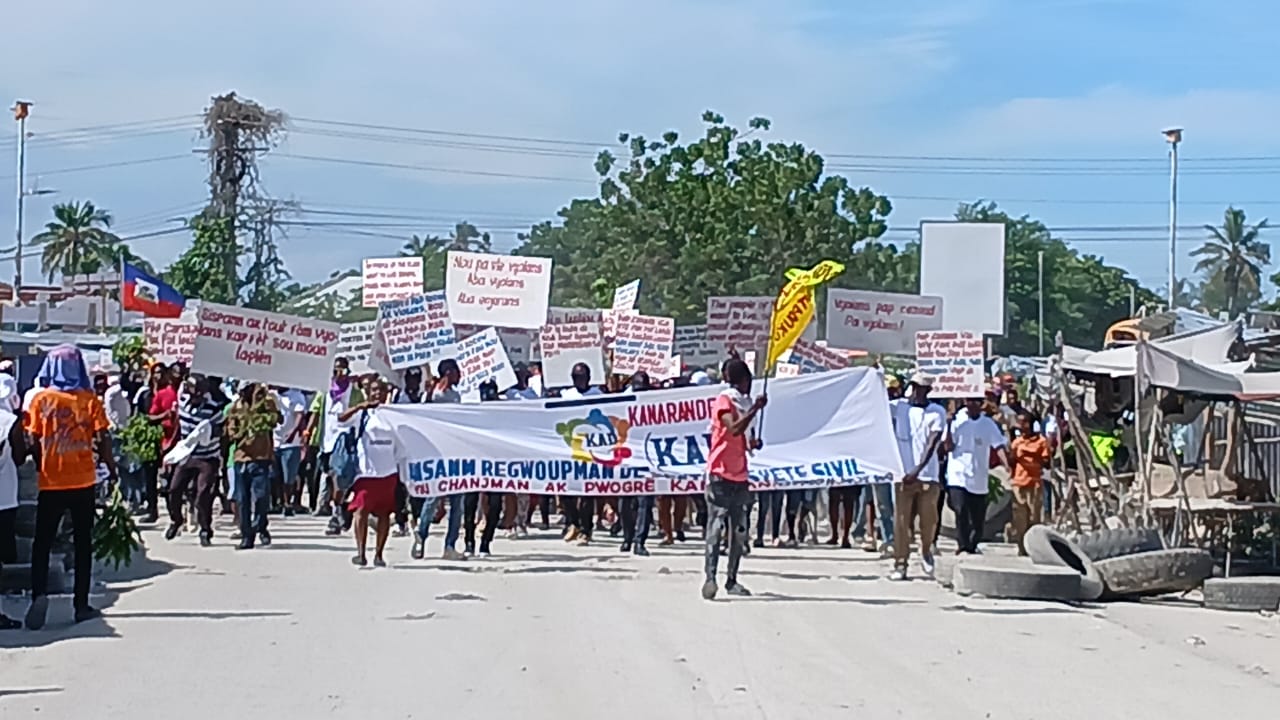
Bukele says his war is God’s war and that Haiti “will be free.” But for the families of La Plaine du Cul de Sac, who cannot flee and are counting their dead, the Salvadoran invasion has brought not freedom but terror. As Pasteur Timothée put it, these are “war crimes by the hand of invading nations.” The children of Dessalines are marching against them.