(Français)
Fri., Aug. 14, 2026, marked the 235th anniversary of the Bois-Caïman Pact, which took place on the night of Aug. 14-15, 1791, at the Lenormand de Mezy plantation near Morne-Rouge in the North Department, under the leadership of Dutty Boukman and Cécile Fatiman.
The symbolism of this Congress, this high-level political event, an example of solidarity, selflessness, unity, and perfect organization, holds particular and indelible importance in the Haitian collective consciousness. The lesson to be understood and learned is the desire of the enslaved masses not only to revolt against social injustice but also to wrest from the hands of the oppressors of the slave and colonial system the freedom to forge a free and sovereign nation.
The Bois-Caïman Congress was the result of a certain level of organization. This is why the people found in it a project and a leader capable of transforming them into an irresistible force. Eight days later, they demonstrated this when slaves from the five largest plantations rose up and began the revolutionary struggle: the original Bwa Kale. From this dynamic struggle for change, we can conclude that, provided there is a strong will and a clear and distinct political objective, a genuine recovery born of class solidarity can occur and can thwart any imperialist project.
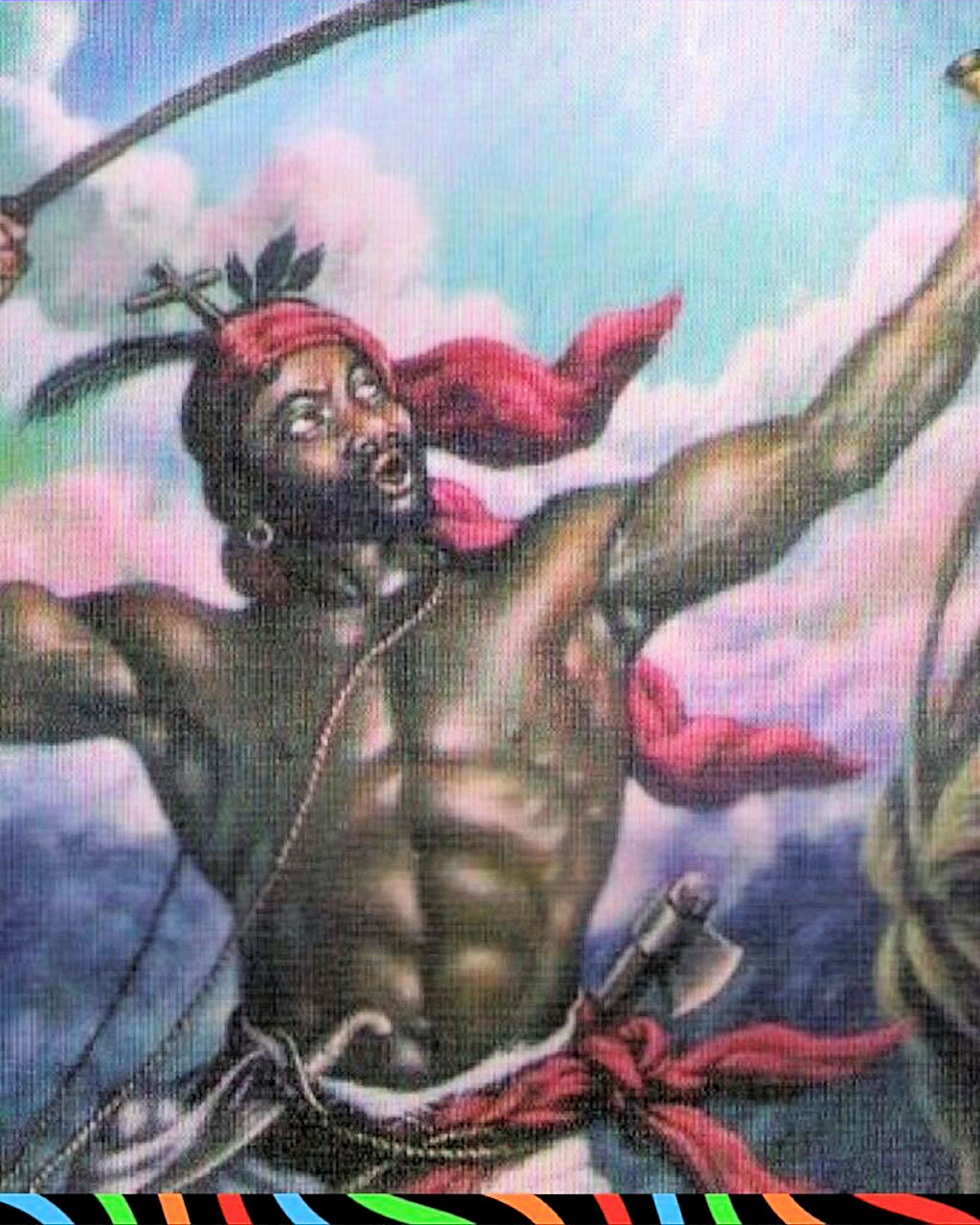
Thanks to the organization that structured itself around the clear and distinct identification of class interests, isn’t the symbolism of the Bois-Caïman Congress still alive and well, capable of restoring order to the Haitian chaos characterized by poverty, exploitation, political despair, and a lack of vision for escaping this complicated labyrinth?
Bois-Caïman remains a formidable, yet untapped, asset. It expresses the unwavering will and fidelity to the commitments made by an entire class of unpaid workers, inspired by a collective awakening to the “live free or die” ideal.
The symbolism of the Bois-Caïman Congress remains a source of inspiration, a compass pointing the way forward for the oppressed masses, provided there is the political will of an “organic elite,” in Gramsci’s words, to unite with the oppressed, to champion the masses’ cause, even if the road ahead is long. It is in this sense that the Nov. 18, 1803 victory at the Battle of Vertières represents a kind of apotheosis to the incandescent night of the call for liberty on Aug. 14, 1791.
Two hundred delegates from various plantations answered the call to the Congress. They came from the plantations of Limbé, Port Margot, Acul, Limonade, Petit Anse, Plaine du Nord, Quartier Morin, Morne Rouge, and others… to participate in the great struggle, to receive the message, and to share in the bonds of loyalty and solidarity. Their presence already signified the great importance they placed on the fight to end slavery. The slogans of that evening were like an anthem, a national song, an interpretation of the objective conditions of Saint-Domingue’s masses. Jean-Jacques Dessalines, who was among the delegates, would a few years later take the lead of this movement to guide us toward total liberation.
According to J. C. Dorsainville, it was ten o’clock in the evening when the inaugural ceremonies of the congress began.
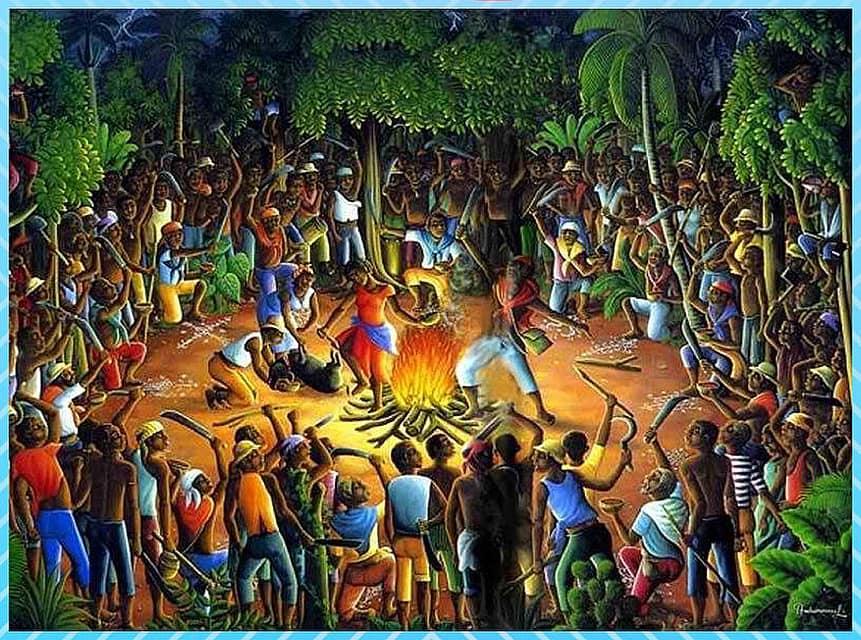
“Everyone was gathered when a storm broke. Lightning streaked across a sky of low, dark clouds with dazzling flashes. In moments, torrential rain flooded the ground, while, battered by the repeated onslaught of a furious wind, the trees of the forest twisted and groaned, their thick branches violently torn off and crashing down… In the midst of this awe-inspiring scene, the onlookers, motionless and seized by a sacred horror, saw an old Black woman rise up. Her body was wracked with long shivers; she sang, pirouetted, and whirled a large cutlass above her head. Even greater stillness, shorter, silent breathing, and burning eyes fixed on the Black woman soon revealed that the audience was captivated. Then a black pig was brought in, its grunts lost in the roar of the storm.” With a swift gesture, the inspired priestess plunged her cutlass into the animal’s throat. Blood spurted out, steaming, and was distributed to the slaves; all drank from it, all swore to carry out Boukman’s orders.
“The old Black woman with strange eyes and bristling hair, chanting mysterious words in the African dialect, invoked the gods of the ancestors.” Suddenly, Boukman rose and cried out in an inspired tone: “The Good God who made the sun that shines on us up there, who stirs the sea and makes the thunder roar, listen well, you others, this Good God there, hidden in a cloud, is watching us. He sees what the white men are doing. The white man’s God demands crime, ours desires blessings. But this God, who is so good, commands you to take vengeance! He will guide our arms, he will assist us. Cast aside the image of the white man’s God, who thirsts for our tears, and listen to the freedom that speaks to our hearts…”
All the delegates repeated this speech word for word with great fervor. This oath sealed the final resolutions of the congress. The slave had become a man, and as a man, he would defend his identity, his land, and his fellow slaves. He was no longer a beast of burden; he had become aware that the colonizer, despite his organizations, could not defeat him. He now thought as a responsible man, and like all men, his love of liberty and honor was just as strong and powerful.
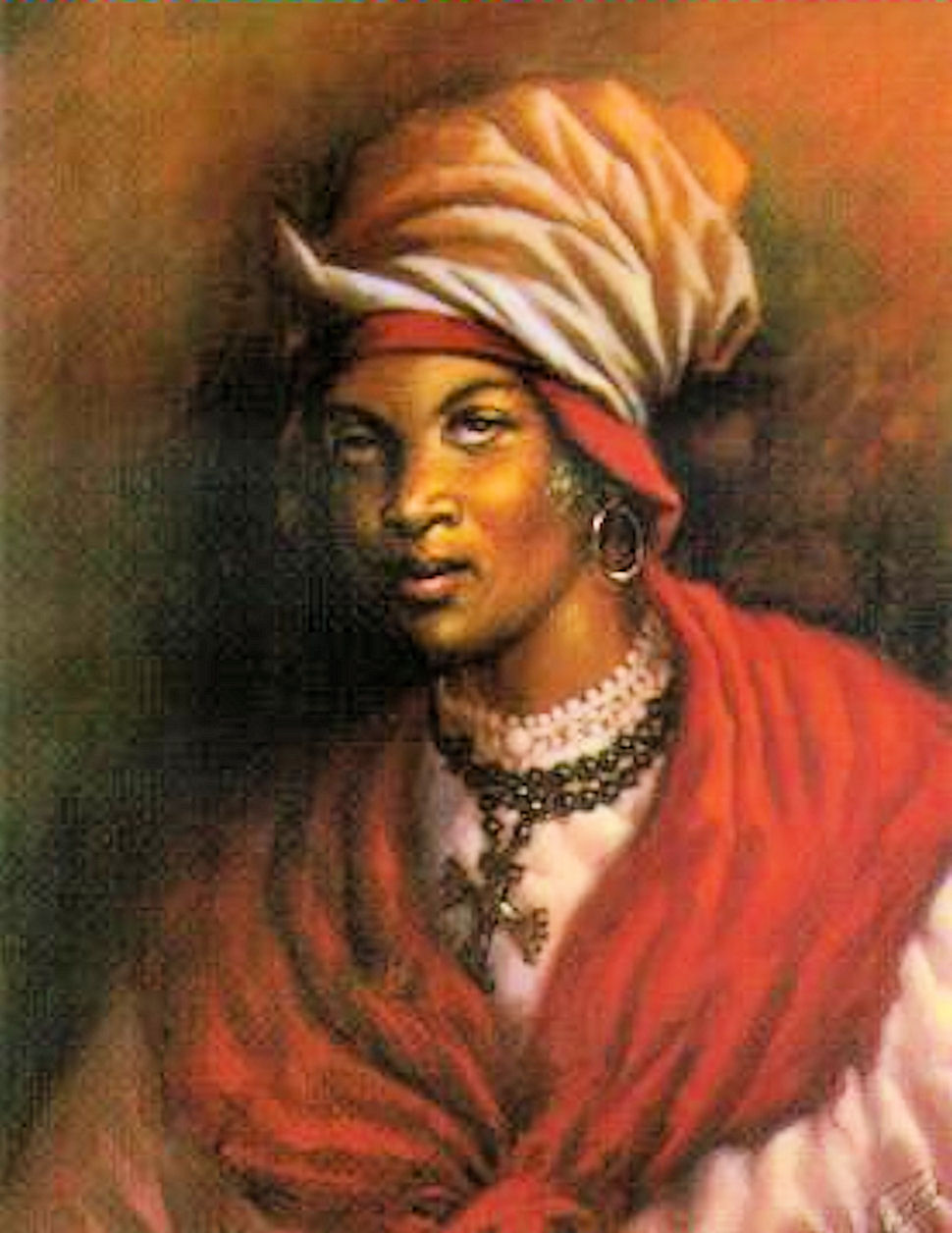
This congress was of paramount importance. It was a calculated, deliberate political milestone that the slaves had set. It was the best way to establish trust among themselves and to show the masses that this struggle was not the affair of one man or one clan, but the struggle of all conscious and committed slaves. It was a high-level political act that already signaled the desire of the masses to be not only free, but also independent. Theoretically, it heralded the end, the very death of colonial domination, the night that would definitively liberate the slave from slavery, Saint-Domingue from France.
Beaubrun Ardouin explains that “the slaves on the Chabaud and Lagoscette plantations misunderstood Boukman’s explanations. That evening, they set fire to both plantations. The insurrection was to begin with the burning of these sumptuous palaces built upon corpses, and of these rich harvests watered with the blood of these unfortunate souls. Several slaves were arrested and swiftly executed, so great was the fear of confessions.” Despite the repression they suffered, none of them ever denounced the leaders or the principal figures of the revolt. This suggests that this incident on the night of Sun., Aug. 14, 1791, was not a misunderstanding but rather an act of combative fervor, a form of impatience. For the spirit of the congress held the promise of hope and signaled that the sun of their liberation had already risen on the horizon.
A week later, on the night of Aug. 21-22, 1791, under the leadership of Boukman, Jean-François, and Biassou, the slaves launched the revolution. They cried, “Vengeance! Vengeance! Death to the Whites!”
Boukman was the first to take action, personally setting fire to the houses. Nearly 50,000 people were in the streets, ransacking the colonists’ plantations: 200 sugar mills and 600 coffee trees were destroyed; they killed women and children; the whites’ blood flowed everywhere in great torrents. The domestic slaves were the first to set fire to their owners’ houses. It is said that some slaves with a certain talent, especially those who worked in bakeries, even poisoned the dough used to make bread.
After three centuries of misery and suffering, the slaves had finally overturned the established order. Armed to the teeth, the slaves of the Trême, Turpin, Clément, Flaville, and Noé plantations revolted and took revenge for all the tortures they had suffered at the hands of their masters. The areas most frequently burned during this “Bwa Kale” uprising were: the Northern Plain, Petite Anse, the Morin Quarter, and Limonade. The slaves were armed with pikes, machetes, and sticks; it was a veritable riot against the northern colonists. This revolt, or Bwa Kale, expressed the slaves’ hatred for their colonizers. Jeannot sawed them in half between two planks. Other slaves, out of gratitude or pity for their former masters, spared them from the vengeance of fire.
This revolt caused great panic among the slave owners. Thus, in the first days of September during a session of the General Assembly, the president, the Marquis of Cadush, suggested handing the colony over to Great Britain, the only power, according to him, capable of saving them from the rebels’ terror.
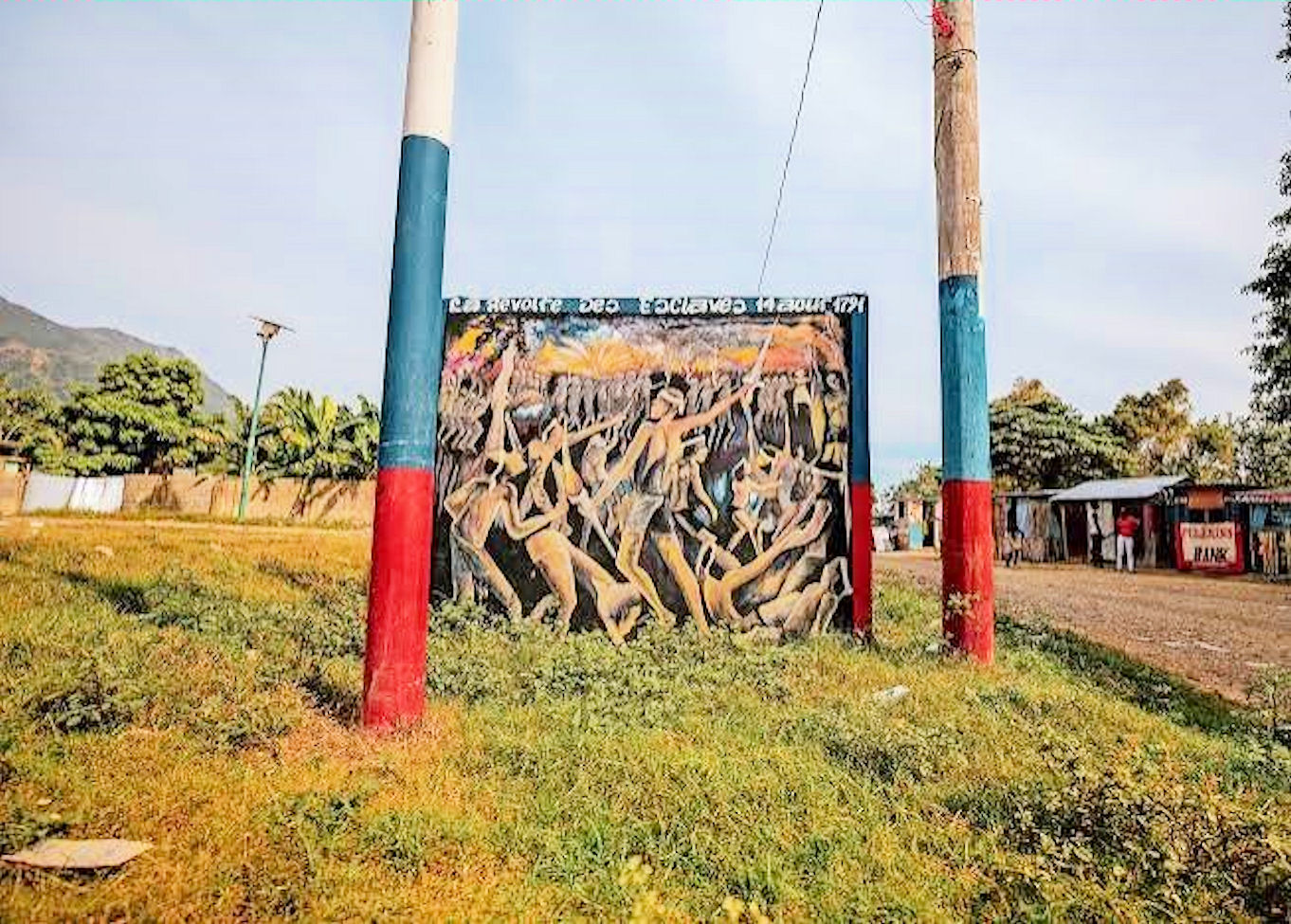
To quell the uprising, the colonists resorted to repression on the advice of the Colonial Assembly in Cap-Haïtien. Supporters of the old nobility joined forces with those of the metropolitan bourgeoisie to quell the masses’ fury. The colonists accused mixed race people and Governor Blanchelande of instigating the slave rebellion. To this end, they massacred a large number of mulattoes; slaves were killed, beheaded; an enraged master even killed a slave who had been completely loyal to him.
The colonists’ cruelty only strengthened the slaves’ resolve, despite their considerable losses. The General Assembly declared a total amnesty for all mulatto prisoners awaiting execution on death row, asking them to lend their support. Marc Chavannes, brother of Jean-Baptiste Chavannes, unscrupulously joined their ranks to fight the slaves. However, many other freedmen chose to join the slaves’ camp. In Cap-Haïtien, two scaffolds and five gallows were erected to kill and torture the slaves.
This revolt caused considerable panic among the slave owners.
Furthermore, in Fond Bleu, near Acul, on Nov. 1, 1791, the renowned revolutionary Boukman was captured and burned alive. Heroically, like Caonabo and Mackandal, he died for the national cause: the fight against slavery and colonization. His head was displayed by the colonists in the Place d’Armes in Cap-Haïtien with this inscription: “Head of Boukman, leader of the rebels.”
Despite everything, the slave revolt had a significant impact in Saint-Domingue. It was a turning point for the masses. Despite their weaknesses, this was the necessary beginning of a revolutionary process which, over 13 years of assiduous struggle, not only changed the world by ending the barbaric system of slavery but also gave birth to a new country of free black people: Haiti!